Electronics FIEs asked to expand Vietnamese supplier networks
Electronics FIEs asked to expand Vietnamese supplier networks
Foreign-invested electronics companies are being urged to expand their Vietnamese supplier networks and help domestic businesses move deeper into global supply chains.
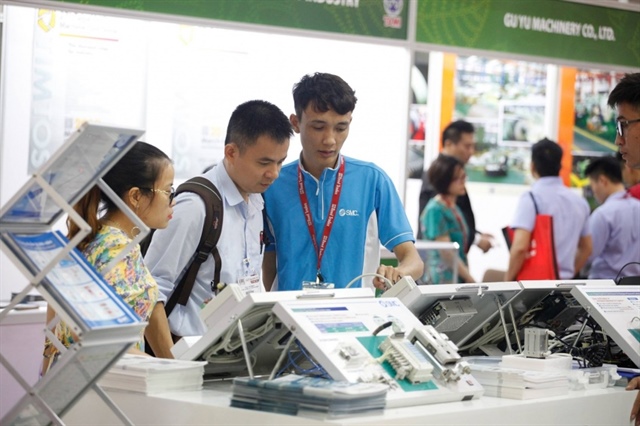
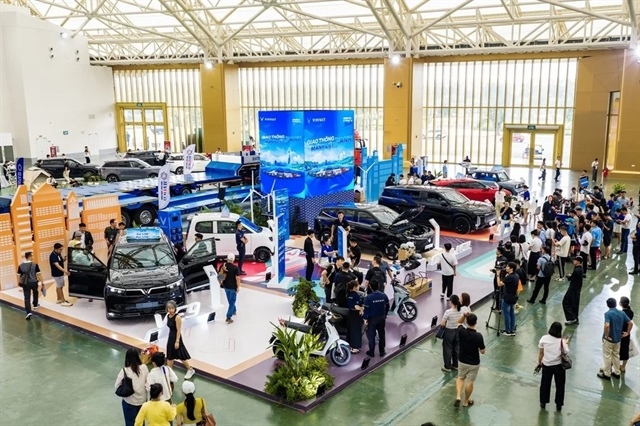
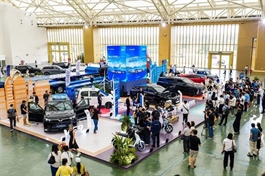
Photo: Vietnam Manufacturing Expo |
The requirement was outlined in Government Office Notice No.481/TB-VPCP, issued on September 14, conveying conclusions by Standing Deputy Prime Minister Pham Gia Tuc following a meeting with the Vietnam Electronic Industries Association and major electronics and semiconductor exporters.
Under the notice, foreign-invested enterprises (FIEs) are expected to actively contribute to developing Vietnam's electronics ecosystem by expanding their lists of Vietnamese suppliers, sharing technical standards and quality management processes, and supporting workforce training.
The aim is to create conditions for Vietnamese businesses to gradually participate more deeply in electronics and semiconductor supply chains, rather than remaining concentrated in lower-value stages of production.
Domestic companies are, in turn, being asked to strengthen their own capabilities, particularly in technology, quality management, automation, digital transformation, research and development (R&D), and human resources. They are expected to gradually shift from low-value-added activities towards manufacturing components and materials and undertaking more technology-intensive processes.
The government is also seeking a closer link between imports, domestic production, and exports. Companies are expected to make more effective use of imported materials, machinery, and equipment to improve productivity and ensure imports translate into production capacity, domestic value addition, and exports generated in Vietnam.
R&D and technological mastery will form another part of this shift, with businesses encouraged to focus on areas with strong potential such as chip design, semiconductor packaging and testing, electronic components and materials, automation, AI, servers, and equipment for data centres.
The push to strengthen local suppliers comes as the electronics industry remains heavily dependent on imported inputs and foreign technologies.
According to the Ministry of Industry and Trade, imports of components, raw materials, and production equipment are substantially higher than exports in the same period in some areas, resulting in localised trade deficits for computers, electronics, and components and at certain companies.
Domestic value addition remains limited, while Vietnamese businesses still have a relatively low level of participation in production and supply chains.
To address these weaknesses, the Ministry of Industry and Trade (MoIT) has been tasked with working with businesses recording large gaps between import and export turnover, particularly major net importers, to clarify their import structure and the extent to which imported inputs contribute to production and exports. The work is due to be completed in September.
Companies with large import turnover and trade deficits must also develop plans to increase value addition, expand domestic supplier networks, and gradually improve their trade balance.
At the same time, the ministry will develop a programme specifically aimed at connecting and developing Vietnamese suppliers for domestic and foreign electronics, semiconductor, and technology corporations. Supplier development will be organised according to individual product chains, technical standards, and corporate demand.
The government is also seeking to increase localisation through supporting industries. The MoIT will review the list of priority supporting-industry products for electronics, focusing on components and materials with substantial demand and the potential to be produced locally.
Rather than providing fragmented support, policies are expected to increasingly target specific products and supply chains.
Financial measures are also being considered. The Ministry of Finance will review tax incentives for the production of electronic components and materials and supporting industries, while proposing policies that encourage domestic manufacturing of products Vietnam is capable of producing without restricting imports of machinery, equipment, and materials that cannot yet be supplied locally.
The State Bank of Vietnam, meanwhile, has been tasked with studying appropriate credit policies for electronics supporting-industry companies and businesses investing in technological innovation, automation, and digital transformation, particularly small- and medium-sized enterprises seeking to join electronics and semiconductor supply chains.
Technology policy will reinforce the supplier-development push. The Ministry of Science and Technology has been instructed to prioritise support for Vietnamese businesses researching and mastering core and foundational technologies in semiconductors, integrated circuits, electronic materials, and automation.
The broader goal is to increase the value created by Vietnamese businesses within global electronics supply chains, enabling domestic suppliers to move beyond basic manufacturing and take on components, materials, and technology-intensive stages as foreign-invested manufacturers deepen their supplier networks in Vietnam.
- 15:50 15/09/2026