FTSE upgrade puts Vietnam on global investors’ radar, now investability must follow
FTSE upgrade puts Vietnam on global investors’ radar, now investability must follow
FTSE Russell has added 27 Vietnamese stocks to the FTSE Global All Cap Index as part of its September semi-annual review. In an interview with VIR’s Hazy Tran, Thomas Nguyen, Chief Global Markets Officer at SSI Securities said that FTSE Russell’s inclusion could bring billions in passive inflows, but the bigger opportunity lies in Vietnam’s institutional transformation.
How significant will the initial foreign inflows from FTSE inclusion be, and which stocks are likely to benefit most?
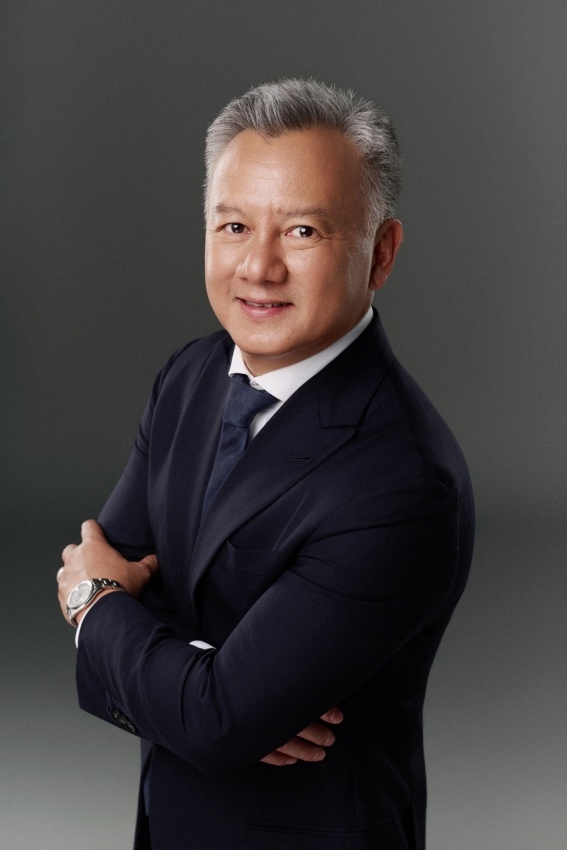
Thomas Nguyen, chief global markets officer at SSI Securities. Photo: SSI |
The initial flows are significant, but they should be kept in perspective. Under the current announcement, we estimate approximately $2.2 billion of cumulative passive inflows across the four implementation tranches. Because only around 10 per cent of the transition is scheduled for the first tranche, the September inflow itself could be closer to $200-220 million.
The 27 stocks will not benefit equally. Passive capital follows index weight and investable market capitalisation. The largest beneficiaries will generally be companies combining scale, liquidity, meaningful free float and sufficient foreign-ownership headroom. A company can be large in absolute terms but still receive a relatively modest allocation if only a small proportion of its shares is genuinely available to international investors.
But we should ask a more fundamental question: is $2.2 billion itself transformational? Vietnam has experienced more than $5 billion of foreign net selling over recent years. If we describe the upgrade simply as $2.2 billion coming back after more than $5 billion went out, we are missing the bigger story.
The $2.2 billion is the headline. The global financial ecosystem arriving behind it is the story.
Vietnam is moving from a predominantly retail market towards an institutional market. Foreign investors represented only 7.4 per cent of trading activity in 2021, compared with 13.2 per cent during the first seven months of 2026. As global brokers, passive funds, quantitative investors and active institutions build their presence, I would not be surprised to see institutional participation move towards 20 per cent and eventually 30 per cent.
That transformation will also drive consolidation. Global institutions demand technology, capital, risk management, KYC, execution quality and settlement capabilities at international standards. Not every market participant will be able to make that investment. Business will increasingly concentrate among companies and securities firms capable of serving the global institutional ecosystem.
The upgrade changes Vietnam’s classification. Institutionalisation changes how the entire market operates.
Source: tinnhanhchungkhoan.vn |
Beyond passive inflows, could FTSE inclusion drive sustained interest from global active investors in Vietnamese equities?
Vietnam is moving from a market that global investors could choose to study into one that many institutions will now be required to understand. The conversation is changing from “Why should we look at Vietnam?” to “How much should we allocate, when should we enter and which companies can absorb institutional capital?”
Active managers have much more flexibility than passive funds. Some may build positions ahead of the implementation dates because they anticipate passive demand. However, most will still require a compelling economic and investment case. That is where Vietnam is exceptionally well positioned: high GDP growth, macroeconomic stability, strong corporate earnings growth and an expanding universe of companies with regional and global ambitions.
The upgrade has also demonstrated something extremely important about the government’s commitment to reform. KRX was a key requirement for modernising the market’s infrastructure. Its implementation had been delayed for more than a decade, but once the current leadership made the upgrade a national priority, the system was brought into operation in less than a year.
The same pattern can be seen in non-prefunding and the Global Broker Model. The Global Broker Model became necessary because institutions such as Vanguard and their global brokers required more efficient access and execution. The government listened to that feedback and acted. This demonstrated not only determination, but also a willingness to design the market around the practical requirements of global investors.
The planned central counterparty will be the next important step. Together with the KRX infrastructure and supporting regulation, it can create the foundation for intraday trading, securities lending, short selling and a much more sophisticated market structure.
The upgrade is not merely the result of reform. It has become an engine driving reform.
Under the current announcement, Vietnam’s benchmark weight is approximately 0.49 per cent, supporting estimated cumulative passive inflows of around $2.2 billion. But there is certainly a possibility that Vietnam’s benchmark weight could expand further as free float increases, foreign-ownership constraints become less binding, new large companies list and more of the market becomes accessible.
That is the decisive distinction. September is the implementation event; investability is the long-term investment thesis. If Vietnam continues converting economic scale into investable market capacity, the active capital attracted by this transformation could ultimately become far more important than the initial passive inflows.
Could FTSE inclusion increase pressure on Vietnamese firms to improve governance, disclosure and investor relations?
The scrutiny will increase enormously, and it has already begun.
Inclusion in a global benchmark introduces a company to investors who compare it not only with other Vietnamese businesses, but with companies across Asia and the entire emerging-market universe. Reporting that may have appeared adequate domestically can look incomplete when measured against global peers.
International visibility is a privilege, but scrutiny is the price of admission.
The largest gap is the transition from regulatory disclosure to genuine investor communication. Global investors expect timely English-language disclosure, clear explanations of strategy, transparent related-party transactions, credible capital-allocation policies, strong boards and investor-relations teams capable of maintaining a continuous dialogue with the market.
Companies must explain not only what happened, but why it happened, what management intends to do next and how shareholders will benefit. Investor relations can no longer be treated as an activity performed only before an offering or when management wants to raise capital.
Passive funds will buy a company because the index methodology instructs them to do so. They do not need to decide whether the company is inexpensive, and a high valuation alone does not prevent an index-linked allocation. Benchmark weight can therefore become an increasingly important influence on capital flows and valuation.
However, active investors still decide how much conviction capital to allocate and how long to remain invested. Governance, disclosure and management credibility will be critical to that decision.
Passive capital may arrive because of a rule. Active capital stays because of trust.
- 18:22 25/08/2026