Carbon market needs greater liquidity
Carbon market needs greater liquidity
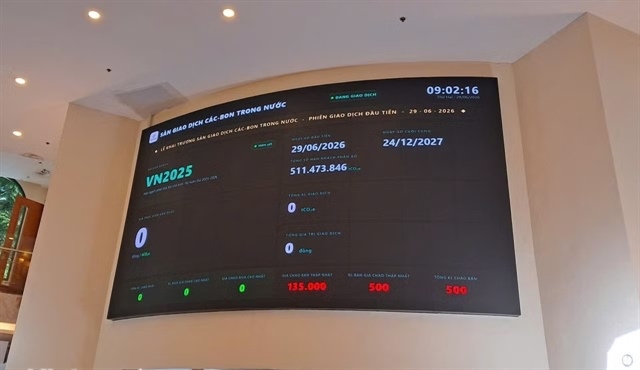
The domestic carbon exchange began pilot trading of greenhouse gas emission allowances at the Hanoi Stock Exchange (HNX) on June 29 under the code VN2025, marking a shift from building the regulatory framework to putting the market into operation.

The Sác forest in HCM City's Cần Giờ Ward. Việt Nam is developing a carbon market as part of efforts to achieve net-zero emissions by 2050. — VNA/VNS Photo |
The trading screen is open, the first carbon allowances have changed hands, and Việt Nam’s carbon market is officially under way. But beneath that milestone lies a tougher question: can the fledgling market attract enough buyers, sellers and reliable carbon data to become a functioning marketplace?
The domestic carbon exchange began pilot trading of greenhouse gas emission allowances at the Hanoi Stock Exchange (HNX) in June under the code VN2025, marking a shift from building the regulatory framework to putting the market into operation.
Allowance prices rose as high as VNĐ136,000 (US$5.17) per tonne of carbon dioxide equivalent (CO2e) during the opening session before closing at VNĐ130,000. More than 1,200 tonnes of CO2e were traded on the first day, with transactions worth VNĐ161.7 million ($6,150), according to market data.
The launch of the carbon trading platform marked the first step towards commercialising emission reductions achieved by organisations and turning them into publicly tradable market commodities, said Trần Trọng Kiên, deputy director of the Derivatives Market Department at HNX.
The HNX platform handles two main types of carbon-market instruments: emission allowances and carbon credits. Only facilities and organisations allocated emission quotas by the State can trade allowances, while carbon-credit trading is open to all organisations operating in Việt Nam, Kiên said.
Companies seeking to trade carbon-market instruments must open accounts and conduct transactions through trading members, which are securities firms affiliated with the Vietnam Stock Exchange. Six securities firms currently serve as carbon trading members.
The platform uses negotiated trading, under which buyers and sellers agree on transaction terms before entering orders into the system.
Kiên said participants must verify the product code, trading volume and price before placing orders and ensure their accounts contain sufficient funds and assets.
|
The Sác forest in HCM City's Cần Giờ Ward. Việt Nam is developing a carbon market as part of efforts to achieve net-zero emissions by 2050. — VNA/VNS Photo |
Since the opening session, however, the VN2025 allowance code has recorded no additional trading volume or value, while the system has yet to record a closing price, according to data from HNX's carbon trading portal.
The subdued trading activity has raised questions about the market's appeal, but experts and regulators say low liquidity was expected during the early stages of a new market, as infrastructure, operating mechanisms and the participant base are still being developed.
A low transaction volume does not necessarily indicate that the market is inefficient, they say. The pilot phase currently covers only 110 facilities in the major emitting sectors of thermal power, steel and cement. Almost 100 companies engaging in these industries are participating in the pilot, including major industrial groups such as Hoa Phat, Formosa, EVN, PV Power and Vicem.
The only product currently eligible for trading is the 2025-26 compliance-period emission allowance coded VN2025. It represents more than 511 million tonnes of CO2e and can be traded until December 24, 2027.
Most enterprises are still completing greenhouse gas inventories, assessing their quota requirements and familiarising themselves with trading procedures, meaning sustained demand for buying and selling allowances has yet to emerge.
The Sác forest in HCM City's Cần Giờ Ward. Việt Nam is developing a carbon market as part of efforts to achieve net-zero emissions by 2050. — VNA/VNS Photo |
Regular developments
Speaking at a recent carbon market forum in HCM City, Nguyễn Thế Minh, director of investment banking at An Binh Securities, said low liquidity in Việt Nam's carbon market was a normal feature of its early development, similar to the initial years of the country's stock market.
The market remained in a pilot, or sandbox, phase, with only a limited number of carbon credits currently eligible for listing and trading. While carbon credit transactions had taken place, the standardisation needed to bring such products onto an exchange had yet to be implemented on a large scale, Minh said.
Supply and demand were also poorly connected, contributing to low trading volumes and limited liquidity.
Minh compared the situation with the early days of Việt Nam's stock market, when only two companies were listed and trading volumes were minimal. The carbon market similarly needed time to prepare and standardise the supply of eligible products, while companies needed to familiarise themselves with using the market as a financing channel, he said.
Businesses had yet to view the carbon market as a significant source of financing, reflecting the experience of green finance, where relatively few companies had successfully raised funds through green financing structures, Minh said.
Limited supply of carbon credits, coupled with weak investment demand for the asset class, had further constrained market liquidity.
Another challenge was the lack of a fully developed operating and standardisation framework. Việt Nam had a limited pool of domestic consultants capable of standardising carbon credits, forcing many companies to hire foreign specialists at higher costs, Minh explained.
Technical standards and regulations governing the verification, certification and listing of carbon credits also remained inconsistent, limiting the number of products that qualify for trading on an exchange.
Despite these challenges, Minh said Việt Nam's carbon market had significant growth potential, given the country's large agricultural sector and continued industrialisation, supported by substantial foreign direct investment in manufacturing.
Those sectors were expected to generate growing demand for emissions reductions, carbon credit trading and offsetting, he said.
Low liquidity was not unique to Việt Nam; it was a common characteristic of many carbon markets worldwide, including those in Europe, Minh said, adding that limited liquidity could make companies and financial intermediaries more cautious about participating.
To support the market's development, he called for the regulatory sandbox to remain in place for a sufficient period, alongside incentives to attract more participants.
The immediate priority should be to build infrastructure for standardising carbon credits and develop a domestic pool of advisers, Minh said. Securities firms could eventually expand beyond their role as trading intermediaries to advise companies on standardising carbon credits, preparing documentation and listing eligible credits on the market.
Boosting liquidity
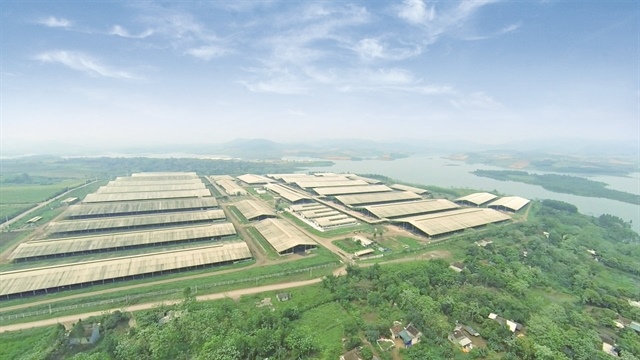
The Sác forest in HCM City's Cần Giờ Ward. Việt Nam is developing a carbon market as part of efforts to achieve net-zero emissions by 2050. — VNA/VNS Photo |
Lê Xuân Nghĩa, director of the Consultancy on Development Institute, said boosting liquidity in Việt Nam's carbon market would depend on several factors, including the allocation of emission quotas, investor participation, international access and borrowing costs.
The carbon market was distinct from conventional markets because it combined commercial investment with a pricing mechanism intended to reward entities that reduce emissions and penalise those that exceed regulatory limits, Nghĩa said.
The allocation of emission quotas by the Government was a key factor in determining trading demand, he said.
If regulators allocated quotas too generously, a business would only need to buy a small amount on the market. But if the quota was tightened, the business would have to buy more, thereby increasing trading demand and liquidity, Nghĩa added.
Allowing investors to trade carbon assets for profit could also help improve market liquidity, he said, arguing that investors should be able to buy at lower prices and sell at higher prices to facilitate asset circulation.
Greater participation by international investors would also be needed to broaden the market beyond domestic participants, he said.
|
The Sác forest in HCM City's Cần Giờ Ward. Việt Nam is developing a carbon market as part of efforts to achieve net-zero emissions by 2050. — VNA/VNS Photo |
London-based EBC Financial Group said Việt Nam's carbon market would realise its full economic value only when emissions risks become part of corporate finance, credit assessment and investment decisions.
For companies, the priority should be to understand their emissions exposure before turning to the market, the group said. This includes assessing current emissions, allocated allowances, potential shortfalls and the financial impact of different carbon-price scenarios, while comparing the cost of purchasing allowances or credits with investments in energy efficiency, cleaner fuels, renewable energy and lower-emissions technologies.
The guiding principle should be to reduce emissions where economically viable and use trading mechanisms to manage the remaining balance, rather than treating carbon credits as a substitute for operational changes, EBC Financial Group said.
The impact could also extend beyond the first 110 regulated facilities. Businesses would face indirect carbon costs through electricity, steel and cement prices, international customer requirements, financing conditions and supply chain standards before they became directly subject to the compliance system, it said.
According to EBC Financial Group, Việt Nam had established the legal and market infrastructure for carbon trading, but the next phase would determine whether the exchange could develop into a functioning market that influence investment decisions and create incentives for genuine emissions reductions.
"Greater use of reliable carbon data by regulators, companies, banks and investors could help integrate carbon risks into financial decision-making and support the country's broader green-growth goals," the group said.
- 09:23 22/08/2026