Digital transformation reshapes securities market infrastructure
Digital transformation reshapes securities market infrastructure
For HoSE, developing technology infrastructure, strengthening data capabilities and maintaining system security remain important priorities for supporting stable market operations.
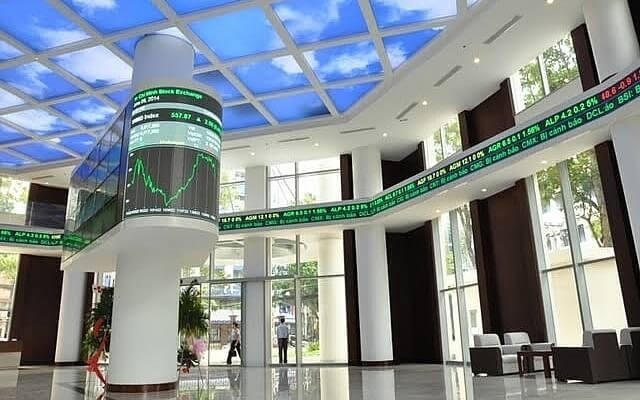
Inside the headquarters of the Hochiminh Stock Exchange (HoSE) in HCM City. — VNA/VNS Photo |
Digital transformation is becoming a key part of Việt Nam's efforts to modernise its securities market, with regulators focusing on stronger trading infrastructure, interconnected data and cybersecurity as the market expands in scale and moves closer to international practices.
According to Lê Văn Phương, deputy head of the Technology and Digital Transformation Department at the State Securities Commission (SSC), digital transformation in the financial and securities sector should extend beyond adopting new technologies.
It involves a comprehensive transformation of how the market is organised and managed and how services are delivered as the number of investors, market size and international integration continue to increase, he said at the Vietnam Securities Tech Summit 2026.
The expansion requires infrastructure capable of processing transactions reliably, connecting market participants seamlessly and providing stronger protection for investor data. Technology capacity, data quality and surveillance are also becoming increasingly important as Việt Nam pursues its market-upgrade objectives.
One priority is further modernisation of information technology and trading infrastructure, covering the entire transaction chain from order placement to clearing, settlement, depository services, information disclosure and market supervision.
Phương said the launch of the new KRX information technology system marked an important step towards improving transaction-processing capacity, system stability and scalability. The infrastructure is also expected to provide the technical foundation for new products and services.
The SSC plans to continue working with agencies to improve trading, clearing and settlement infrastructure, strengthen electronic connectivity among market participants and review the legal framework governing online transactions.
Another priority is building an integrated digital data ecosystem.
According to the SSC, data is increasingly becoming a strategic resource for regulation, supervision, policymaking and modern financial services. The value, however, depends on whether information is collected comprehensively, standardised, securely connected and shared, and used for appropriate purposes.
The regulator is therefore developing a centralised securities-sector database and promoting data sharing among market participants in accordance with legal requirements.
Electronic identification and authentication are also being expanded in service provision, potentially reducing paperwork, shortening account-opening procedures and facilitating customer information updates. Their application must be accompanied by personal data protection, access controls and clearly defined responsibilities for participating organisations.
Cybersecurity represents the third major pillar of the transformation.
Digitalisation brings risks ranging from cyberattacks and data breaches to technology-enabled fraud and online scams. The SSC is therefore directing securities-sector organisations to invest in information-security infrastructure, strengthen risk management, regularly inspect their technology systems and comply with cybersecurity and data-protection regulations.
Technology is also expected to play a larger role in market surveillance. The regulator aims to apply digital tools to management, inspection and supervision to improve its ability to detect abnormal activities earlier, shifting towards preventive warnings and early-stage risk management.
Emerging technologies are adding another dimension to the transformation. Artificial intelligence (AI), cloud computing and big data could improve operational capabilities and investor experience but also create challenges involving cybersecurity, data protection and risk governance.
From the exchange's perspective, Trịnh Sơn Hồng, acting chairman of the Hochiminh Stock Exchange (HoSE), said market modernisation should not simply mean investing in new technology.
More important, he said, is establishing a platform capable of improving connectivity, using data more effectively, scaling flexibly and operating securely.
AI, cloud computing, big data and other advanced technologies are changing how financial institutions operate, manage activities and deliver services, Hồng said. Their adoption, however, also raises questions over data governance, privacy, system security and dependence on technology providers.
The International Monetary Fund noted that while AI could improve market efficiency, it could potentially increase risks involving volatility, contagion and financial stability.
Hồng said modernisation therefore requires coordination among regulators, stock exchanges, market members and the technology community to identify practical needs, exchange implementation experience and gradually establish appropriate standards for technology, data and system security.
- 09:46 25/08/2026