Vietnam could cut emissions by 3 per cent with $15-per-tonne carbon tax
Vietnam could cut emissions by 3 per cent with $15-per-tonne carbon tax
A carbon tax of $15 per tonne of CO₂ could reduce Vietnam’s greenhouse gas emissions by nearly 3 per cent, although it may come at the expense of economic growth without appropriate support policies, according to the University of Copenhagen.
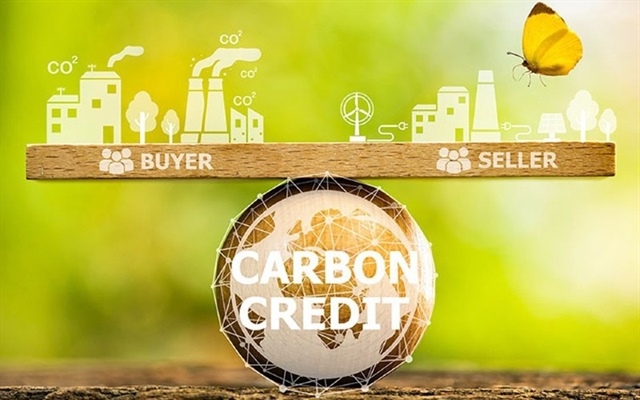
Photo: baodautu.vn |
The Institute of Policy and Strategy Studies and the United Nations Development Programme released a study on policy implications for Vietnam's just energy transition on July 13, quantifying the economic and social trade-offs of green transition policies.
"A carbon tax of $15 per tonne of CO₂ could reduce Vietnam's greenhouse gas emissions by 2.9 per cent," said Prof. Finn Tarp of the University of Copenhagen, the study's academic partner.
The research team noted that this level would be sufficient to discourage highly polluting activities while remaining broadly consistent with the carbon pricing range recommended by the World Bank in its Vietnam 2045 report.
"However, the country's GDP could decline by 0.8 per cent if no accompanying support measures are introduced while exports and imports would each fall by around 0.9 per cent, investment by 1.3 per cent, and indirect tax revenue by 1 per cent," he added.
State revenue would be the only indicator to increase, rising by 0.41 per cent under the carbon tax scenario.
The study found that carbon pricing would have the greatest impact on fossil fuel-intensive industries, particularly coal-fired power generation, which still accounts for a significant share of Vietnam’s electricity supply. As a result, household incomes could also be affected, mainly through higher electricity bills.
To mitigate the adverse economic impacts of the green transition, Tarp recommended directing carbon tax revenues towards lower-income households.
“When revenues are targeted appropriately, low-income rural households could see higher incomes, making the transition fairer across different income groups,” he said.
“High-income households generally consume more electricity. Allocating just 30 per cent of carbon tax revenues would be sufficient to offset income losses for the poorest 50 per cent of households,” Tarp added.
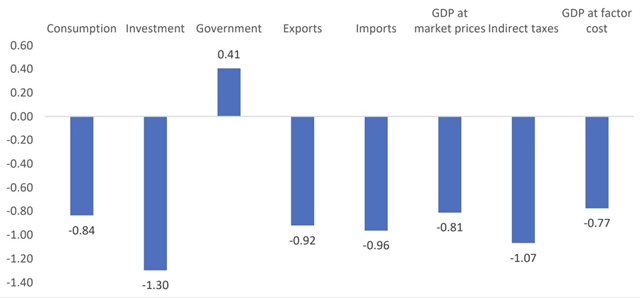
Projected macroeconomic impacts of a $15-per-tonne carbon tax. Photo: IPSS |
Nguyen Ngoc Hung, head of the Energy Economics Division at the Institute of Energy, said central Vietnam has abundant solar and wind resources, making it well suited to develop renewable energy projects to supply electricity to northern Vietnam, where demand is higher.
“However, local authorities receive very limited land tax revenue from infrastructure such as turbine foundations, transmission towers and power corridor land, while allocating land for transmission infrastructure often constrains other economic activities,” Hung said.
According to the IPSS, carbon taxation should be implemented alongside other policy instruments to minimise short-term impacts on economic growth. The study also found that improving energy efficiency by 10 per cent could increase Vietnam’s GDP by 1 per cent, representing a “win-win” solution for economic growth, emissions reduction, and household incomes.
Besides carbon taxation, an emissions trading system (ETS) is another carbon pricing mechanism. Vietnam officially launched the pilot phase of its domestic carbon market in late June, with 92 companies from the thermal power, steel, and cement sectors participating.
The participating companies have been allocated a combined greenhouse gas emissions quota of 511 million tonnes of CO₂ equivalent for the 2025-2026 period, requiring them to reduce emissions or manage their allowances accordingly.
According to the World Bank’s Vietnam 2045 - Growing Greener: Pathways to a Resilient and Sustainable Future” report released last year, Vietnam’s greenhouse gas emissions intensity is 45.6 per cent higher than the average for upper-middle-income economies.
The power, industrial, and agricultural sectors remain the country’s largest sources of emissions. The report estimates that improvements in energy efficiency, industrial decarbonisation, and expanded carbon sinks could reduce Vietnam’s greenhouse gas emissions by 74 per cent by 2050.
- 10:31 14/07/2026