Supply-side model required for sustainable growth
Supply-side model required for sustainable growth
Vietnam’s leadership is demonstrating a strong aspiration to push economic growth as high as possible over the next few years. Dr. Dam Nhan Duc, chief economist at MBBank, talked to VIR’s Thanh Van about such a transformation.
What makes you optimistic about the future of Vietnam’s economy?
I have to say that I am optimistic, but not over-optimistic. I have total confidence that Vietnam’s economic development would be much better compared with the past period. 10 per cent of GDP growth might be a very hard task, and we need to see more proactive and effective mechanisms and actions from the government to make sure that happens. Nevertheless, more than 8 per cent of GDP growth this year and next couple of years is of very high possibility.
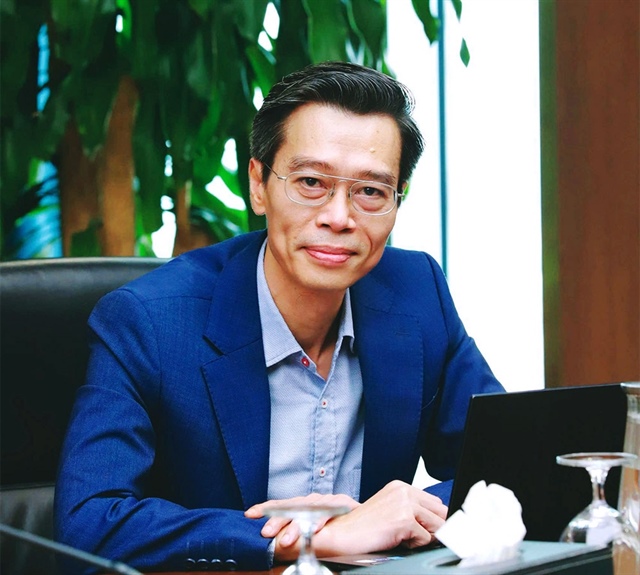
Dr. Dam Nhan Duc |
Vietnam has been very successful in the past several decades with its production and export growing model. In the next period, this model will be supplemented with a infrastructure-led growing model. As in strategy, the government is now very clear about where it wants to go and how it plans to get there. Some supporting factors provide a strong foundation for achieving these objectives.
Firstly, Vietnam currently has a very strong macro environment with very low public debt to GDP. This provides Vietnam with large room for using fiscal tools to support economic growth. Secondly, Vietnam is rapidly climbing the global value chain, as it is now targeting high-tech integration like semiconductor fabrication, AI, and digital transformation. Thirdly, with a population of more than 100 million and a growing working-age population, Vietnam has a rapidly expanding middle class.
Within this framework, the private sector serves as the primary engine, productivity establishes the cornerstone, spearhead industries drive the breakthroughs, and the banking system assumes the pivotal role of channelling capital and guiding the overall quality of growth.
What are the key factors to achieve a 10 per cent annual GDP growth target?
Supply-side solutions are required. International experience demonstrates that no economy can sustain a 10 per cent growth rate over the long term by relying solely on aggregate demand policies. To achieve sustained high growth, successful nations have uniformly formulated and implemented impactful supply-side policies, propelling themselves to global leadership positions in specific strategic sectors.
For South Korea, this manifested in the chaebol model, featuring pioneering corporations in heavy industries, chemicals, electronics, semiconductors, and automotive, heavily backed by government-enabling policies. Taiwan positioned itself as a pioneer in advanced chip and semiconductor manufacturing, moving upstream within the global value chain. China established itself as the “factory of the world”, dominating assembly and manufacturing sectors, with its economic growth further bolstered by massive infrastructure investment and robust research and development activities.
Consequently, Vietnam must design supply-side solutions and prepare risk management frameworks to navigate an increasingly volatile international landscape. In addition, its traditional development trajectory – anchored in low-cost labour, export processing, and attracting overseas funding via labour cost advantages – is rapidly approaching its structural limits.
The emerging global landscape presents novel variables and opportunities arising from global supply chain restructuring, alongside the advent of technologies like semiconductors and AI, and frontier sectors like renewable energy. These elements constitute the foundational infrastructure shaping new growth spaces.
The government has charted this strategic direction, and numerous enterprises have mobilised. While Vietnam has achieved considerable success in software services, application development, systems integration, and maintenance to generate rapid near-term revenue, the long-term focus must prioritise foundational infrastructure development.
Infrastructure serves as the foundation and the backbone of an economy. However, technology infrastructure investments typically do not yield short-term profits and may even be perceived as capital-inefficient. Consequently, this domain should be spearheaded by the government, or by enterprises backed by solid government support. Failure to execute a strategic investment framework to master this advanced technology infrastructure, like data or AI, will prevent the success of Vietnam in the long run.
What is the role of the financial sector and MBBank in this era?
The banking system is emerging as a central link of the economy, serving as the primary capital channel for the private sector. However, the role of banks in the coming period must extend beyond merely expanding credit. It needs to shift toward enhancing the quality of capital allocation.
This means that credit flows must be strategically directed into high-productivity and high-value-added sectors such as processing, manufacturing, high technology, or renewable energy, rather than being spread too thinly as in the past.
Banks must integrate more deeply into the formation of spearhead industries. This can be achieved by providing long-term financing for foundational sectors such as digital infrastructure, data, and AI. Although these sectors involve extended payback periods and higher risk profiles, they play a decisive role in elevating national competitiveness.
Furthermore, through strategic credit policies, the banking system can incentivise enterprises to innovate technology, refine governance, and improve productivity. This active engagement will ultimately drive the transition of the economic growth model toward greater sustainability.
Additionally, the stock market with the potential of upgrading and underdeveloped corporate bond market must be promoted to share the role with the banking sector in providing medium and long-term fundings to corporates and business communities.
- 10:29 21/07/2026