MoF highlights institutional reforms, fiscal management and investment mobilisation in first half of 2026
MoF highlights institutional reforms, fiscal management and investment mobilisation in first half of 2026
The Ministry of Finance has highlighted sweeping institutional reforms, strong fiscal management, accelerating public investment, and continued digital transformation as key achievements in the first half of 2026, while acknowledging that significant challenges remain in meeting the country's ambitious full-year growth target.
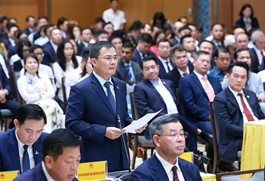
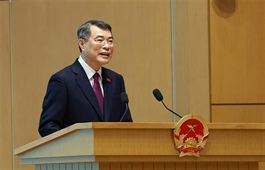
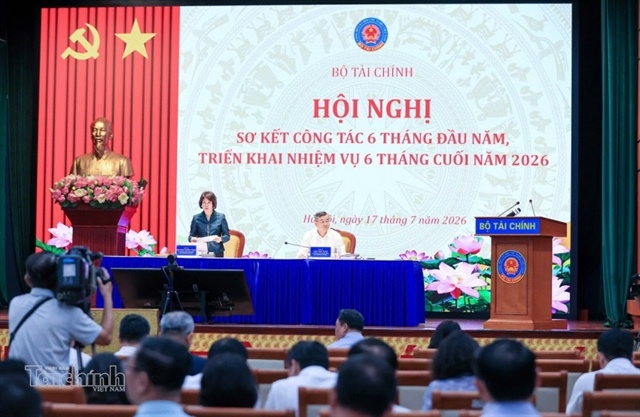
Speaking at the ministry's nationwide mid-year review conference on July 17, officials said the finance sector had handled an unprecedented workload amid a volatile global economic environment, contributing to macroeconomic stability and laying the groundwork for stronger growth in the second half of the year.
|
Record institutional reform
Institutional development remained one of the ministry's most significant accomplishments during the first six months of 2026. The MoF advised the Politburo on the issuance of Resolution No.79-NQ/TW on state-owned economic development and Resolution No.10-NQ/TW on foreign-invested economic development, both of which are expected to shape Vietnam's long-term economic strategy.
By June 30, the ministry had submitted or issued 152 legal documents, the largest legislative workload among all ministries and government agencies. These included two laws and National Assembly resolutions, one resolution of the National Assembly Standing Committee, 56 government decrees, six government resolutions, six prime ministerial decisions, and 81 ministerial circulars.
The MoF also played a central role in drafting socioeconomic development plans for 2026-2030 to be incorporated into the 14th National Party Congress documents. It led the preparation of Conclusion No.18-KL/TW, covering socioeconomic development, national finance, public debt management, and the medium-term public investment plan aligned with Vietnam's objective of achieving double-digit economic growth.
Following these policy decisions, the government submitted to the National Assembly medium-term plans covering socioeconomic development, public finance, public debt, and public investment for 2026-2030, providing the legal framework for implementing national development priorities.
As the standing agency of Steering Committee 751, the MoF also helped formulate Conclusion No.24-KL/TW, Resolution No.29/2026/QH16, and related mechanisms aimed at resolving thousands of delayed and stalled projects, gradually unlocking land resources and frozen investment capital.
Administrative reform also continued to advance. By the end of June, the MoF had reduced its administrative procedures to 687 across 25 management areas, down by 314 procedures, or 31.4 per cent, compared with January 2025.
Together with other government agencies, the ministry supported reforms that cut administrative procedures by 82.84 per cent, reduced processing time by 53.88 per cent, and lowered compliance costs by 52.24 per cent. Its 2025 Public Administration Reform Index reached 90.29 per cent, ranking third among 12 ministries. Taxpayer satisfaction rose to 92.3 per cent, while satisfaction with the social insurance authority increased to 89.5 per cent, up more than two percentage points from a year earlier.
Proactive fiscal management
The MoF credited proactive fiscal management with helping Vietnam's economy expand by 8.18 per cent in the first half of 2026, the fastest first-half growth since 2011. Budget revenue increased strongly, while the budget deficit and public debt remained within safe limits.
Amid sharp fluctuations in global energy prices, the ministry, acting as the standing agency of the national price management steering committee, developed policy scenarios and proposed measures to stabilise domestic prices, particularly fuel prices. Average CPI rose 4.38 per cent during the first half, while core inflation increased 4.1 per cent.
State budget revenue reached an estimated VND1.568 quadrillion ($61 billion), equivalent to 62 per cent of the annual target and up 17.4 per cent on-year. At the same time, tax, fee, and charge relief measures worth around $3.4 billion were implemented to support businesses, households, and individual entrepreneurs.
State budget expenditure remained within approved estimates while ensuring funding for socioeconomic development, national defence, security, public administration, and social welfare. Total expenditure reached an estimated $45 billion, or 36.4 per cent of the annual plan.
Budget resources were increasingly directed towards strategic priorities, with 3 per cent of total expenditure allocated to sci-tech and digital transformation, 2 per cent to culture, and 20 per cent to education.
Investor confidence also remained strong. Registered foreign investment exceeded $34.6 billion during the first half, up 61 per cent on-year, while disbursed FDI reached more than $13.03 billion, an increase of 11.2 per cent. Resolution No.10-NQ/TW is implemented drastically to attract larger, high-technology foreign-invested projects that encourage technology transfer and strengthen the competitiveness of the Vietnamese economy.
Mobilising investment and strengthening financial markets
Business activity continued to recover during the first half of the year. Vietnam recorded 111,693 newly established enterprises, up 22.5 per cent from a year earlier, while 58,149 businesses resumed operations. In total, 169,842 enterprises entered or re-entered the market, representing an annual increase of 11.2 per cent. The country now has around 1.061 million active enterprises and more than 35,000 cooperatives.
The performance of the 20 state-owned enterprises represented by the MoF also remained positive. Combined revenue reached an estimated $53 billion, equivalent to 56.9 per cent of the annual plan. Pre-tax profit totalled $3.4 billion, or 77.24 per cent of the annual target, while contributions to the state budget reached approximately $4 billion.
Public investment disbursement also accelerated. By June 30, nationwide disbursement had reached $14 billion, equivalent to 35.5 per cent of the prime minister's annual plan and $1.5 billion higher than the same period in 2025. Investment continued to focus on nationally significant infrastructure projects with broad economic spillover effects.
To improve implementation efficiency, the ministry has proposed introducing a KPI-based assessment system for ministries, central agencies, and local authorities. The objective is to ensure that public investment delivers measurable socioeconomic benefits, expands productive capacity, and attracts additional private-sector investment.
Vietnam's financial markets also continued to develop. By the end of June, stock market capitalisation exceeded $414.5 billion, equivalent to 82.3 per cent of estimated 2025 GDP.
The insurance sector maintained its recovery, with total assets reaching $46.5 billion, up 10.27 per cent, while investment back into the economy rose 11.55 per cent to an estimated $40 billion. In late April, Moody's upgraded Vietnam's outlook from "stable" to "positive."
Digital transformation also continued to reshape public administration. All administrative records and processing outcomes under the MoF have now been digitised. The ministry has synchronised 13 of its 16 databases with the National Data Centre, covering more than 408 million records, while more than 2.3 million administrative files have been integrated with the National Public Service Portal.
Organisational restructuring also progressed, with around 3,600 organisational units eliminated across the finance sector, representing a 37 per cent reduction. The MoF streamlined eight educational institutions into four and delegated 75.52 per cent of administrative procedures to ministries and local authorities.
Challenges remain
Despite these achievements, MoF's leaders acknowledged that economic growth in the first half fell short of expectations, while inflationary pressures have increased amid continued geopolitical tensions and volatile global energy prices.
Public investment disbursement and project settlement have yet to meet expectations, while institutional development has not always kept pace with economic requirements. Revenue forecasting in some localities also remained inaccurate.
The MoF noted that the management of surplus public land and buildings following administrative restructuring has progressed slowly, limiting the efficient use of public assets.
Although tax refund and tax settlement procedures have improved, processing delays still occur, while smuggling and trade fraud remain persistent challenges. Administrative reform and modernisation have also been uneven across some agencies, with weaknesses in discipline and accountability continuing to affect implementation.
During the first half of the year, the MoF was assigned 471 tasks by the government, accounting for 12.2 per cent of all government assignments. The unprecedented volume and complexity of work, including many tasks without precedent, created significant implementation pressure and led to delays in some areas.
To strengthen accountability, delayed assignments have been publicly disclosed within the ministry, while four units were rated as having failed to fulfil their duties.
Looking ahead, the MoF described the second half of 2026 as particularly challenging. Achieving the government's target of at least 10 per cent GDP growth for the full year will require the economy to expand by 11.9 per cent during the second half, despite an increasingly uncertain global economic and geopolitical environment.
The ministry said it would intensify efforts to maintain national fiscal stability, unlock and efficiently utilise development resources, and support the achievement of Vietnam's 2026 growth target while laying the foundations for rapid and sustainable growth during 2026-2030.
- 08:00 18/07/2026