Security takes centre stage in tokenised asset market push
Security takes centre stage in tokenised asset market push
The rapid development of digital assets must be accompanied by stronger cybersecurity, anti-money laundering measures, investor protection and an appropriate legal framework.
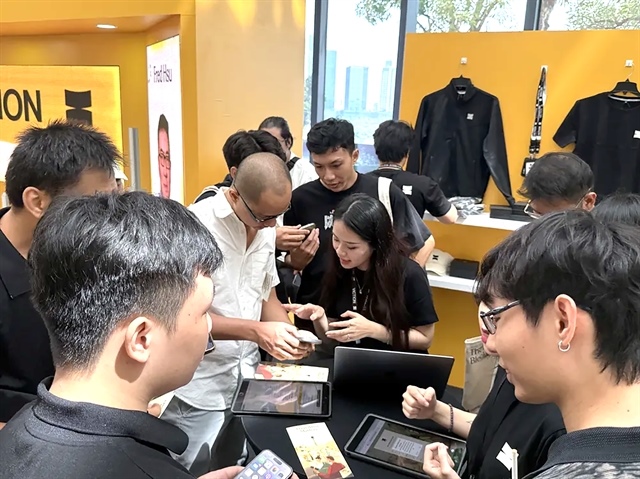
Young investors discuss crypto assets at the Conviction 2025 in HCM City. — Photo courtesy of the organiser |
As Việt Nam prepares to develop a regulated market for tokenised real-world assets (RWA), policymakers and industry experts are placing security, legal certainty and risk management at the centre of discussions, arguing that robust infrastructure will be essential to unlocking liquidity while safeguarding investors.
Bùi Hoàng Hải, vice chairman of the State Securities Commission (SSC), said blockchain technology, smart contracts and digital trading platforms are reshaping global financial markets, with tokenisation of RWA emerging as one of the most influential trends.
Tokenisation helps bridge physical and digital assets, enhance transparency, broaden access to capital and unlock resources across the economy.
"For Việt Nam, where demand for capital for infrastructure, manufacturing, innovation and digital transformation is increasing, this represents a promising development direction that requires serious research, prudent implementation and a long-term vision," he said.
However, he said that the value of an RWA token must originate from a genuine underlying asset, legally recognised ownership rights, verifiable cash flows and clearly defined responsibilities among all participating parties.
Similarly, experts and insiders said that the rapid development of digital assets must be accompanied by stronger cybersecurity, anti-money laundering measures, investor protection and an appropriate legal framework.
They noted that more than 24,000 online fraud cases, causing losses of nearly VNĐ40 trillion (US$1.5 billion) occurred between 2020 and 2025, highlighting the importance of integrating security throughout the digital asset ecosystem.
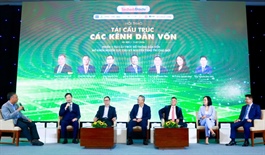
Speaking at the Vietnam RWA Summit 2026 last week, Major General Hồ Văn Hương, deputy head of the Government Cipher Committee, said that the success of tokenised real-world assets depends not only on digitising assets or conducting transactions on blockchain platforms, but also on reliable asset verification, transaction security and trusted digital identities.
He said Việt Nam should establish technical standards for blockchain platforms and asset tokenisation while strengthening digital identity infrastructure, authentication systems and cryptographic technologies.
Standardising data sources, improving verification mechanisms and enhancing coordination among regulators, technology companies, financial institutions and specialised agencies would also be necessary to build a secure and interoperable digital infrastructure, he added.
Dr Cấn Văn Lực, a member of the National Financial and Monetary Policy Advisory Council, said the rapid expansion of tokenised assets brings multiple risks, including legal uncertainty, ownership disputes, cybersecurity threats, liquidity challenges, valuation issues, money laundering and potential spillovers into the traditional financial system.
He suggested that tokenised assets should be classified and supervised according to their underlying economic characteristics and risk profiles rather than being governed under a single regulatory framework.
Service providers should segregate client assets, maintain transparent reserves, strengthen liquidity management and establish contingency plans for insolvency, while regulators should reinforce cross-border information sharing to reduce supervisory gaps.
Drawing on international experience, Francesco Ranieri Fabracci, head of Tokenisation at Tether, said the widespread adoption of stablecoins has demonstrated that financial assets can be issued and transferred efficiently on blockchain networks.
However, extending tokenisation to bonds, investment funds, real estate and commodities requires platforms capable of managing ownership rights, regulatory compliance, cybersecurity and interoperability with financial institutions.
Fabracci cited Hadron, Tether's tokenisation platform, as an example of infrastructure designed to manage the full lifecycle of tokenised assets, from issuance and administration to transfer.
He said the system integrates institutional-grade security, compliance functions, application programming interfaces (APIs) and multi-blockchain capabilities, enabling lower investment thresholds, digitised know-your-customer (KYC) processes, near-instant settlement and real-time asset tracking.
"Higher transaction speeds also mean less time to detect and respond to incidents," Fabracci said.
"Identity management, access control, transaction monitoring and compliance cannot be handled manually after a transaction has occurred. These rules need to be embedded directly into the platform architecture and the token lifecycle."
Managing risks throughout the lifecycle of tokenised assets should remain the top priority.
While regulatory models may differ across jurisdictions, experts said the fundamental principles remain consistent: clear legal frameworks, technology-neutral regulation, sound risk governance, investor protection and maintaining market integrity.
- 10:49 22/07/2026