Real-world asset tokenisation set to transform business financing
Real-world asset tokenisation set to transform business financing
Unlike the common perception that tokenised assets mainly serve as investment products for individuals, Việt Nam's model is designed to focus on corporate fundraising by converting valuable real-world assets into digital tokens.
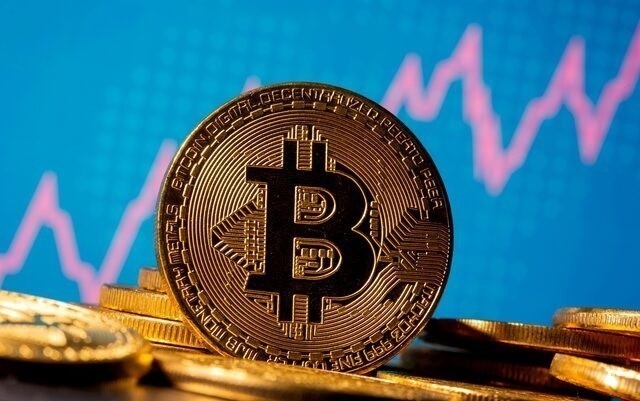
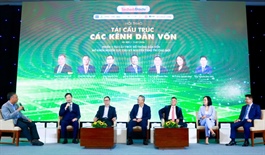
Tokenising real-world assets would provide businesses with an additional fundraising channel. — VNA/VNS Photo |
The pilot implementation of a tokenised asset trading market marks not only the launch of a new financial sector but also the foundation of an alternative capital-raising channel alongside bank lending and the stock market.
If operated effectively under a robust legal framework, the tokenisation of real-world assets (RWA) could broaden access to financing for businesses, particularly small- and medium-sized enterprises (SMEs), which have long faced difficulties in securing medium- and long-term capital.
For many SMEs, access to funding remains one of the biggest challenges.
While bank credit continues to be the primary financing source, issuing shares or corporate bonds requires companies to meet stringent requirements on scale, financial capacity and corporate governance, limiting fundraising opportunities for many businesses.
As a result, the development of a tokenised asset market is being viewed as a new financing avenue. Unlike the common perception that tokenised assets mainly serve as investment products for individuals, Việt Nam's model is designed to focus on corporate fundraising by converting valuable real-world assets into digital tokens.
According to the Ministry of Finance and the State Securities Commission of Vietnam (SSC), five companies have been approved to begin preparing the infrastructure needed to operate pilot tokenised asset exchanges.
All have submitted technology investment plans and satisfied the minimum charter capital requirement of VNĐ10 trillion (US$380 million) under current regulations. The initiative represents the first implementation step under the Government's Resolution No. 05/2025 on piloting the tokenised asset market.
At the core of the model is the tokenisation of real-world assets. Ownership rights to assets such as real estate, bonds, gold, carbon credits and agricultural commodities can be converted into blockchain-based tokens, with each token representing fractional ownership that can be traded on the market.
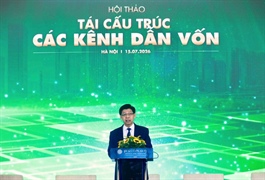
Chris Chill, senior adviser at Vietnam Prosperity Crypto Asset Exchange JSC, said tokenising real-world assets would provide businesses with an additional fundraising channel beyond traditional bank lending.
By dividing ownership rights into tradable units, enterprises can reach a broader pool of investors while reducing their dependence on bank credits, he said, adding that the model is particularly suitable for SMEs that often face difficulties accessing long-term financing.
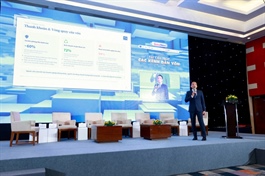
Looking further ahead, Lê Duy Bình, director of Economica Vietnam, said the digital transformation of the economy would gradually reshape corporate asset structures. In the future, corporate balance sheets will reflect not only tangible assets but also digital and tokenised assets, Bình said.
At the same time, new forms of capital contribution – lending and fundraising based on digital assets – are expected to emerge, creating additional financial instruments for innovative enterprises and SMEs.
While opening a new fundraising channel, regulators have stressed that the tokenised asset market will not be liberalised without oversight but instead developed gradually under a tightly controlled regulatory framework.
According to regulatory authorities, the pilot programme aims not only to diversify domestic funding sources but also to create conditions for attracting international capital through a transparent and legally compliant market.
Tô Trần Hòa, deputy head of the Standing Board of the Crypto Asset Market Supervision Department under the SSC, said the regulator is developing a mechanism that would allow Vietnamese enterprises to issue tokenised assets backed by real-world assets for sale to foreign investors under Resolution No. 05/2025.
If implemented effectively, this could become an additional channel for attracting international investment into Việt Nam's economy, Hòa said.
He emphasised, however, that the market remains in the pilot phase and that all issuance and trading activities will be closely monitored to provide practical experience for refining the legal framework.
Regulators also noted that the rapid development of tokenised assets presents significant challenges in risk management, including potential fraud, money laundering, market manipulation and other violations if effective supervisory mechanisms are not in place.
The Ministry of Finance is working with the Ministry of Public Security and the State Bank of Vietnam to establish an inter-agency supervisory mechanism covering all activities in the tokenised asset market. The framework will focus on information sharing, coordinated inspections, ongoing supervision and the prevention of potential operational risks.
- 09:25 17/07/2026