Remittances to HCM City down 23% in H1
Remittances to HCM City down 23% in H1
If the global economy avoids major disruptions and the current recovery trend continues in the second half of the year, HCM City’s total remittance inflows in 2026 could reach $8.6-8.9 billion.

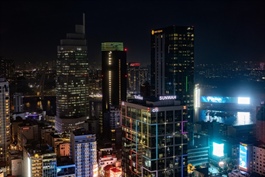
Remittances transferred through credit institutions and economic organisations total $2.03 billion in the second quarter. — VNA/VNS Photo |
Remittances to HCM City reached more than US$4 billion in the first half of 2026, down nearly 23 per cent year-on-year, as global economic headwinds, tighter immigration policies and shifting capital flows weighed on overseas Vietnamese transfers.
According to the State Bank of Vietnam (SBV)’s Region 2 Branch, remittances transferred through credit institutions and economic organisations totalled $2.03 billion in the second quarter, up 1.4 per cent from the first quarter but down 27.9 per cent from the same period last year.
Trần Thị Ngọc Liên, Deputy Director of the SBV’s Region 2 Branch, said Asia remained the largest source of remittances, contributing more than $1 billion, or 49.3 per cent of total inflows, up 9.8 per cent from the previous quarter. The Americas ranked second with $672.6 million, accounting for more than 33 per cent.
Compared with the first quarter, remittances from Asia rose 9.8 per cent, becoming the main driver of the recovery, while inflows from Europe, the Americas and Oceania all declined.
In the first six months, Asia and the Americas remained the two principal sources, accounting for more than 81 per cent of total remittances. Asia led with $1.92 billion, representing 47.5 per cent of the total, followed by the Americas with $1.38 billion, or 34.1 per cent. Oceania contributed $418.3 million, equivalent to 10.4 per cent.
According to Liên, the decline resulted from a combination of international and domestic factors. Globally, slower economic growth, a persistently strong US dollar and stricter immigration policies in several countries have affected employment, income and the ability of overseas Vietnamese to send money home.
The Americas, particularly the US – a major remittance market for HCM City – have also been affected by inflationary pressures, high living costs, labour market changes and tax policy adjustments related to certain money transfer transactions.
Domestically, the SBV’s Region 2 Branch said some investment channels have not been attractive enough to absorb remittance capital. In addition, foreign currency deposit interest rates have remained at zero per cent, prompting a number of overseas Vietnamese to keep funds abroad or shift them into other investment assets.
The branch also noted that remittance flows are increasingly being dispersed across new payment channels, resulting in a relative decline in volumes recorded through the banking system.
Despite the slowdown, the SBV’s Region 2 Branch forecasts that if the global economy avoids major disruptions and the current recovery trend continues in the second half of the year, HCM City’s total remittance inflows in 2026 could reach $8.6-8.9 billion.
Although this would still be below levels recorded in previous years, remittances are expected to recover more clearly on a quarterly basis, supported by gradually easing international interest rate conditions, exchange rate stability and continued effectiveness of banks’ remittance promotion programmes.
- 07:52 24/07/2026