Digital technology helps sustain export competitiveness
Digital technology helps sustain export competitiveness
As global markets tighten technical standards, raise logistics costs and accelerate green transition requirements, Vietnamese exporters are coming under mounting pressure to upgrade supply chains and improve competitiveness.
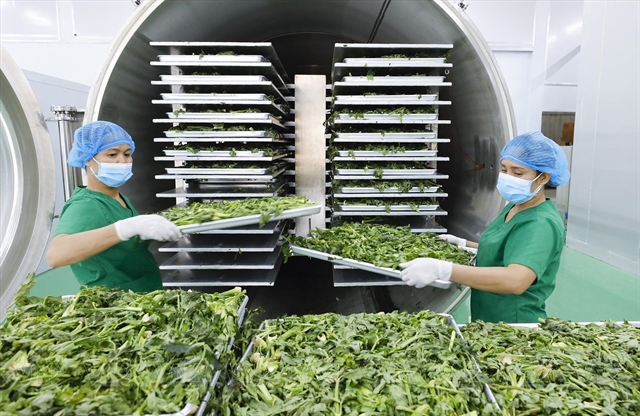
Rising logistics costs, stricter technical barriers and tougher environmental standards are forcing a structural shift in how Vietnamese exporters operate, with supply chain standardisation and digitalisation becoming essential to remain competitive in global markets.
The clearest signal is coming from China, a key market on which many Vietnamese industries still rely. Việt Nam’s Agency of Foreign Trade under the Ministry of Industry and Trade has warned businesses about China Customs’ enforcement of Decree 280, which governs the registration of foreign food manufacturers exporting to China.
According to the agency, the regulation covers 18 categories of imported food products and focuses on raw material sourcing, production and processing procedures, transport and storage conditions, compliance records and adherence to international management practices.
The move suggests China is increasingly aligning its standards with stricter global markets rather than maintaining the relatively accessible import regime seen in previous years.
For Vietnamese businesses, pressure is intensifying. Many exporters still operate under a low-cost model with limited investment in traceability systems and production standardisation.
As requirements tighten across food, agricultural products, seafood and consumer goods, traditional advantages such as geographical proximity, faster delivery and competitive pricing are gradually eroding, raising the risk of long-term stagnation.
Meanwhile, major export markets, including the EU, the US and Japan, are strengthening rules linked to the Carbon Border Adjustment Mechanism (CBAM), digital product passports and supply chain traceability.
Beyond stricter standards, many export industries are also grappling with prolonged market dependence. Despite rapid export growth, diversification has lagged, leaving businesses exposed to concentration risks.
Amid rising trade protectionism and tighter technical regulations worldwide, the strategy of putting too many eggs in one basket is becoming increasingly risky.
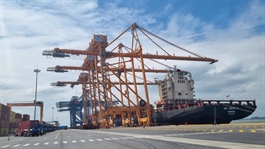
Logistics is another major pressure point. According to Việt Nam’s Trade Office in Argentina, in late May 2026, rising freight costs have become one of the biggest threats to the competitiveness of Vietnamese goods exported to Argentina and the wider South American market.
Shipping costs from Asia to South America have risen sharply due to long distances and extended transit times.
International logistics firms estimate that total container shipping costs to South America have increased by 50–80 per cent compared to pre-Red Sea crisis levels. Some 40-foot container routes have seen rises of several thousand US dollars per container.
The trade office in Argentina noted that for key sectors such as textiles, footwear and contract manufacturing, rising logistics costs are directly weakening competitiveness.
“Many Vietnamese exports to Argentina generate relatively low added value per order while competitiveness largely depends on the ability to optimise production and delivery costs,” the trade office said.
As freight rates rise, CIF prices of Vietnamese goods at Argentine ports have increased significantly, narrowing Việt Nam’s competitive advantage against suppliers closer to Latin American and North American markets.
At the same time, Argentina’s economic difficulties are pushing importers to prioritise suppliers with more stable logistics networks or shorter shipping distances to reduce financial pressure and delivery risks.
This has contributed to a sharp decline in several Vietnamese export categories to Argentina in 2026, with price-sensitive products such as footwear, garments and industrial materials particularly affected.
Economist Lê Quốc Phương said global supply chains are being restructured towards greater safety, transparency and environmental sustainability rather than relying solely on low-cost advantages.
Vietnamese enterprises therefore face not only risks linked to freight costs and exchange rate fluctuations but also growing pressure to comply with new international standards, he said, warning that companies without effective risk management systems and supply chain optimisation strategies could see profit margins eroded by rising compliance costs.
In response, many exporters have begun restructuring operations and shifting from passive production models to proactive supply chain optimisation, from sourcing materials to manufacturing, packaging and transport.
Nguyễn Văn Lê, director of Bình Minh Interior Wood Manufacturing and Export JSC, said markets such as the EU and the US are imposing increasingly strict requirements on supply chain transparency, sustainable forestry certification and intellectual property protection.
“Instead of focusing solely on delivery speed, we are now required to ensure that the entire production process complies with market standards,” he said.
The company has invested in enterprise resource planning (ERP) software to digitalise material tracking. Although the initial investment was significant, the system has helped reduce intermediate waste by around 15 per cent while improving traceability for international partners.
Experts said the green transition and supply chain upgrading process requires substantial financial and technical resources, making stronger policy support essential, particularly for small- and medium-sized enterprises.
Nguyễn Cẩm Trang, deputy director of the Agency of Foreign Trade, said the ministry is working with Việt Nam’s trade offices abroad and industry associations to develop an early warning database on trade defence measures and supply chain risks.
The ministry will also strengthen training programmes on risk management and coordinate with financial institutions to help businesses access preferential financing for production modernisation and compliance with international standards, she said.
- 16:59 04/06/2026