Border tensions could lead to end of Thai investment in Cambodia
Border tensions could lead to end of Thai investment in Cambodia
Over the months, the protracted Cambodia-Thailand border tensions have crushed business prospects with little sign of recovery. This shouldn’t be viewed as any other off-the-cuff remarks. For a long period, Thai companies have maintained a strong presence in Cambodia’s economy. Their footprint spanned across retail, banking, construction materials, food and beverages, hospitality, logistics and consumer goods distribution, which Cambodians willingly accepted and made part of their day-to-day lives. Post June 2025, all these have drastically changed, if not completely stopped, and there is little hope they may revive to their earlier footing. According to the General Department of Customs and Excise, Cambodia-Thailand trade reached approximately $925 million in the first four months of 2026, a sharp decline compared to previous periods. As political tensions have persisted, they have a corresponding impact on purchasing behaviour, business partnerships and local support for foreign-owned enterprises. Second, in several sectors, Thai businesses now face increasing competition from regional and international players. Companies from Singapore, Malaysia, Indonesia, Japan and Western markets, to name a few, have stepped in with their fast-moving consumer products and are reshaping market preferences. Also, Cambodian consumer behaviour is evolving at a pace which can only be fairly said as “gradual erosion of public confidence in Thai products and businesses operating in Cambodia”
The sustained Thailand-Cambodia border tensions and periodic closure measures since June 2025 are increasingly being assessed not only through the lens of trade disruption but also through their deeper and less visible impact on foreign investment and business presence despite the Royal Government’s support.
While official narratives on both sides have often emphasised resilience and limited economic damage, emerging trends suggest that Thai firms operating in Cambodia may be facing a gradual erosion of market position, competitiveness and investor confidence.
Unlike immediate trade shocks, investment-related consequences tend to unfold slowly and quietly. Businesses do not necessarily exit the market abruptly; instead, they adjust expansion plans, reduce risk exposure, delay reinvestment, or gradually lose market share to more stable and strategically positioned competitors.
In this context, Thai firms in Cambodia may represent what could be described as ‘hidden casualties’ if the geopolitical tension is prolonged for just a few more years.
Shift in trade volume
For decades, Thai companies have maintained a strong presence in Cambodia’s economy. Their footprint spanned retail, banking, construction materials, food and beverages, hospitality, logistics, manufacturing support and consumer goods distribution.
Thai brands have been deeply embedded in Cambodian urban and semi-urban markets, supported by geographical proximity, established supply chains and familiarity with consumer preferences.
However, the continuity of this advantage depended heavily on stable cross-border conditions. The recurring border disruptions since 2025 have introduced uncertainty into what was previously a highly integrated economic corridor.
Even when trade flows continue, unpredictability in border operations, logistics delays and political messaging can weaken long-term investor confidence and increase operational costs.
According to trade balance statistics from the General Department of Customs and Excise (GDCE), Cambodia-Thailand trade reached approximately $925 million in the first four months of 2026, representing a notable decline compared to previous periods.
While trade remains substantial, the downward trend reflects a broader adjustment in bilateral economic relations. More importantly, the shift is not only about trade volume but also about structural dependency and market influence.
Thai firms operating in Cambodia are particularly vulnerable to reputational and confidence effects arising from prolonged geopolitical tension. Investment sustainability depends not only on profitability but also on predictability, regulatory stability and consumer sentiment.
When political tensions persist, even indirectly, they can influence purchasing behaviour, business partnerships and local support for foreign-owned enterprises.
In several sectors, Thai businesses now face increasing competition from regional and international players. Companies from Singapore have expanded their role in logistics, finance and services, leveraging their regional hub position.
Similarly, Malaysian companies have expanded in halal food production, retail and mid-level consumer goods, while Indonesian exporters have increased their presence in fast-moving consumer products. These shifts indicate that Cambodia’s market is becoming more diversified and competitive.
This diversification process is further reinforced by Cambodia’s broader external trade strategy. The country has been actively increasing economic engagement with multiple partners to reduce overreliance on any single market.
Trade with Japan reached around $967 million in the first four months this year, followed by Singapore at $775 million, Malaysia at $535 million, Indonesia at $425 million and Canada at $407 million. These figures highlighted a growing multipolar trade structure in which Cambodia is expanding commercial relationships beyond traditional partners.
At the same time, Cambodia’s import adjustments in response to external tariff pressures have also contributed to shifting trade dynamics. Imports from the US reportedly increased significantly in 2026 as part of broader efforts to balance trade relationships.
This reflected a policy environment increasingly shaped by diversification and strategic balancing rather than reliance on historical trading partners. Within the evolving structure, Thai firms face a more complex competitive landscape. The challenge is no longer simply about price competitiveness or geographic advantage.
Instead, it involved maintaining relevance in a market where supply chains, investment flows, and consumer preferences are gradually broadening. Once Cambodian importers and distributors establish alternative supply relationships, those networks often persist due to efficiency, stability and reduced political risk.
The concept of ‘hidden casualties’ is particularly relevant in this context. Unlike industries that experience immediate collapse, Thai firms may continue operating but with reduced growth potential, lower market expansion rates or shrinking influence in key sectors.
Some companies may maintain their presence but lose strategic positioning to competitors that are perceived as more stable or politically neutral. The impact is also psychological and strategic as business confidence plays a critical role in investment decisions.
If companies perceive prolonged uncertainty along the border, they may adopt a more cautious approach to capital allocation, expansion projects or long-term commitments. Over time, this can gradually shift market leadership without dramatic exit events.
The role of infrastructure and logistics further shapes this transition. Cambodia’s increasing use of maritime routes and regional ports, including through Sihanoukville Autonomous Port (PAS), allowed importers to bypass traditional land-border dependencies. This reduced Thailand’s historical logistical advantage, particularly for goods that previously relied on cross-border trucking and short-distance distribution networks.
It is also important to consider that Cambodian consumer behaviour is evolving alongside these structural changes. While Thai products remain widely recognised and consumed, increasing exposure to Japanese, Malaysian, Indonesian and Western brands is gradually reshaping market preferences.
Consumer diversification does not necessarily imply rejection of Thai goods, but it has reduced exclusive dependence on them. From a political economy perspective, the situation illustrates how geopolitical tensions can influence investment ecosystems without direct regulatory barriers.
Even in the absence of formal restrictions on foreign ownership or business operations, sustained uncertainty can alter market dynamics in ways that disadvantage previously dominant players.
Consumer behaviour
Nevertheless, it is important to recognise that Thai firms are not disappearing from the Cambodian market. Their presence remains significant, and in many sectors, they continue to hold competitive advantages. However, the central issue is relative influence rather than absolute presence.
The concern is whether Thailand can maintain its historical level of dominance in the Cambodian investment landscape under conditions of prolonged geopolitical tension and increasing regional competition.
Speaking to Khmer Times, Chey Tech, a socio-economic and geopolitical analyst, said that one of the less visible but potentially more damaging consequences of the prolonged Thailand-Cambodia border tensions is the gradual erosion of public confidence in Thai products and businesses operating in Cambodia.
“Economic disputes and geopolitical tensions often influence consumer behaviour, particularly when national sentiment becomes closely linked to economic decisions. While trade figures can measure immediate economic impacts, shifts in public perception may have longer-lasting effects on foreign businesses,” he said.
Tech noted that many Cambodian consumers have increasingly sought alternatives to Thai products since the border dispute escalated, creating opportunities for suppliers from other countries to expand their presence in the Cambodian market.
“Consumer sentiment can become an important economic factor during periods of political tension. Once consumers become accustomed to alternative products and brands, it may be difficult for former market leaders to fully regain their previous position,” he said.
Tech argued that the implications extend beyond trade and could eventually affect investment decisions as companies considering expansion plans typically assess market stability, public perception and long-term business prospects. “Prolonged uncertainty may encourage some firms to adopt a more cautious approach toward future investments,” he said.
He observed that several sectors traditionally associated with strong Thai commercial participation, including agro-industry, animal feed, construction materials and consumer goods, are already facing increasing competition from suppliers originating from other regional economies.
“At the same time, Cambodian businesses are exploring opportunities to strengthen domestic production and broaden their international partnerships,” he noted.
According to Tech, the growing diversification of Cambodia’s trade and investment relationships may gradually reduce the dominance previously enjoyed by Thai businesses.
“While Thai firms continue to maintain a significant presence in Cambodia, the competitive environment is becoming increasingly challenging as new market players enter and expand,” he said.
He stressed that the risk facing Thai companies is not necessarily an abrupt withdrawal from Cambodia but rather a gradual loss of market share, influence and growth opportunities over time.
“Such changes often occur incrementally and may not immediately appear in investment statistics or business performance reports.”
He explained that although Thai businesses remain important contributors to Cambodia’s economy, prolonged political tensions create uncertainty that competitors can take advantage of.
“If alternative suppliers, investors and brands continue gaining acceptance among Cambodian consumers, some of the market space traditionally occupied by Thai firms could become increasingly difficult to recover,” Tech said.
He added that the longer tensions persist, the greater the likelihood that temporary adjustments in trade, investment and consumer behaviour could evolve into permanent structural changes within Cambodia’s economic landscape.
Erosion of market share
Chea Chandara, President of the Logistics Supply Chain and Brokers Business Association in Cambodia (LOSCBA), told Khmer Times that despite a year of border tensions between the two neighbouring countries, many Thai investors continue to operate in Cambodia.
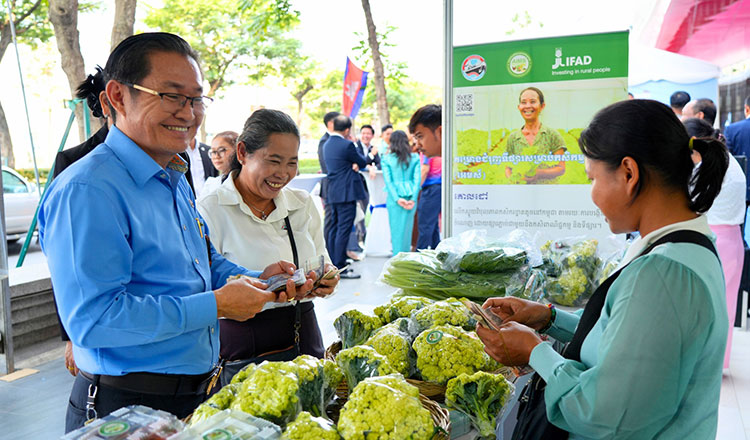
Chandara described the boycott of Thai-related products and businesses as a form of consumer-driven economic response that has gained momentum over the past year. He noted that many Cambodians believe supporting domestic products can strengthen local industries and create greater economic opportunities for local producers.
“Many consumers see the purchase of Cambodian-made products as a contribution to national economic development. This growing preference for local goods is helping domestic enterprises expand their market presence and competitiveness,” he said.
The LOSCBA President emphasised that some Thai firms have adapted to the changing business environment by appointing representatives of other nationalities to manage operations and public-facing activities.
“Businesspeople are highly adaptable. They constantly assess risks and adjust their strategies according to market conditions. In many cases, they are already preparing responses before challenges become visible to the public,” he said.
When asked which industries face the highest risks, Chandara said that businesses with strong public visibility are more vulnerable than smaller firms operating outside the public spotlight. “Well-known brands and companies are more likely to attract attention from consumers who actively support the boycott movement,” he noted.
He added that some companies may restructure ownership arrangements or bring in partners from different nationalities, allowing them to rebrand or reposition themselves in the market. “Such adjustments are common business strategies used to reduce reputational risks and maintain operations during periods of uncertainty.”
However, the LOSCBA President stressed that one of the clearest indicators of investor sentiment is the absence of significant new Thai investment projects over the past year.
“The lack of new investment suggests that investors are taking a cautious approach while monitoring developments. Existing businesses may continue operating, but expansion plans and new capital commitments often depend on confidence in long-term stability and predictability,” he said.
According to Chandara, if border tensions persist, the greatest challenge for Thai businesses may not be maintaining current operations, but preserving future growth opportunities in an increasingly competitive Cambodian market.
The prolonged Thailand-Cambodia border conflict should not be viewed solely as a trade disruption event. Its more significant impact may lie in the gradual reshaping of investment patterns, business confidence and competitive positioning within Cambodia’s economy.
While many Thai firms remain active in Cambodia and continue adapting to changing market conditions, concerns are growing over the absence of significant new Thai investment and the increasing diversification of Cambodia’s trade and investment partnerships.
At the same time, shifting consumer preferences, growing support for domestic products and the expansion of regional competitors are creating new challenges for businesses that have traditionally enjoyed strong market influence.
Thai companies are unlikely to disappear from the Cambodian market in the near future. However, if border tensions persist, they may face a gradual erosion of market share, brand influence and growth opportunities as businesses and consumers increasingly turn to alternative suppliers and investors from other countries.
If current trends continue, the long-term consequence may not be the abrupt withdrawal of Thai businesses, but rather a steady decline in Thailand’s economic influence in Cambodia. In an increasingly diversified and competitive marketplace, Thai firms could gradually transition from dominant players to one among many competitors vying for opportunities in the Kingdom’s evolving economy.
- 08:00 08/06/2026