Việt Nam eyes deeper access to South Korea beyond traditional exports
Việt Nam eyes deeper access to South Korea beyond traditional exports
Experts said one of the most effective new approaches for Vietnamese firms is to leverage the extensive network of South Korean manufacturers already operating in Việt Nam.
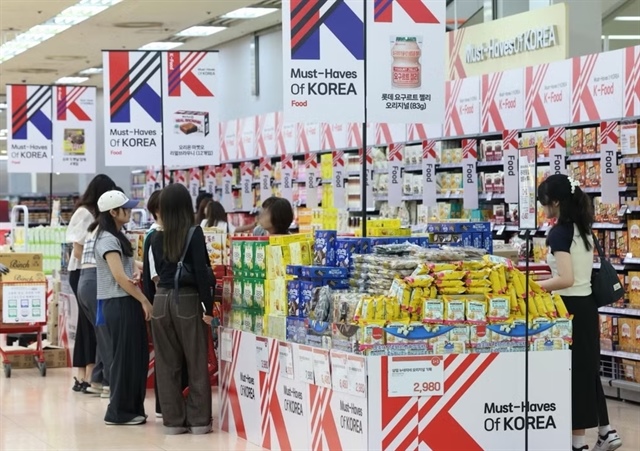
Booths displayed Vietnamese products at a supermarket in Seoul. — YONHAP/VNA Photo |
Enterprises are being encouraged to adopt new market-entry strategies and deepen industrial cooperation with South Korean partners as trade ties between the two countries continue to expand and supply chains become increasingly integrated across Asia.
Experts said South Korea is no longer only a destination for traditional Vietnamese exports such as seafood, textiles and agricultural products, but is also emerging as a strategic market for higher-value industrial goods, supporting industries and technology-linked manufacturing.
The discussions came during a series of presentations on Việt Nam-South Korea industrial and trade cooperation on May 14, where South Korean and Vietnamese trade representatives outlined opportunities for Vietnamese businesses to strengthen their foothold in the South Korean market through supply chain integration, digital trade platforms and industrial partnerships.
According to the Korea International Trade Association (KITA), Việt Nam has become one of South Korea's most strategic economic partners in Southeast Asia, supported by extensive investment flows and the growing presence of South Korean corporations in Việt Nam.
Kang Heon Woo, chief representative of the KITA Office in Hà Nội, said that Việt Nam hosts more than 10,000 South Korean companies, many of which continue to rely heavily on imported materials and components from South Korea, China and other markets due to difficulties in identifying qualified local suppliers.
"This creates a strategic opportunity for Vietnamese enterprises to enter South Korean supply chains directly from Việt Nam before expanding exports into Korea itself," Heon Woo said.
Data showed that Việt Nam has rapidly climbed among South Korea's top import partners. By March, Việt Nam ranked fourth among South Korea's largest importing countries, compared with seventh place in 2024.
Việt Nam's major export items to South Korea include electronics, machinery components, textiles, agricultural products and processed consumer goods, reflecting a shift from labour-intensive exports towards more technology-oriented manufacturing.
Experts said one of the most effective new approaches for Vietnamese firms is to leverage the extensive network of South Korean manufacturers already operating in Việt Nam.
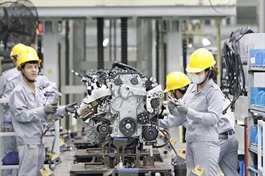
Major South Korean conglomerates including Samsung, LG, POSCO, Hyosung and Hyundai have built large-scale manufacturing ecosystems in the country, supported by hundreds of suppliers and satellite enterprises.
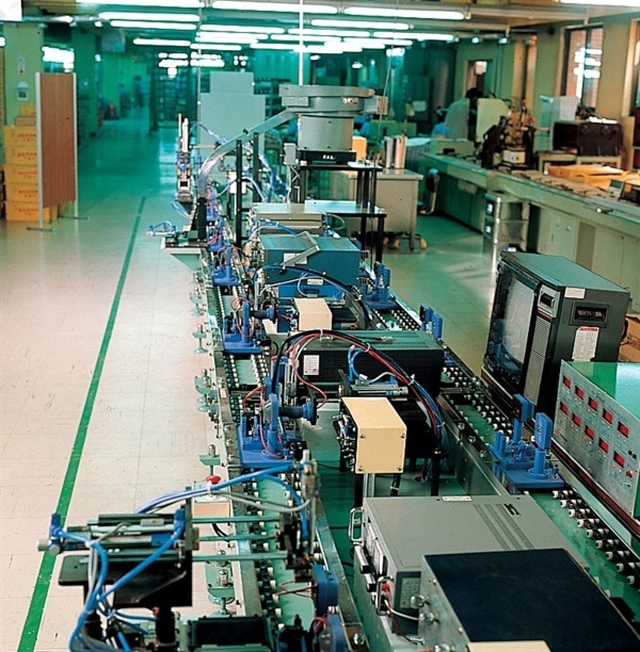
Samsung Electronics and its affiliates alone are connected with around 1,000 partner companies in Việt Nam, while more than 500 Korean textile and apparel firms have established operations nationwide.
Industry specialists said this ecosystem offers Vietnamese suppliers opportunities to participate in localisation programmes and gradually become part of South Korean corporations' regional and global procurement systems.
"South Korean companies in Việt Nam are seeking better cost efficiency and logistics optimisation, but many still struggle to identify reliable domestic suppliers," Bok Dug Gyou, deputy director of the Korea Trade-Investment Promotion Agency (KOTRA), said.
Rather than focusing solely on exporting finished products directly into South Korean retail markets, Vietnamese enterprises were advised to position themselves as suppliers of industrial materials, supporting-industry products and intermediate goods within South Korean-led manufacturing networks.
Booths displayed Vietnamese products at a supermarket in Seoul. — YONHAP/VNA Photo |
Trade representatives also highlighted the growing importance of data-driven market research and digital trade tools in accessing the Korean market.
The representative of KITA encouraged Vietnamese companies to utilise South Korea's trade statistics systems, including K-Statistics and Korea Customs Service databases, to identify import demand trends, product categories and shifts in sourcing patterns before approaching buyers.
Heon Woo also promoted the use of TradeKorea, a global B2B platform designed to connect exporters with Korean and international buyers through online product promotion and business matching services.
"South Korean buyers increasingly expect suppliers to provide detailed company information, certifications and quick responses through digital channels," he said.
To strengthen competitiveness, Vietnamese firms were advised to improve compliance standards, product traceability and production flexibility while adopting a longer-term approach to relationship building in the South Korean market.
Another strategy discussed at the event involved developing industrial value chain maps and company directories to improve transparency and help Korean investors identify potential Vietnamese suppliers more efficiently.
The proposed value-chain mapping programme would categorise Vietnamese businesses according to the Vietnam Standard Industrial Classification (VSIC), business activities and tax registration information, creating a more structured supplier database for South Korean enterprises seeking local partnerships.
South Korean trade and investment agencies also proposed expanding cooperation in technical workforce training, research and development, technology transfer and supporting-industry incentives to help Vietnamese firms move further up the value chain.
The event additionally underscored opportunities in sectors such as electronics, automotive components, machinery, chemicals, distribution services and cultural content industries, where South Korean investment in Việt Nam has grown rapidly over the past decade.
KITA Hà Nội office said it would continue supporting Vietnamese enterprises through buyer matching, networking consultations and business meeting coordination as companies from both countries seek to deepen trade and industrial ties.
- 11:46 15/05/2026