Experts seek solutions to control shrimp diseases under changing conditions
Experts seek solutions to control shrimp diseases under changing conditions
Việt Nam’s shrimp farming industry is facing mounting challenges from dangerous diseases and climate related environmental changes, prompting experts and businesses to call for a shift towards proactive disease prevention and sustainable farming practices.
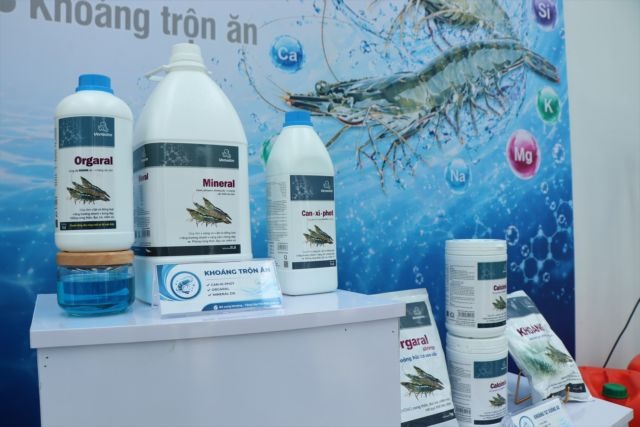
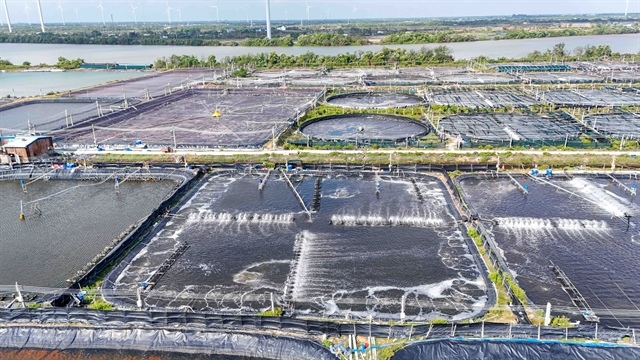
Microbial probiotics are considered by experts to be one of the safest and most effective alternatives to antibiotics, helping improve disease resistance in farmed shrimp. — VNA/VNS Photo |
Microbial probiotics are considered by experts to be one of the safest and most effective alternatives to antibiotics, helping improve disease resistance in farmed shrimp. — VNA/VNS Photo
CẦN THƠ — Việt Nam’s shrimp farming industry is facing mounting challenges from dangerous diseases and climate related environmental changes, prompting experts and businesses to call for a shift towards proactive disease prevention and sustainable farming practices.
Industry specialists warned that diseases such as acute hepatopancreatic necrosis disease, white spot syndrome and Enterocytozoon hepatopenaei (EHP) are continuing to threaten the livelihoods of millions of shrimp farmers as well as the country’s shrimp export earnings.
Tạ Văn Hùng, a shrimp farmer with 15 years of experience in Vĩnh Hải Ward of Cần Thơ City, said EHP, white spot disease and red body syndrome were among the biggest concerns for farmers today, causing severe financial losses in recent years.
Professor Vũ Văn Út, rector of the College of Aquaculture and Fisheries under Cần Thơ University, said shrimp diseases not only caused immediate economic losses but also silently reduced long-term production efficiency.
According to Út, disease outbreaks are increasingly linked to environmental fluctuations driven by climate change.
Changes in temperature, salinity, pH levels and water quality have created favourable conditions for pathogens to develop while weakening the natural resistance of shrimp.
Experts said the shrimp farming sector needs to move away from a “passive response” towards “active prevention”, while prioritising sustainable development based on ecological balance instead of pursuing growth at all costs.
From a business perspective, Trịnh Trung Phi, deputy general director for technical operations and commercial shrimp at Việt Úc Group, said shrimp farming was becoming increasingly difficult due to persistent disease risks and deteriorating water quality.
Rather than waiting until disease outbreaks occur, farmers should focus on risk management from the very beginning, including broodstock selection, high quality seed production, biosecurity systems and early disease detection, he said.
Phi noted that pathogens can quickly reappear in farming water even after chlorine treatment.
To improve efficiency, the company has adopted combined chemical technologies for water treatment, helping reduce treatment costs from VNĐ3,000-4,000 per cubic metre to around VNĐ800-900.
The company has also reduced stocking density from 300-400 shrimp per square metre under super intensive farming models to around 200-250 shrimp per square metre in order to improve farming stability.
According to Phi, shrimp seed quality accounts for around 40 per cent of a farming crop’s success despite representing less than 10 per cent of total investment costs.
Disease free and traceable shrimp seed can help shorten farming cycles, reduce costs and limit risks from dangerous diseases such as translucent post larva disease (TPD) and EHP.
With improved seed quality, shrimp can now reach a size of 60 shrimp per kilogramme after just 60 days of farming, with survival rates exceeding 80 per cent and feed conversion ratios maintained at 1.2-1.3, he added.
Experts also stressed the growing importance of probiotics and biosecurity measures in sustainable shrimp farming.
Microbial probiotics are considered by experts to be one of the safest and most effective alternatives to antibiotics, helping improve disease resistance in farmed shrimp. — VNA/VNS Photo |
Dr Lê Thị Hải Yến, deputy director of the R&D Centre at Vemedim Corporation, said probiotics were increasingly being used as an alternative to antibiotics to improve shrimp immunity and control harmful bacteria.
Popular microbial groups include Bacillus bacteria, which can survive harsh environmental conditions and suppress harmful pathogens, lactic acid bacteria that support digestion and nutrient absorption, and photosynthetic microorganisms that help treat toxic gases in shrimp ponds.
Lê Thành Cường from Nha Trang University recommended farmers use high dose probiotics regularly to suppress Vibrio bacteria instead of relying on antibiotics, as many bacterial strains have already developed drug resistance.
He also emphasised the importance of antibiotic susceptibility testing to ensure appropriate treatment when antibiotics are genuinely needed.
To support the long-term sustainability of the shrimp farming industry, Professor Trương Quốc Phú from Cần Thơ University proposed an integrated disease prevention strategy based on four key factors: clean water, quality shrimp seed, proper nutrition and scientific farm management.
He also called for a change in wastewater management practices. Instead of discharging untreated wastewater directly into rivers and canals, farmers should apply biological treatment methods to recycle water or ensure it is safe before release.
The use of aquatic plants and beneficial bacteria to decompose waste was considered one of the most environmentally friendly, effective and low-cost solutions, he said.
The issues were discussed at an aquaculture science conference on shrimp health management and disease control held at Cần Thơ University on May 6, where scientists, experts and businesses exchanged solutions to address disease threats facing Việt Nam’s shrimp industry.
- 08:14 12/05/2026