Rice sector needs sustainable development to deal with new challenges
Rice sector needs sustainable development to deal with new challenges
In the first four months of the year, the total exports reached 3.3 million tonnes, valued at $1.57 billion, representing a year-on-year decline of 2.3 per cent in volume and 11.1 per cent in value.
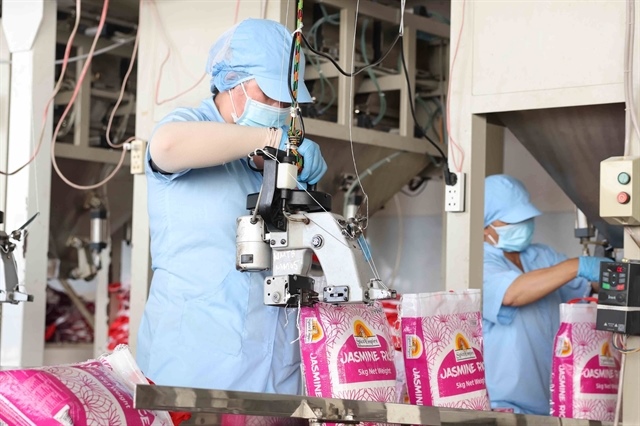
Rice products are packaged for export at a factory of Tấn Vương Food Co, Ltd, An Giang Province. VNA/VNS Photo |
Recent volatility in paddy prices has underscored the urgent need to reorganise the rice value chain towards greater stability and sustainability.
According to data from the Ministry of Agriculture and Environment, rice exports in April were estimated at 1.1 million tonnes, equivalent to nearly US$493 million.
In the first four months of the year, the total exports reached 3.3 million tonnes, valued at $1.57 billion, representing a year-on-year decline of 2.3 per cent in volume and 11.1 per cent in value.
The average export price was approximately $468.4 per tonne, down 9 per cent year-on-year.
The Philippines remained Việt Nam’s largest export market, accounting for 48.5 per cent of total shipments, followed by China and Ghana. Exports to China recorded strong growth, while several African markets saw a marked decline.
Đỗ Hà Nam, chairman of the Việt Nam Food Association, noted that Việt Nam’s rice export capacity has continued to strengthen, with both prices and volumes at times matching or even surpassing those of Thailand.
However, sharp fluctuations in domestic paddy prices have revealed a persistent paradox. At one point, prices fell to just over VNĐ5,000 per kilogramme, discouraging farmers from harvesting and leaving ripe crops uncollected in the fields. Shortly afterwards, prices rebounded rapidly, but supplies among farmers had already been depleted.
According to Nam, these developments point to a lack of effective regulatory mechanisms within the rice value chain, particularly in distribution and temporary storage.
Farmers are often forced to sell at low prices due to limited storage capacity, while price gains later in the cycle tend to benefit intermediaries rather than producers.
A key contributing factor is Việt Nam’s heavy reliance on the Philippine market, which accounts for nearly half of its rice exports. Last year, the country’s decision to suspend imports for the final four months led to domestic stockpiles exceeding one million tonnes.
In early 2026, the Philippines initially announced a demand of around 300,000 tonnes, yet actual contracts later exceeded two million tonnes. Such rapid and unpredictable shifts have left both farmers and exporters vulnerable, fuelling price instability.
At the same time, other export markets are showing encouraging signs. China has emerged as a fast-growing destination, importing around 500,000 tonnes in the first four months of the year. Demand in Africa is also increasing, particularly for fragrant rice varieties – a segment where Việt Nam holds a competitive advantage.
Storage constraints
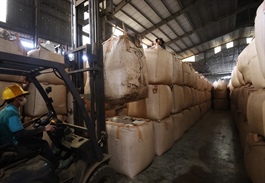
However, Nam emphasised that most farmers now lack access to drying and storage facilities, forcing them to sell immediately after harvest and often at unfavourable prices.
Meanwhile, only traders possess the greater capacity to purchase and store rice. As a result, a significant share of profits from price fluctuations accrues to intermediaries rather than producers.
Drawing on experiences from other agricultural sectors such as coffee and pepper, Nam argued that farmers with the ability to store produce and choose when to sell are better positioned in the market. Investment in drying systems and storage facilities at the household or cooperative level is therefore crucial.
In addition, appropriate financial mechanisms are needed to enable farmers to access credit using paddy as collateral, or to deposit their produce in enterprise or bank-managed warehouses. Improved storage capacity would reduce the pressure to sell during price downturns, contributing to greater market stability.
Encouragingly, Việt Nam’s rice product mix is shifting towards higher quality. The share of low-grade white rice is declining, while fragrant rice varieties are gaining popularity in international markets. This transition provides a foundation for enhancing export value over the long term, in line with the strategy of prioritising quality over quantity.
However, capitalising on this opportunity will require continued efforts to diversify export markets and reduce dependence on any single destination. Expanding into China, Africa and other potential markets will help mitigate risks and stabilise demand.
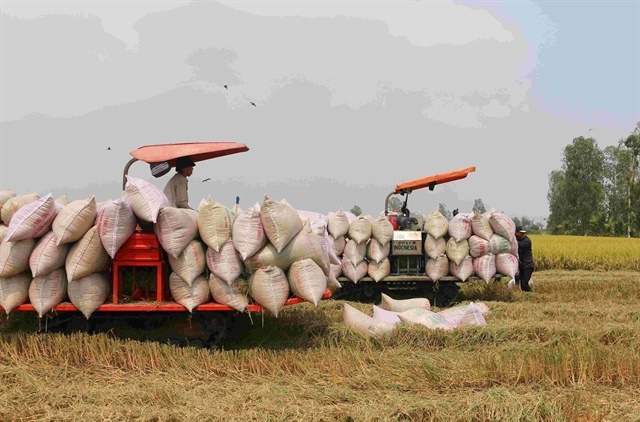
Rice products are packaged for export at a factory of Tấn Vương Food Co, Ltd, An Giang Province. VNA/VNS Photo |
Policy and market reforms
Beyond market dynamics, regulatory and policy constraints also require attention. One notable issue is payment practices. Farmers largely rely on cash transactions, while financial regulations impose limitations on such methods, making it difficult for enterprises to purchase directly and increasing reliance on intermediaries.
Nam suggested introducing more flexible mechanisms alongside efforts to expand financial services in rural areas, thereby enabling more transparent and efficient transactions.
Export policy is another area requiring careful consideration. Previous regulations on minimum stockpiles and linkages with farmers helped stabilise supply. Removing these requirements entirely could risk weakening supply chain connections, leaving farmers without reliable market support.
In practice, rice farmers remain among the most vulnerable groups, facing low incomes, rising costs and market volatility, while the area under rice cultivation continues to decline.
In this context, Nam stressed the need for a long-term policy framework that balances the interests of farmers, businesses and the state.
By 2030, Việt Nam's rice exports may fall to around four million tonnes, reflecting a strategic shift from volume to value.
Overall, the challenges facing Việt Nam’s rice sector extend beyond market access to the organisation and governance of the value chain itself.
A comprehensive approach – combining improved storage capacity, market diversification, enhanced payment systems and coherent policy frameworks – will be essential to ensure more stable and sustainable development.
- 07:15 07/05/2026