Unclogging lab bottlenecks: A strategic lifeline for durian exports
Unclogging lab bottlenecks: A strategic lifeline for durian exports
A sharp mismatch between record-breaking durian yields and stagnant testing infrastructure is paralysing Việt Nam’s export momentum.
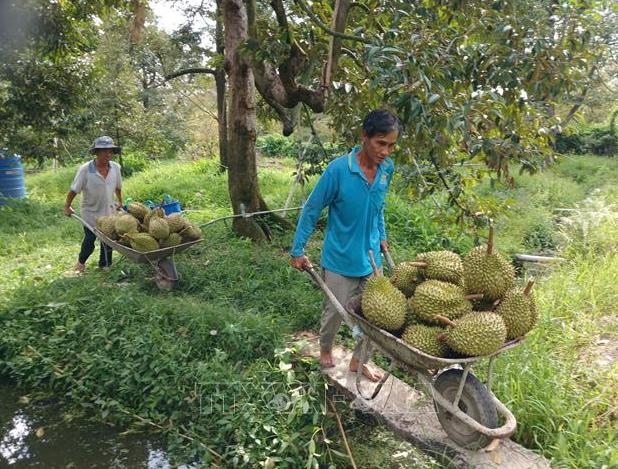
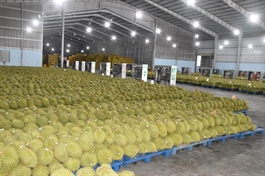
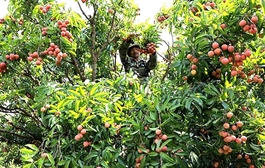
Farmers in Đồng Tháp Province harvest durians during the peak season. Despite high yields, many growers are facing losses due to falling market prices. — VNA/VNS Photo Minh Trí |
A sharp mismatch between record-breaking durian yields and stagnant testing infrastructure is paralysing Việt Nam’s export momentum.
As laboratory bottlenecks trigger an export standstill, the resulting domestic glut has sent prices plummeting to historic lows, leaving Mekong Delta growers to bear the brunt of severe financial losses.
In early May, the atmosphere at major durian hubs in Đồng Tháp Province is heavy with anxiety.
Prices for the popular Ri6 variety have plummeted to VNĐ20,000-30,000 (US$0.8-1.2) per kg, less than half of last year's price and significantly below the average production cost of VNĐ40,000 ($1.6) per kg.
Dương Văn Đây, a veteran farmer in the province’s Ngũ Hiệp Commune, expressed his frustration as he looked at his 10-tonne harvest.
"The fruit doesn't wait for the laboratory. When the peak season hits, testing centres become overloaded or stop accepting samples.
"We are forced to dump our high-quality fruit on roadsides for pennies just to clear the stock," he said.
Laboratory bottleneck
China has recently tightened inspections on heavy metal residues, particularly Cadmium and Auramine O. Data from the Mekong Delta showed that nearly 30 per cent of tested durian and jackfruit samples exceeded Cadmium limits, prompting many exporters to scale back purchases to avoid trade risks.
Exporters also face logistical disruptions during the peak harvest season, as delays at testing laboratories can interrupt procurement and customs clearance procedures.
At the same time, Vietnamese durian is under increasing competitive pressure from Thailand’s Monthong variety, which continues to enjoy stronger brand recognition in the Chinese market.
Faced with the risk of a widespread industry collapse, the local government has identified localising laboratory capacity and controlling quality at the source as top priorities.
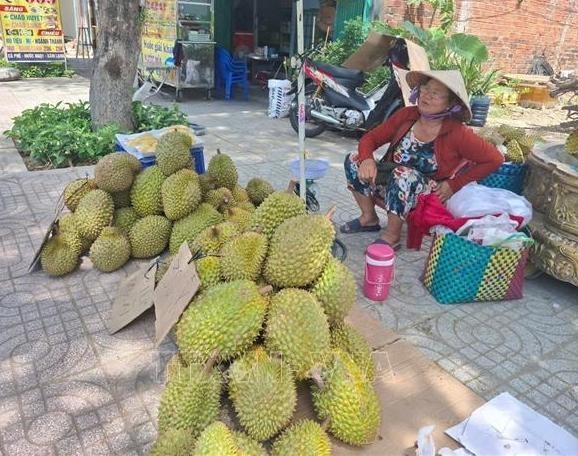
Farmers in Đồng Tháp Province harvest durians during the peak season. Despite high yields, many growers are facing losses due to falling market prices. — VNA/VNS Photo Minh Trí |
The province has proposed investing in local testing facilities for Cadmium and Auramine O residues to shorten waiting times for exporters and reduce dependence on external laboratories.
Authorities are also planning to expand field-level testing at orchards to help classify risk levels earlier and improve trader confidence during the harvest season.
At the farm level, growers are being encouraged to adjust soil pH levels and increase the use of organic fertilisers to reduce heavy metal absorption from soil and water sources.
Võ Phương Thủy, director of the province’s Department of Industry and Trade, proposed a strategic breakthrough: partnering with Chinese authorities for on-site joint inspection and certification to streamline the export process.
“This would provide Vietnamese durian with a ‘green channel’ for faster customs clearance.”
Đồng Tháp’s 2030 roadmap to reach 38,000 hectares of durian reflects an ambitious growth strategy.
However, the province maintains that becoming a sustainable 'billion-dollar' hub depends on overcoming logistical hurdles in testing and ensuring uniform quality, allowing the fruit to confidently penetrate high-standard global markets.
- 15:19 07/05/2026