American burger chains struggle to adapt in Việt Nam's price-sensitive market
American burger chains struggle to adapt in Việt Nam's price-sensitive market
After years of aggressive expansion, several American burger chains are scaling back in Việt Nam, struggling to compete in a market driven by local tastes, price sensitivity and fierce competition.
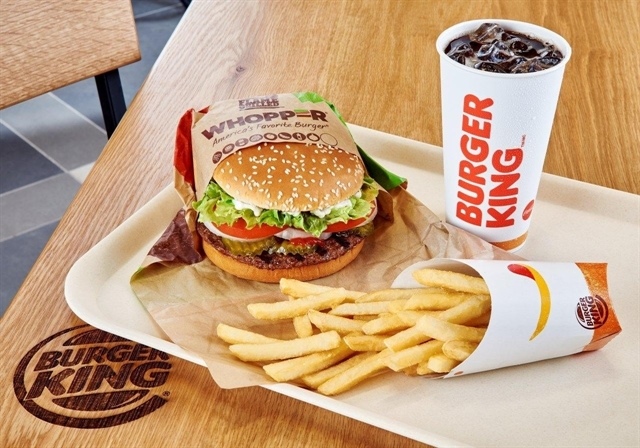
Burgers, a staple of American fast food, have yet to become an everyday meal choice for many Vietnamese consumers. — Photo courtesy of Burger King |
American-style burger chains are finding Việt Nam a far tougher market than expected, as local diners continue to favour familiar flavours, affordable meals and eating habits deeply rooted in rice, noodles and street food culture.
After more than a decade of expansion, several Western fast-food chains are shifting from aggressive growth to consolidation, as intensifying competition and deeply entrenched local eating habits make it harder to win over Vietnamese consumers, baodautu.vn reported.
Burger King illustrates the trend. The chain entered Việt Nam in 2012 with plans for rapid expansion through franchising but now operates only a handful of outlets in Hồ Chi Minh City, having largely exited other markets, including Hà Nội. Former locations in districts, such as Tây Hồ, Ba Đình and Cầu Giấy, have closed in recent years.
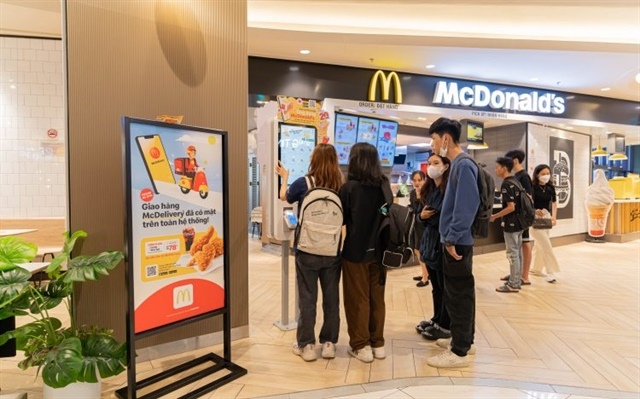
In contrast, McDonald’s has expanded cautiously in Việt Nam while KFC and Lotteria have leveraged early entry and localised menus to capture market share. Burger King, by comparison, has struggled to establish a sustainable business model.
Industry analysts said the core issue lies in product-market fit. Burgers, a staple of American fast food, have yet to gain traction as an everyday meal choice among Vietnamese consumers, who typically favour more filling and affordable options such as rice dishes, noodles and phở.
Even within the fast-food segment, fried chicken has become the dominant category, supported by established consumer habits and competitive pricing. Burgers, often priced higher, have struggled to build the same level of repeat demand.
Operational challenges have compounded the issue, according to experts. Burger King initially focused on premium locations including airports, shopping malls and central urban streets. However, high rental costs combined with inconsistent foot traffic have weighed on profitability.
By comparison, McDonald’s has adopted a more flexible approach, combining flagship outlets with drive-through formats that align with changing urban consumption patterns.
Rising operating costs in major cities such as HCM City and Hà Nội have further increased pressure on large-format, high-rent retail models.
Burgers, a staple of American fast food, have yet to become an everyday meal choice for many Vietnamese consumers. — Photo courtesy of Burger King |
Price pressure
Pricing and positioning present an additional challenge. A typical burger meal can cost around VNĐ200,000 (US$8), which is relatively high for many consumers.
For Tiến Trung, a Hà Nội-based travel company manager, eating at McDonald’s or Burger King is more of an experience than a necessity.
He said comparable meals at local eateries were often cheaper and more filling.
Meanwhile, Tú Anh, a bank employee in Hà Nội, eats burgers occasionally for a change but for regular meals she prefers rice or noodles as they suit her taste and keep her full longer.
The premium image has become a double-edged sword for international burger chains in Việt Nam, creating differentiation while narrowing their customer base, industry analysts say.
Việt Nam’s per capita income remains moderate by regional standards, complicating fast-food spending decisions. When a burger meal costs the equivalent of two or three street food dishes, most consumers opt for cheaper, more familiar options. Increasingly value-conscious diners are pushing chains to either lower prices or enhance portion sizes to justify the cost.
Global players have begun to adjust. McDonald’s has phased out older menu items in favour of upgraded versions, introduced rice-based offerings, promoted value combos and signalled plans to expand into tourist destinations such as Phú Quốc, Đà Nẵng and Nha Trang.
Dan Ta, director of development at McDonald’s Vietnam, said the company was exploring strategies to improve its image, pricing and expansion strategy, including a stronger focus on second-tier cities.
He told Nikkei Asia that McDonald’s was currently perceived as a premium establishment, but his company wanted to be able to serve a wider range of customers.
New entrants
Despite the challenges, Việt Nam continues to attract new investment in the segment. Shake Shack, a premium burger brand from the US, last year announced plans to enter the market, targeting 15 outlets by 2035.
Việt Nam will become its fifth Southeast Asian franchising market after Singapore, the Philippines, Malaysia and Thailand, the article says.
According to the Ministry of Industry and Trade, Shake Shack Enterprises International, LLC has registered franchising operations in Việt Nam, covering restaurant services linked to brands such as ShackBurger and Shake Shack.
The move follows the company’s expansion into Bangkok in 2023 and signals concrete progress in its plans in Việt Nam, although a launch date for its first outlet has not been disclosed.
Analysts say the developments underscore that Việt Nam’s challenge is not a lack of demand but the need for the right market approach.
Consumers continue to prioritise value, convenience and familiar flavours while dining out also serves a social function. In this context, expansion strategies for American fast-food chains are shifting beyond store count to balancing taste, pricing and brand positioning.
Without sufficient localisation, brands risk failing to reach mass consumers. Yet moving too far from their core identity could dilute their competitive advantage.
Caught between global brand identity and deeply rooted local eating habits, burger chains in Việt Nam are being forced to rethink not only how they expand, but how they fit into a market where rice, noodles and street food still dominate everyday dining.
- 09:57 16/05/2026