Việt Nam's market upgrade enters crucial test phase ahead of reviews
Việt Nam's market upgrade enters crucial test phase ahead of reviews
Kojima Kazunobu, consultant for the Japan International Cooperation Agency (JICA) and expert from the DAIWA Institute of Research, spoke with Việt Nam News reporter Ly Ly Cao to share his insights into the implications of the reclassification, the market's internal readiness and priorities for future reforms.
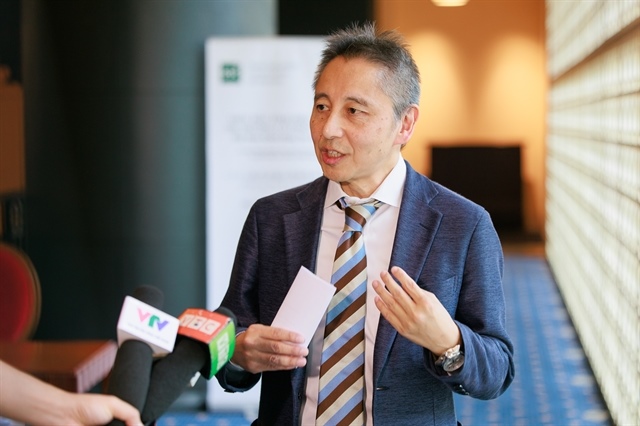
Kojima Kazunobu, consultant for the Japan International Cooperation Agency (JICA) and expert from DAIWA Institute Research. — Photo courtesy of JICA |
Following its upgrade by FTSE Russell from frontier to emerging market status in October 2025, Việt Nam's stock market is entering a new phase of development, drawing increasing attention from global investors.
Ahead of key review milestones in March and September, Kojima Kazunobu, consultant for the Japan International Cooperation Agency (JICA) and expert from the DAIWA Institute ofResearch , spoke with Việt Nam News reporter Ly Ly Cao to share his insights into the implications of the reclassification, the market's internal readiness and priorities for future reforms.
Based on international experience, what is the most significant change following a market upgrade?
Japan does not have direct experience in transitioning from frontier or emerging market status, as it has long been classified as a developed market.
However, looking at other markets, the most notable change is often not immediate or singular. Instead, upgrades tend to trigger a gradual shift in investor perception, particularly regarding the credibility and direction of ongoing reforms. The impact is usually more visible in how international investors reassess a market’s medium-term potential, rather than in short-term price movements.
Compared with many other emerging markets, Việt Nam stands out for its strong economic growth potential and the expanding scale of its capital market. These factors make it structurally attractive for long-term investment.
At the same time, authorities have been actively implementing reforms to improve accessibility for foreign investors. These include efforts to modernise trading and settlement infrastructure, enhance disclosure requirements and align regulations more closely with international standards.
However, challenges remain. Foreign ownership limits continue to constrain portfolio allocation, particularly in large-cap sectors such as banking.
Additionally, while the number of listed companies is high, the pool of stocks with sufficient liquidity and free float remains limited for global investors. Addressing these issues will be key to strengthening Việt Nam’s position as an emerging market.
With a midterm review scheduled for March and potential index-related developments in September, which criteria are likely to be closely monitored?
While it is not possible to anticipate the specific judgements of index providers, reviews generally focus on whether previously identified reform measures are being implemented effectively and consistently.
Operational stability is a critical factor, including the reliability of trading and settlement systems, as well as the actual experience of market participants. In addition, consistency in regulatory enforcement and communication with investors plays an important role in building confidence during review periods.
The main risks are typically related to implementation rather than policy direction. Even well-designed reforms require time to be absorbed by the market, and any operational disruptions or inconsistencies may affect investor confidence.
Another potential risk lies in a mismatch between expectations and reality. If investor expectations rise faster than actual improvements in liquidity, governance or market accessibility, a temporary gap may emerge. Managing this transition through clear communication and steady reform implementation will be crucial.
After achieving the upgrade, what should be the next goal for Việt Nam's stock market?
The FTSE Russell reclassification should be viewed as a milestone rather than an endpoint. Moving forward, continued improvements in market quality and accessibility could support further advancement within the FTSE framework.
At the same time, sustained reforms in areas such as corporate governance, investability and market infrastructure will help Việt Nam move closer to meeting the criteria of other global index providers, including MSCI. In this sense, the upgrade is part of a broader, long-term trajectory toward deeper integration into global capital markets.
Under JICA’s ongoing cooperation framework, Japanese experts will continue to contribute to the implementation of Việt Nam's Securities Market Development Strategy through 2030.
Key priorities include improving the primary market, particularly IPOs and listing practices, in line with international standards, enhancing the quality and governance of listed companies and supporting the development of the fund market.
Expanding participation in fund-based investment among individual investors is also a focus, as these efforts are closely linked to building a more resilient and sustainable capital market.
How might geopolitical tensions in the Middle East affect Việt Nam's stock market?
In the current context of heightened geopolitical tensions, global financial markets are likely to remain cautious, with short-term investment flows becoming more risk averse. This could lead to temporary volatility across many markets, including emerging ones.
While Việt Nam may be less directly affected than regions closer to the Middle East, it is not immune to shifts in global risk sentiment. Over the medium term, the extent of the impact will depend largely on broader geopolitical and macroeconomic developments worldwide.
- 09:31 19/03/2026