Middle East conflict raises risks for global coffee market
Middle East conflict raises risks for global coffee market
The US-Iran conflict could put pressure on the coffee market through higher production costs, a volatile dollar, skyrocketing fuel prices and growing logistical uncertainty, especially with the closure of the Strait of Hormuz and the risk of paralysis in the Suez Canal.
|

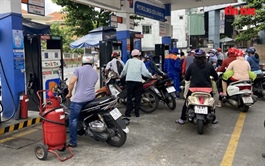
The United States and Israeli offensive against Iran at the end of February unleashed a new wave of instability in the Middle East, rocketing oil prices – which jumped 24 per cent in a week – and strengthening the dollar, while tight Iranian control over the Strait of Hormuz threatened essential global trade routes.
"Against this backdrop, the coffee market is among the sectors that could feel both indirect and direct impacts from the crisis. The rise in oil prices and the volatility of the exchange rate tend to increase production costs – not only because of the greater use of fuel on farms, but also because of the increase in the cost of energy-dependent inputs, such as fertilisers and pesticides. At the same time, the escalation adds a layer of pressure on global coffee logistics," said Laleska Moda, market intelligence analyst at Hedgepoint Global Markets.
So far, hundreds of ships (including oil tankers and freighters) remain anchored offshore or outside the Strait of Hormuz, unable to reach any port. "This is already affecting coffee shipments destined for Gulf roasters, especially the United Arab Emirates, and could reduce the global availability of vessels," he says.
Added to this are the growing attacks on oil tankers, increasing the risk to trade routes in the Gulf and even the Suez Canal. The fear of a return to attacks in Yemen has led many companies to suspend or redirect their services away from the region.
The Suez Canal is a key bottleneck for the global coffee trade, being the most efficient route for coffees from East Africa – such as Uganda and Ethiopia – and Southeast Asia to reach the European market.
In this way, logistical issues have the potential to directly impact trade flows and coffee differentials, especially since Europe is the world's largest consumer market. In recent months, the EU has increased its use of Asian beans – especially from Vietnam – and continues to import more coffee from East Africa, a move reinforced by the lower willingness of Brazilian producers to sell.
"At this time, Vietnamese traders report that the routes have not been interrupted, but confirm that freight costs have increased significantly. Shipments to Europe are already being contained in the country and should remain limited until there is greater clarity on the risks of crossing via Suez. Many transport companies have also suspended bookings to the Gulf, rerouting ships via the Cape of Good Hope – which implies not only higher costs, but also longer shipping times," Moda said.
Although Europe can diversify its purchases, natural Arabica and Robusta beans are mostly exported by Asia, Uganda and Brazil. Laleska explains that, in the case of Brazil, producers are still reluctant to sell their remaining stocks, while most of the 26/27 harvest will only reach the market from July onwards. This scenario could impact differentials in Brazil, as well as the volume imported by the EU and, potentially, the bloc's stocks – especially if the conflict continues.
- 15:07 10/03/2026