Việt Nam needs to accelerate adoption of biofuel amid global energy supply uncertainty
Việt Nam needs to accelerate adoption of biofuel amid global energy supply uncertainty
Although the mandatory roadmap for biofuel blending will take effect from June 1, Việt Nam should consider accelerating the use of biofuel-blended petrol in response to increasingly complex geopolitical developments affecting global energy supplies, Deputy Minister Nguyễn Sinh Nhật Tân said at a conference on March 9.
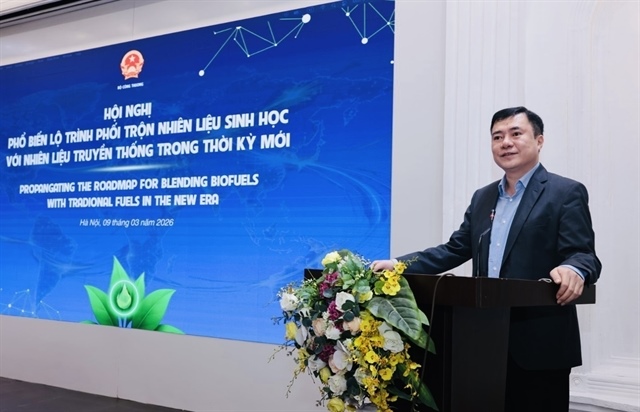
Deputy Minister of Industry and Trade Nguyễn Sinh Nhật Tân speaks at a conference on implementing the roadmap for blending biofuels held in Hà Nội on March 9. VNA/VNS Photo |
Speaking at a conference on implementing the roadmap for blending biofuel, the Deputy Minister emphasised that earlier adoption of the fuel would help reduce Việt Nam’s reliance on conventional fossil-based petrol.
According to the Ministry of Industry and Trade, Việt Nam already has a roadmap for blending and using biofuels. However, developments in the global oil market over the past week have highlighted the volatility of international energy supplies.
Under the roadmap, authorities must carefully prepare several key elements, including ethanol supply, blending and distribution systems, and management and monitoring mechanisms to ensure transparency, efficiency and compliance with technical standards.
Đỗ Văn Tuấn, chairman of the Việt Nam Biofuels Association, noted that Circular 50 stipulates that from June 1 petrol sold in Việt Nam must be either E5 or E10 biofuel-blended gasoline. However, companies are already able to sell these fuels ahead of the deadline.
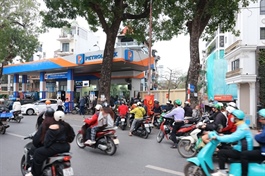
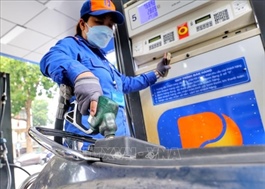
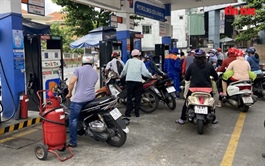
In practice, several major petroleum distributors began selling E10 petrol as early as August 1, 2025, and throughout March this year E10 has been introduced to the market in increasing volume.
“If Việt Nam can proactively secure ethanol supply, it will clearly help ease pressure on crude oil imports and refined petroleum products, which are currently heavily affected by instability and conflict in the Middle East,” Tuấn said.
Following Government directives, the Ministry of Industry and Trade issued Circular 50 on November 7, 2025, establishing new regulations on the blending ratio of biofuels with conventional fuels to replace the previous roadmap.
The Circular's implementation has also been reinforced by Directive 07 issued by the Prime Minister on February 26, which calls for stronger production, blending, distribution and use of biofuel petrol.
Tân said that expanding the use of E5 and E10 bio petrol reduces emissions compared with traditional gasoline, thus contributing to environmental protection.
In addition, it supports the development of the biofuel industry, creates stable demand for agricultural products and helps reduce dependence on imported petroleum.
Amid growing uncertainty in global energy supplies due to armed conflicts, many countries, including the US, Brazil, European nations, China and Thailand, have widely adopted higher ethanol blends, such as E10, E15 and E20.
In Việt Nam, E5 petrol has been distributed nationwide since 2018, while E10 was introduced to the market on August 1, 2025.
“In practice, there have been no recorded cases of negative reactions related to the quality of E5 or E10 petrol affecting vehicle performance or damaging engines,” the Deputy Minister confirmed.
He added that the development and expansion of biofuel use is an inevitable trend in the global energy transition. For Việt Nam, bio petrol represents an important solution for reducing greenhouse gas emissions, fulfilling international climate commitments, strengthening energy security and diversifying fuel supply sources.
Việt Nam also has significant potential and favourable conditions for producing ethanol feedstocks. The country has operated E100 ethanol production plants for many years and possesses an extensive petroleum distribution network.
However, to fully leverage these advantages, closer coordination is required among ministries, local authorities, research institutions and the business community. Efforts are needed to develop raw material zones, expand production capacity, upgrade technical infrastructure and organise the market effectively.
Implementing the biofuel blending roadmap stipulated in Circular 50 is thus considered an important step toward establishing a stable and long-term market for biofuels in Việt Nam.
This will require thorough preparation of ethanol supply, blending and distribution systems, as well as robust quality management and monitoring mechanisms to ensure transparency, efficiency and compliance with technical standards.
Dr Đặng Tất Thành from the ministry's Department of Innovation, Green Transition and Industrial Promotion said that completing the legal framework is essential to regulate the blending, distribution and use of biofuels in Việt Nam.
According to Thành, strengthening the regulatory framework will help ensure consistency, transparency and feasibility in State management of the sector, while supporting the development of the domestic biofuel market and balancing the interests of the Government, businesses and consumers.
The policy framework is also expected to promote the use of clean and renewable energy, gradually reducing reliance on fossil fuels in line with global trends toward sustainable development and energy transition.
In addition, expanding biofuel use could contribute to lowering emissions in the transport sector and support Việt Nam’s national climate objectives. Beyond environmental benefits, the development of the biofuel sector is also expected to support agricultural and rural economic growth.
Expanding feedstock production for ethanol fuel could create additional jobs and increase incomes for farmers, particularly in midland, mountainous and agricultural regions.
Based on these considerations, Thành emphasised that the rollout of E10 petrol represents a balanced approach between environmental protection, energy security and economic development.
He added that successful implementation will require close coordination among central authorities, local governments and the business community.
Meanwhile, the Deputy Minister also called on Government agencies, industry associations and businesses to strengthen communication and public outreach efforts, providing accurate and objective scientific information about the environmental and socio-economic benefits of biofuels to build public consensus and strengthen consumer confidence in biofuel petrol.
- 02:51 10/03/2026