VN aims to develop a more self-reliant steel industry, pushing towards high-speed rail, auto
VN aims to develop a more self-reliant steel industry, pushing towards high-speed rail, auto
Vietnamese Government has urged the steel industry to move toward greater self-reliance in producing specialized steel for automobiles, high-speed rail, energy infrastructure and national defense under a newly approved development strategy.
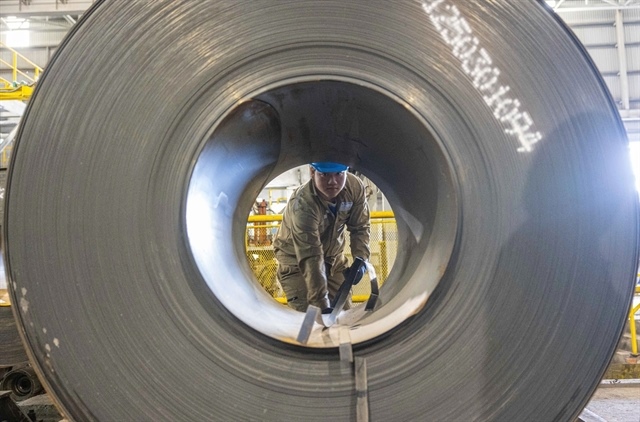
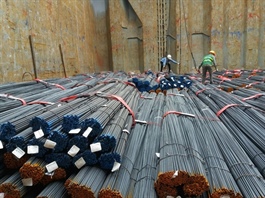
Steel products of steelmaker Hoà Phát Group. Deputy Prime Minister Bùi Thanh Sơn on Monday signed a decision approving the national steel development strategy to 2030 with a vision to 2050 which aims to restructure the steel sector toward higher-value, technology-intensive production. — VNA/VNS Photo Hoàng Hiếu |
Việt Nam is sharpening its steel ambitions, with the Government urging the industry to move beyond basic construction materials and towards greater self-reliance in producing specialised steel for automobiles, high-speed rail, energy infrastructure and national defence under a newly approved national strategy.
Deputy Prime Minister Bùi Thanh Sơn on Monday signed a decision approving the national steel development strategy to 2030 with a vision to 2050, aiming to restructure the sector towards higher-value and technology-intensive production.
A core pillar of the strategy is a shift in product structure to reduce reliance on imports. Rather than focusing mainly on conventional construction steel, where domestic capacity is already in surplus, the industry will prioritise high-quality products such as alloy steel, tool steel and specialised manufacturing steel.
Under the plan, Việt Nam aims to meet 80–85 per cent of domestic steel demand by 2030. Crude steel production is targeted at 25–26 million tonnes per year, with annual growth of 7–8 per cent, while finished steel output is expected to reach 32–33 million tonnes per year, growing by 5.5–6.5 per cent annually. Per capita steel consumption is projected at 270–280 kg per year.
During the 2030–35 period, domestic supply is expected to cover 85–90 per cent of demand, with priority given to high-value steel products for supporting industries such as automobiles, shipbuilding, mechanical engineering and energy.
Looking further ahead, by 2050 the Government envisions Việt Nam producing 65–70 million tonnes of crude steel and 75–80 million tonnes of finished steel annually, with per capita consumption approaching levels seen in developed economies at 570–650 kg per person.
The strategy also places strong emphasis on the development of green steel. New investment projects will be required to adopt advanced and environmentally friendly technologies to cut carbon emissions, a move seen as critical for expanding exports and integrating more deeply into global supply chains.
A key breakthrough task under the strategy is the development of specialised steel for national strategic infrastructure. The Government has called on the industry to master technologies to produce rail steel for high-speed rail, a flagship national project, alongside high-strength steel plates, prestressed steel, specialised steel for prestressed reinforced concrete and ultra-light steel for transport.
Priority is also given to corrosion-resistant stainless steel, seamless steel pipes for liquefied gas transport, seamless pipes for shipbuilding and steel for offshore wind turbine towers. Strengthening domestic capacity to produce defence and security-grade manufacturing steel is listed as another top priority.
The strategy further calls for stronger linkages across the steel value chain, from research and raw material supply to production and distribution, with the aim of building a more resilient and self-reliant industry ecosystem.
- 08:00 12/02/2026