US exports to Cambodia surge nearly 96% on policy shift and energy imports
US exports to Cambodia surge nearly 96% on policy shift and energy imports
Cambodia’s decision to grant duty-free access to all US-made goods has led to a sharp rise in American exports, even as the Kingdom faces mounting tariff risks in its largest export market, says a US business honcho.

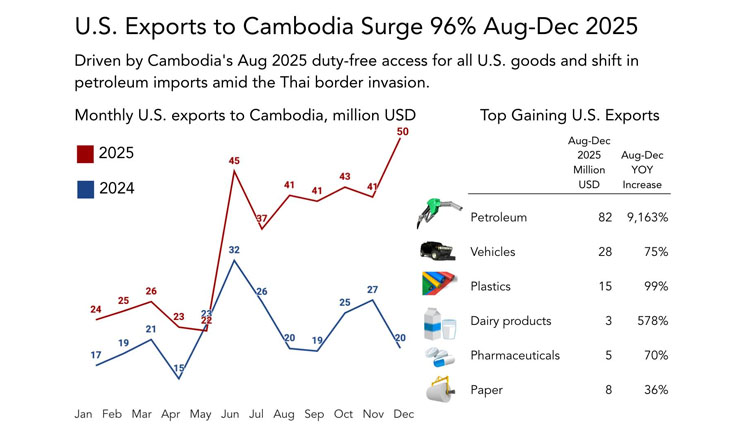
The United States exports to Cambodia surged by nearly 96 percent between August and December 2025, driven by Cambodia’s decision to grant duty-free access for all US goods and a sharp shift in petroleum imports amid the Thai border invasion, according to trade data and analysis based on official customs figures released on Tuesday.
Monthly data show US exports rising from approximately $22 million in May 2025 to a peak of $50 million in December, significantly outperforming the same period in 2024. The strongest growth momentum began in August, immediately after Cambodia removed import duties on all US goods as part of efforts to diversify trade partners and strengthen economic resilience.
Petroleum was the largest contributor to the increase, with US petroleum exports to Cambodia reaching $82 million during the August-December period, representing a year-on-year increase of more than 9,000 percent.
The surge followed Cambodia’s rapid shift in fuel sourcing amid the Thai border invasion, which disrupted traditional supply routes and accelerated the country’s move away from neighbouring energy suppliers.
Vehicles were the second-fastest growing export category, with shipments valued at $28 million, up 75 percent year-on-year. Plastics followed at $15 million, nearly doubling compared with the same period in 2024. Additional gains were recorded in pharmaceuticals, dairy products and paper, indicating a broad-based expansion of US consumer and industrial goods entering the Cambodian market.
By contrast, US exports to Cambodia in 2024 remained relatively flat, fluctuating between $15 million and $32 million per month, with no sustained upward trend.
The graphic and analysis were prepared by Casey Barnett, President of the American Chamber of Commerce in Cambodia (AmCham Cambodia), using data from the General Department of Customs and Excise. Analysts say the figures underscore the significant impact of targeted trade facilitation measures, as well as how geopolitical developments can rapidly reshape trade and energy supply chains.
If current trade policies remain in place, US-Cambodia trade flows are expected to remain elevated in 2026, particularly in petroleum, vehicles and other higher-value manufactured goods.
Cambodia’s decision to grant duty-free access to all US-made goods has led to a sharp rise in American exports, even as the Kingdom faces mounting tariff risks in its largest export market, according to the President of AmCham Cambodia.
Casey said that in August 2025, Cambodia allowed the United States to export all US-made products into the Cambodian market duty-free as a concession aimed at reducing reciprocal tariffs imposed by Washington.
He warned that Cambodia currently faces potential reciprocal tariffs of up to 49 percent, posing a serious threat to its manufacturing sector, particularly garments and footwear. The United States accounts for 38 percent of Cambodia’s total exports, making it by far the Kingdom’s most important export destination.
“Due to this change, US exports to Cambodia increased by 96 percent year-on-year during the August-December period,” Casey said, adding that exports rose in 54 out of 85 product categories.
The most significant increase was recorded in refined petroleum products, which surged nine-fold. Casey said this was partly driven by Cambodia’s efforts to diversify supply chains and reduce risk, including diverting petroleum imports away from Thailand.
“Similarly, some dairy product imports shifted from Thailand to the United States,” he said. Other notable increases were seen in vehicles, plastics, paper, textile fibres, food products and machinery imported from the US.
Despite the surge, Casey acknowledged that the negotiated arrangement is more favourable to the United States. In 2024, Cambodia exported $12.7 billion worth of goods to the US, while importing only $300 million in American products.
He said the imbalance reflects Cambodia’s limited consumer purchasing power, but also pointed to domestic barriers. “Cambodia’s unclear product licensing process and various regulatory requirements prevent many American goods from entering the Cambodian market,” he noted.
Casey highlighted that a significant portion of the “Mutual Trade Agreement” focuses on governance reforms in Cambodia. These include commitments to establish an independent labour court, publish draft regulations, disclose official public service fees and strengthen anti-fraud measures.
“Although these conditions are required by the United States, the main benefits of such reforms ultimately extend to Cambodia itself,” he said.
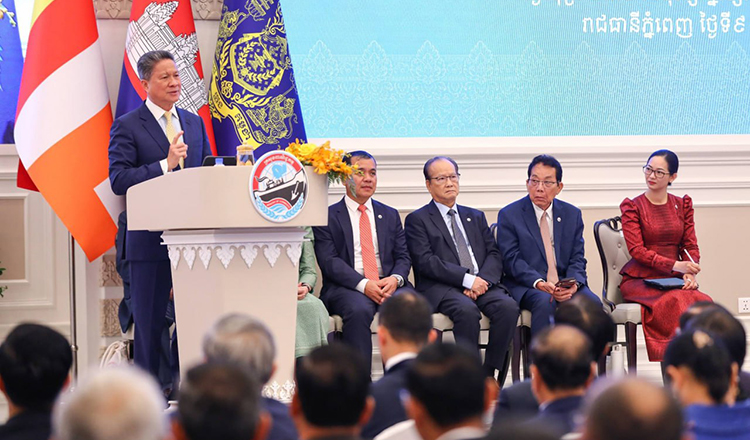
Meanwhile, Cambodia is awaiting a decision by the United States Supreme Court on whether to abolish reciprocal tariffs imposed on Cambodian goods, Sun Chanthol, Deputy Prime Minister and First Vice Chairman of the Council for the Development of Cambodia (CDC), said, noting that Cambodia remains in a relatively strong position due to its early and comprehensive negotiations with Washington.
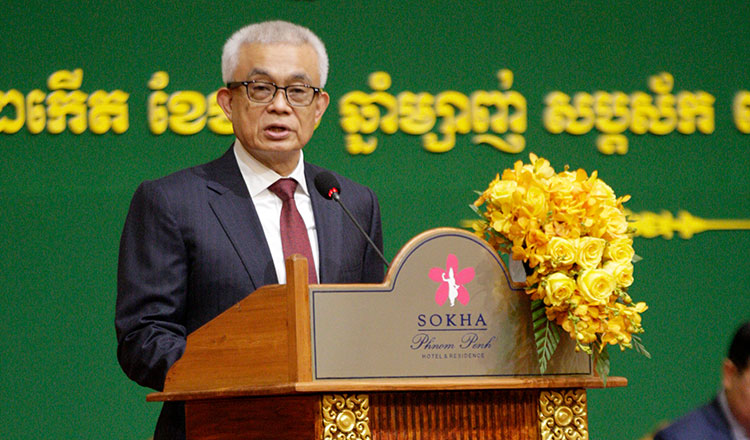
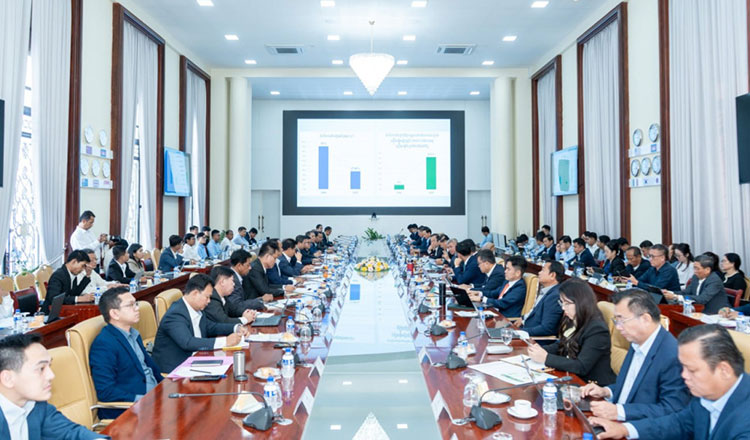
Speaking at the Ministry of Commerce during the closing ceremony of the conference reviewing trade performance in 2025 and setting priorities for 2026 on January 9, 2026, Chanthol said Cambodia is the first country to have fully concluded a reciprocal trade agreement with the United States. He attended the event on behalf of Prime Minister Hun Manet.
“Some countries have only signed brief framework agreements, but Cambodia has completed the entire negotiation process,” he said, adding that Malaysia is the second country to reach a similar agreement with the US.
Chanthol said it remains unclear whether the US Supreme Court will cancel the reciprocal tariffs introduced under President Donald Trump, and if such a decision will come this month or next. However, he stressed that Cambodia faces limited risk, as it negotiated “openly and honestly” with the US.
It is worth noting that on April 3, 2025, the US imposed tariffs of around 49 percent on Cambodian imports. Following negotiations led by Chanthol and Commerce Minister Cham Nimul, the rate was reduced to 36 percent on July 8, 2025, and further cut to 19 percent on August 1, 2025.
- 08:58 22/01/2026