Cambodia unveils strategic programme to fortify economic independence
Cambodia unveils strategic programme to fortify economic independence
The initiative will help expand domestic productivity, promote local products, create skilled jobs, and deepen Cambodia’s integration into regional and global supply chains.
Confronted with reciprocal tariffs and border conflicts, the Royal Government yesterday launched a strategic programme to fortify national economic independence by enhancing competitiveness, diversifying production and strengthening resilience.
The initiative aimed to expand domestic productivity, promote local products, create skilled jobs, and deepen Cambodia’s integration into regional and global supply chains.
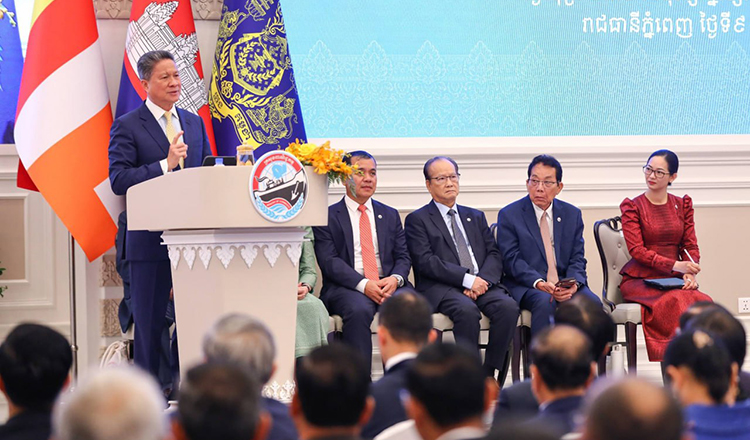
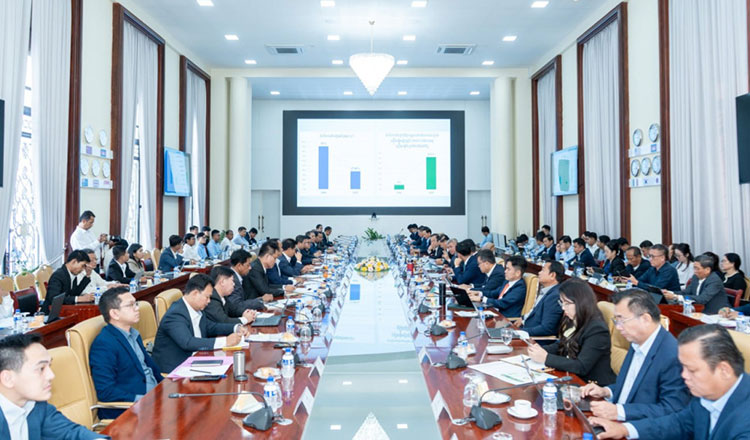
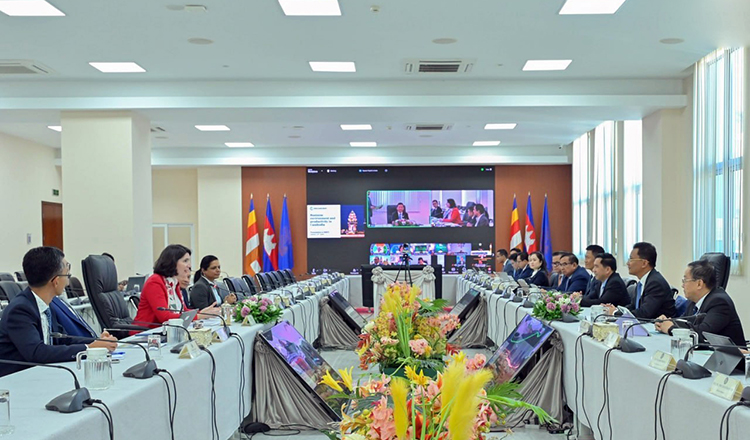
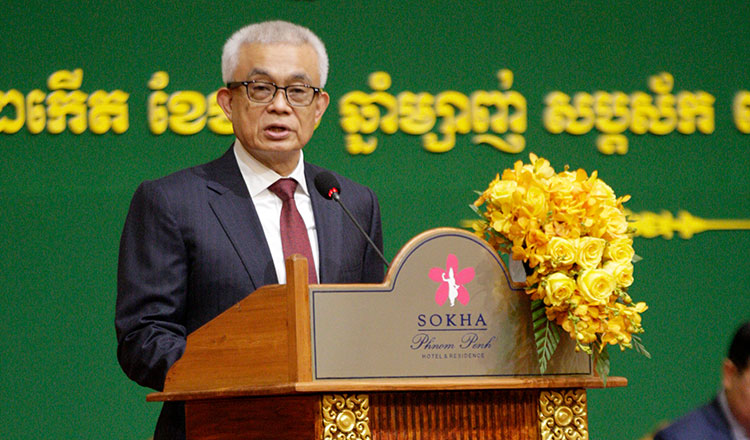
The ‘Program for Enhancing Competitiveness, Promoting Diversification and Strengthening Resilience to Drive Economic Growth in the Highly Uncertain Global Context of the Royal Government of the Seventh Legislature of the National Assembly’ was officially launched in Phnom Penh yesterday.
Presiding over the ceremony, Aun Pornmoniroth, Deputy Prime Minister and Minister of Economy and Finance (MEF), noted that the initiative serves as a key complement to the Pentagonal Strategy – Phase One and the National Strategic Development Plan.
The Deputy Prime Minister underlined that the programme responds to circumstances marked by high uncertainty in the global and regional order, encompassing both geopolitical and geo-economic challenges.
“Despite being a small country with limited options, Cambodia does not adopt a reactive approach that risks losing control. Instead, we are committed to strengthening our resilience to create the space to act in a proactive, flexible and transformative manner,” he said.
Pornmoniroth, also the Chairman of the Economic and Financial Policy Committee (EFPC), stressed that the programme was formulated in alignment with ongoing efforts to tackle a wide range of complex challenges. “These challenges include reciprocal tariff measures, the impact of the war of aggression on Cambodia’s socio-economic development and many other sources of high uncertainty.”
He emphasised that the programme aimed to promote capacity development and diversification of the production base, strengthen competitive advantage, and enhance domestic production chains while improving connectivity to regional and global supply chains.
He went on to add that the programme also seeks to capture high-value-added production activities, create more jobs for medium- and high-skilled labour, and broaden the national economic base, supporting sustainable growth and economic independence for the Kingdom.
“The initiative is expected to boost economic growth and reinforce the independence of the national economy while fostering patriotism and national unity, encouraging the promotion and appreciation of local products,” Pornmoniroth added.
The Deputy Prime Minister lauded the efforts of the EFPC General Secretariat, the Cambodia Australia Partnership for Resilient Economic Development (CAPRED), and relevant ministries and institutions for their contribution and cooperation in formulating the programme.
He handed over the programme book for implementation to Huot Hak, Minister of Tourism, Eang Sophalleth, Minister of Environment, Keo Rottanak, Minister of Mines and Energy, Dith Tina, Minister of Agriculture, Forestry and Fisheries, Bin Trachhai, Minister of Planning, Chheang Ra, Minister of Health, and Hem Vanndy, Minister of Industry, Science, Technology & Innovation.
Highlighting the 19th Government-Private Sector Forum, Phan Phalla, Secretary of State of MEF and Secretary General of the General Secretariat of EFPC, said Prime Minister Hun Manet tasked the EFPC with developing the initiative to address key challenges raised by the private sector, focusing on human capital development, support for small and micro enterprises (SMEs), and improving the business and investment climate.
- 08:33 21/01/2026