Exports cement role as central pillar
Exports cement role as central pillar
Vietnam’s export prospects for 2026 remain positive on the back of recovering major markets, with attention increasingly shifting to value-added content and economic self-reliance.
At a ceremony on December 25 to discuss Vietnam’s total merchandise import–export turnover for 2025, the Ministry of Finance (MoF) said Vietnam’s external trade reached a new high in 2025, total trade value for the year was estimated at $920 billion, up 16.9 per cent on-year. Exports were projected at $470.6 billion, while imports were estimated at $449.4 billion, resulting in a trade surplus of around $21.2 billion.

Exports cement role as central pillar. This resource was generated with AI |
The Ministry of Industry and Trade (MoIT) said the 2025 result marked a significant milestone for Vietnam’s foreign trade, as total turnover surpassed the $800 billion level and moved close to $900 billion despite geopolitical tensions, trade frictions and uneven global recovery.
Reviewing the 2021–2025 period, Deputy Minister of Industry and Trade Phan Thi Thang reported at the meeting that export growth had become a central pillar of macroeconomic stability.
“Export growth during the 2021–2025 period has been very strong and has become one of the most important pillars supporting Vietnam’s economic development,” Thang said.
“Exports have contributed directly to GDP growth, enhanced the economy’s resilience to global shocks, helped stabilise the macroeconomy, and strengthened Vietnam’s position in global trade,” she said, “In addition, continuous trade surpluses over recent years have played a crucial role in maintaining exchange rate stability, controlling inflation and improving the balance of payments.”
Vietnam’s export basket in 2025 continued to be dominated by manufactured goods. According to MoIT estimates for the full year, processed and manufactured products accounted for about 85.2 per cent of total export value, equivalent to roughly $400 billion, up 16.6 per cent from 2024.
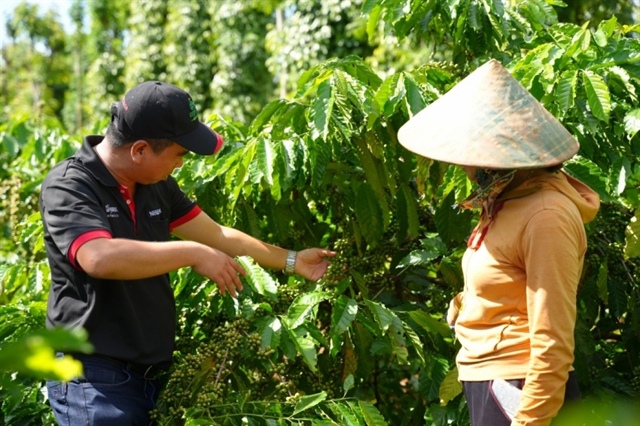
Agro-forestry-fishery exports were projected at $44.46 billion, an increase of 14.1 per cent on-year, accounting for about 9.5 per cent of total export turnover.
In terms of product breadth, 36 out of 45 export groups recorded turnover exceeding $1 billion in 2025. Among them, eight groups surpassed $10 billion, with a combined value of approximately $319 billion, accounting for 68 per cent of total exports, according to MoF data.
On the import side, 49 out of 53 import product groups recorded turnover exceeding $1 billion. Eight groups surpassed the $10 billion mark, with a combined value of around $281 billion, accounting for about 63 per cent of total imports.
Imports remained concentrated in production inputs, including machinery and equipment, computers and electronic components, textile and footwear materials, steel and other industrial metals. Imports of consumer goods, particularly automobiles, also increased.
Market concentration remained a defining feature of Vietnam’s trade structure. Vietnam maintained trade relations with more than 230 countries and territories in 2025, including 34 export markets and 24 import markets, each recording turnover above $1 billion.
China remained Vietnam’s largest trading partner, with two-way trade estimated at $252 billion, up 26.5 per cent on-year. The United States ranked second, with total trade estimated at $170 billion, also up 26.5 per cent.
The United States continued to be Vietnam’s largest export market, with shipments estimated at $151.85 billion, accounting for about 32 per cent of total export value. Other major export markets included China ($69 billion), the European Union ($56 billion), ASEAN ($38 billion), South Korea ($29 billion), and Japan ($27 billion).
Combined trade with China and the United States was estimated at $422 billion, equivalent to approximately 46 per cent of Vietnam’s total trade turnover and contributing more than 60 per cent of overall trade growth in 2025.
According to assessments by the MoIT, higher logistics costs, stricter technical standards and increased sustainability requirements continued to affect exporters, particularly in sectors with high exposure to the United States and the European Union.
The wood and wood sector illustrates these pressures. Its export turnover in 2025 was estimated at nearly $18 billion, based on figures cited by industry associations and reported by domestic media. While this represented a recovery compared with earlier years, growth was constrained by stricter environmental and traceability requirements in major markets.
Ngo Sy Hoai, vice chairman and secretary general of the Vietnam Timber and Forest Products Association, said the operating environment for wood exporters had become more demanding.
“Demand recovered only slowly in 2025, while technical barriers and sustainability standards in major markets such as the United States and the European Union became increasingly stringent,” Hoai said. “These requirements have forced enterprises to adjust their production models, invest in traceability systems and focus more on higher value-added products.”
For 2026, compliance with green standards and deeper participation in global value chains will be key factors determining whether Vietnamese wood exporters can maintain their market share, Hoai added.
Similar challenges have been observed in other export-oriented industries, including textiles, footwear, seafood and electronics, where buyers have increased requirements related to carbon emissions, labour standards and supply-chain transparency.
The MoIT has set an export growth target of over 8 per cent for 2026, alongside a projected trade surplus of around $25 billion. The ministry said the target was set against a high base following strong growth in 2025 and in the context of continued global uncertainty.
International organisations including the International Monetary Fund, the World Bank, and the Organisation for Economic Co-operation and Development have forecast that global economic growth in 2026 is likely to remain below long-term averages, reflecting the impact of geopolitical tensions, high interest rates, public debt pressures and persistent trade uncertainty.
Tran Thanh Hai, deputy head of the Foreign Trade Agency at the MoIT, said export performance in 2026 would depend on how effectively businesses and authorities respond to these external developments.
“The global economy is recovering, but new tariff policies from the United States, as the world’s largest consumer market, will have significant spillover effects,” Hai said at a recent industry briefing.
“Vietnam’s export sectors, particularly textiles, footwear, seafood and electronics, will feel these impacts clearly. Enterprises need to strengthen market forecasting, diversify export destinations and prepare response scenarios, while authorities focus on early warning systems and trade facilitation,” he continued.
Experts share:
Vlad Savin, partner, Acclime Vietnam
|
As the global economy moves through a period of shifting trade dynamics and heightened caution, Vietnam is entering a decisive phase in its long-term growth story. After weathering the 2025 policy storm, 2026 should be another year of Vietnam economic resilience, supported by resilient domestic demand, robust export performance, and a visible transformation in infrastructure and investment.
Major transport and logistics projects are reshaping the national landscape, laying the groundwork for sustained expansion, with growth expected to exceed 8 per cent in 2025 and scope for further acceleration in the years ahead.
For business associations and foreign investors, Vietnam’s appeal lies in its adaptability and forward momentum. The country continues to benefit from supply chain diversification, a youthful workforce, and an increasingly open investment environment. High-tech manufacturing, electronics, and renewable energy projects are attracting strong foreign interest, while new public–private partnerships are reinforcing confidence in long-term returns.
However, the next two years will also test Vietnam’s economic resilience. Global uncertainties from trade tensions and tariff adjustments to elevated borrowing costs, an overheated AI sector, and volatile financial markets pose real challenges. The implementation of Organisation for Economic Co-operation and Development’s global minimum tax (Pillar Two) will reduce the effectiveness of traditional tax incentives, requiring Vietnam to compete on fundamentals such as infrastructure, talent, and regulatory efficiency.
Additionally, the EU’s Carbon Border Adjustment Mechanism, moving to full enforcement in 2026, will pressure exporters to decarbonise and adopt transparent carbon reporting. At home, rising input costs, currency fluctuations, and climate-related disruptions call for steady policy coordination and energy security.
In 2026 and the years to come, what matters most is predictability and partnership. Global investors seek policy clarity, consistent enforcement, and efficient coordination between central and local authorities. Equally vital is Vietnam’s ability to deliver reliable, green energy, accelerate grid upgrades, and build an innovation-driven workforce that can support the next wave of digital and semiconductor transformation.
As global capital becomes more selective, incentives alone are no longer enough to secure competitiveness. Investors are paying close attention to whether policies translate into viable projects, whether infrastructure keeps pace with industrial demand, and whether energy supply and regulatory processes function reliably in practice. In the end, decisions tend to come down to a small set of fundamentals: infrastructure readiness, access to stable and green energy, predictable regulation, and the availability of capable talent.
Adib Kouteili, co-founder and director, Pebsteel
|

Looking back at 2025, despite continued volatility in the global economy, Vietnam’s steel structure and industrial construction sector demonstrated strong adaptability and resilience amid the ongoing restructuring of supply chains across the Asia-Pacific region.
Foreign direct investment remained a key driver, particularly high-quality inflows into technology manufacturing, logistics, and green supply chains. This sustained the momentum of industrial real estate and provided a solid foundation for companies like Pebsteel to operate steadily while progressively enhancing engineering standards and management capabilities in line with regional and international benchmarks.
At Pebsteel, we maintained growth by focusing on operational optimisation, cost control, and proactively aligning with regional supply chain shifts. A defining trend in 2025 and the years ahead is the rising expectation for eco-industrial parks that meet environmental, social, and governance requirements, including decarbonisation, renewable energy adoption, and efficient resource management. In parallel, the expansion of ready-built factories and modern logistics facilities supporting regional e-commerce continues to create new growth opportunities.
Looking ahead to 2026, I expect high-quality foreign investment to continue strengthening, with green construction becoming a baseline requirement for industrial projects. This will be a phase where companies are expected not only to deliver cost efficiency but also to demonstrate strong technical capability, sustainability performance, and execution reliability to meet the increasingly demanding expectations of international investors.
Salvatore Banco, head for Ho Chi Minh City and South China, D’Andrea & Partners
|

Against the backdrop of the global economy, the medium-term outlook can be described as one of structural adjustment rather than cyclical expansion. Growth is likely to remain positive but uneven, shaped by tighter financial conditions, geopolitical fragmentation, and accelerating technological and green transitions.
A prolonged high-interest-rate environment, even if easing at the margin, will continue to constrain global demand and investment compared to the ultra-low-rate era of the 2010s.
Advanced economies may face subdued growth and fiscal pressures, while emerging markets will need to manage higher borrowing costs and more selective capital flows. Sound macroeconomic management and credible institutions will therefore become increasingly important differentiators.
At the same time, supply chain reconfiguration, driven by resilience, geopolitics, and risk diversification, will reshape global trade. While this trend raises costs and reduces efficiency at the global level, it creates meaningful opportunities for emerging economies that can position themselves as reliable manufacturing and logistics hubs.
Geopolitical tensions are likely to remain a persistent source of volatility, influencing trade policies, investment decisions, and commodity prices. This environment favours countries that maintain strategic neutrality, policy stability, and openness to trade, while diversifying economic partners.
The transition towards green and digital economies represents the most powerful medium- to long-term growth driver. However, it is capital- and skills-intensive, meaning benefits will accrue unevenly. Access to green finance, digital infrastructure, and human capital development will be decisive.
For emerging economies such as Vietnam, the most significant impacts will come from supply chain diversification, digital adoption, and the green transition. Vietnam is well positioned to attract manufacturing and technology-related investment, but sustaining momentum will require continued improvements in infrastructure, regulatory transparency, workforce skills, and energy sustainability.
Dao The Anh, chairman, RSL Group
|
In the past year, RSL Group successfully facilitated 105 manufacturing investment projects across Vietnam. Of these, investors from Taiwan, China, and Hong Kong accounted for approximately 23 per cent, while the remainder were Vietnamese enterprises.
Notably, there has been a significant increase in the number of Vietnamese companies forming joint ventures with foreign partners to expand production capacity. This development reflects a more proactive and confident domestic private sector, increasingly willing to participate in global supply chains and international manufacturing networks.
The year 2025 marked a period in which Vietnam accelerated investment in transportation and logistics infrastructure, including expressways, seaports, and key international airports. At the same time, numerous new industrial park projects were launched nationwide, creating substantial opportunities for the relocation and expansion of manufacturing investment.
Within this context, RSL Group has actively accompanied investors in site selection, cost optimisation, and the shortening of project implementation timelines. Through effective investment promotion activities, the company contributes to Vietnam’s broader economic transformation and the nation’s aspiration to enter a new phase of industrial growth.
Entering 2026, we expect Vietnam’s policy environment to remain stable, transparent, and consistent, particularly in the fields of investment regulation and industrial park development. On this foundation, RSL has set a clear strategic objective: to become Vietnam’s leading investment promotion firm in 2026, and to transition into the role of an industrial park or industrial cluster infrastructure developer with a distinctive RSL identity by 2027.
- 12:37 09/01/2026