Đồng Tháp Province eyes rapid economic growth
Đồng Tháp Province eyes rapid economic growth
The Cửu Long (Mekong) Delta province targets the establishment of 3,000 new enterprises this year.
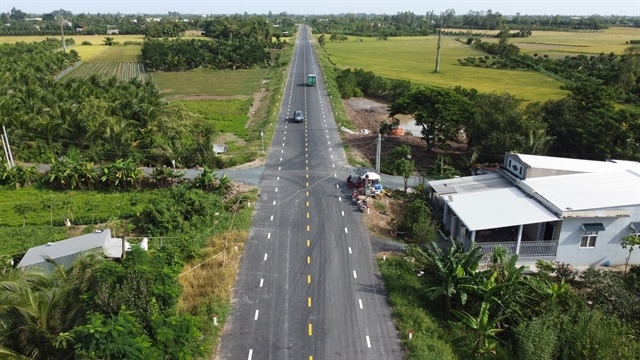
The 14.5-km Cao Lãnh bypass in Đồng Tháp Province's Mỹ Trà Ward opened to traffic on December 19, 2025. Its construction cost more than VNĐ900 billion (US$34.2 million). — VNA/VNS Photo Nhựt An |
Đồng Tháp Province targets economic growth of 8–8.5 per cent and per capita income of VNĐ93.5–94 million (US$3,580–3,600) by 2026.
The Cửu Long (Mekong) Delta province targets the establishment of 3,000 new enterprises this year, its People’s Committee said.
Phạm Thành Ngại, its chairman, said the focus would be on implementing the master plan for 2021–2030.
Priority would be given to mobilising resources to improve regional transport connectivity, especially expressways between Cao Lãnh and An Hữu and Mỹ An and Cao Lãnh, and develop infrastructure at border-gate economic zones and industrial parks, he said.
It plans a shift from agricultural production to an agricultural economy – or a switch from simply growing high-yield, low-value crops to creating high-value, branded products through technology, processing and market connections, turning farming into a sustainable, profitable business – promoting ecological and circular agriculture, and implementing a Ministry of Agriculture and Environment project to farm one million hectares of high-quality, low-emission rice associated with green growth in the delta by 2030.
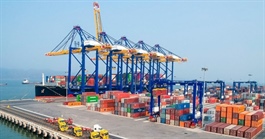
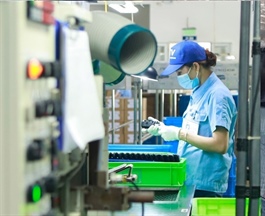
In industry, the province is prioritising deep processing and supporting industries and renewable energy, with a focus on removing obstacles and accelerating the operation of projects at the Tân Phước Industrial Park, Bình Đông Industrial Park and Soài Rạp Oil and Gas Service Industrial Park.
In the trade and services sector, Đồng Tháp is accelerating digital transformation and developing e-commerce and logistics.
It is also fully exploiting ecological and cultural tourism, hoping to make tourism a spearhead economic sector.
Ngại said the province had identified enterprises as the driving force of the economy, and was committed to further improving the Provincial Competitiveness Index (PCI) and the Provincial Governance and Public Administration Performance Index (PAPI) to attract them.
It was cutting cumbersome administrative procedures and eliminating bottlenecks related to land and planning to help enterprises invest with confidence, he said.
Policies to support small and medium-sized enterprises and promote innovative start-ups were being implemented, he added.

The 14.5-km Cao Lãnh bypass in Đồng Tháp Province's Mỹ Trà Ward opened to traffic on December 19, 2025. Its construction cost more than VNĐ900 billion (US$34.2 million). — VNA/VNS Photo Nhựt An |
The province targets revenues of more than VNĐ23.776 trillion ($905 million) in 2026.
In 2025, while consolidating the administrative apparatus following the provincial mergers and maintaining growth momentum, the People’s Committee fully implemented resolutions passed by itself and the legislature.
The province’s socio-economic performance met or exceeded 22 of 24 key targets.
The agriculture, forestry and fisheries sector recorded growth of 5.01 per cent, surpassing the target of 4 per cent and underlining its role as a pillar of the economy.
The industry-construction sector grew at nearly 11 per cent, with processing and renewable energy emerging as new growth drivers.
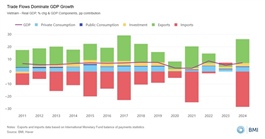
The highlight in 2025 was foreign trade, with total exports estimated at $9.208 billion, again exceeding the target.
This reflected the production capacity and adaptability of the local business community in effectively leveraging free trade agreements.
Investor confidence in the province’s business environment following the merger continued to strengthen.
The province added 2,730 new enterprises in 2025, far exceeding its target of 1,800.
Total social investment capital was estimated at VNĐ85.515 trillion ($3.25 billion), meeting the province’s target of VNĐ85.5 trillion.
Its revenues were estimated at VNĐ22.199 trillion ($884.2 million) in 2025, also exceeding estimates.
- 09:53 21/01/2026