Cà Mau Province dried shrimp producers busy with Tết demand
Cà Mau Province dried shrimp producers busy with Tết demand
Dried shrimp producers in Cà Mau Province are operating at full capacity, increasing output and introducing new items to meet rising demand for Tết (Lunar New Year), which falls on February 17.
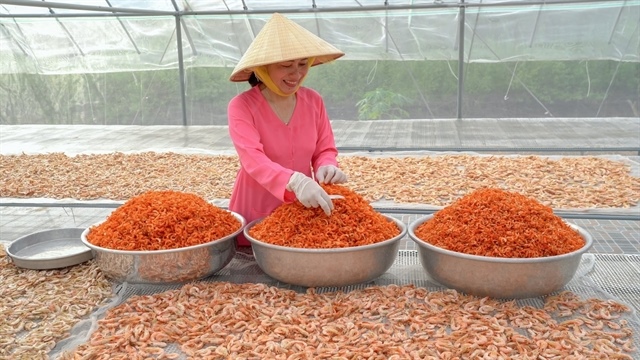
Dried shrimp being produced in Cà Mau Province for Tết (Lunar New Year). — VNA/VNS Photo Huỳnh Anh |
With abundant aquatic resources, especially đất – a wild species that is not farmed – and sea shrimp varieties, the southernmost province’s dried shrimp has become a familiar dish on many families’ Tết trays.
Đất shrimp, the main ingredient, is valued for its sweet flesh and bright red colour when cooked.
In Phan Ngọc Hiển Commune, dried shrimp-making households start work early in the morning and continue until late afternoon.
At Tiêu Thị Ngọc Sương’s, dozens of workers continuously boil, sun-dry and peel shrimp to meet pre-ordered contracts.
Her family has been engaged in dried shrimp production for more than 10 years, with Tết being the busiest period.
“Tết is when we work the most all year. Live đất shrimp must be processed immediately, dried in time under the sun, and peeled, with workers working all day to ensure on-time delivery,” she says.
This year demand has increased, forcing many facilities to raise capacity by more than 50 per cent compared with normal days and creating more seasonal jobs for rural workers, she added.
Tiêu Thị Tuyền, a worker in Phan Ngọc Hiển Commune, says she processes six kilogrammes of shrimp a day.
Having work like this in the countryside is a real joy since an extra income of a few hundred thousand đồng a day helps her support her family, she says.
In the final months of the year, each dried shrimp-making household employs five to 10 workers, while larger ones need 15–20, and pay each an average of VNĐ5 million (US$190) a month.
Hồng Chí Linh, owner of a dried shrimp processing enterprise in Phan Ngọc Hiển Commune, says his company sells more than 15 tonnes of Gạch Gốc-branded dried shrimp each year, with sales doubling from normal days during Tết.
The company has invested in shrimp washing machines and high-capacity steamers, dryers and shell-breaking machines, helping improve quality and stabilise output.
Some producers use dryers and net houses to ensure hygiene, but natural sunlight is still seen as decisive for ensuring colour and flavour.
Trương Ngọc Giàu, 53, of Tân Tiến Commune, who has worked in the trade for more than 30 years, says: “Machine drying is faster, but it is not as tasty as sun-drying. I still dry the shrimp for two days and one night in open air, which makes them fragrant and sweet.”
Producers need seven to eight kilograms of đất shrimp of 130 per kilogram size to obtain one kilogram of dried shrimp.
Dried shrimp is sold at around VNĐ1.2 million ($46) per kilogram depending on type and time of year, but during Tết, top-grade products can reach VNĐ1.7 million ($65) per kilogram.
Alongside preserving traditional methods, some producers have also developed new products to add value.
Lê Tuấn Kiệt in Tạ An Khương Commune has created dried shrimp shaped like a bird’s claw.
The product is priced at VNĐ1.5–1.8 million ($57–69) per kilogram, or higher than regular dried shrimp.
Kiệt established the Đăng Diễm Dried Shrimp Co-operative in 2024, and sells online through social media and trade fairs.
The co-operative supplies 200 kilograms of “bird-claw” dried shrimp a month, rising by three to four times during Tết.
Cà Mau dried shrimp dates back hundreds of years and was recognised as a national intangible cultural heritage by the Ministry of Culture, Sports and Tourism in 2023.
With 400,000ha of farms, the shrimp industry plays a key role in the province’s seafood exports, contributing around $2 billion to exports.
- 09:04 19/01/2026