The PAN Group shaping a better future with ESG strategy
The PAN Group shaping a better future with ESG strategy
With a well-orchestrated sustainable development strategy, The PAN Group has embedded environmental, social, and governance criteria as the guiding principle for all its operations, affirming its role in the journey towards responsible and transparent development.
Environmental, social, and governance (ESG) implementation cannot be effective without professional and transparent corporate governance. At PAN, sustainable development is not treated as a separate goal, but as an overarching strategy embedded throughout the entire system.
|
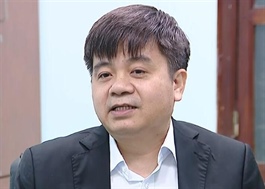
Steering PAN’s ecosystem towards sustainable development since its inception, group CEO Nguyen Thi Tra My said that no business can thrive or endure if it strays from the track, and that leadership must be fully aware of ESG’s role. “The diversity among PAN’s member companies in terms of history, scale, geographical spread, and leadership generations is what sets us apart in practicing sustainable development,” Tra My said.
Specifically, while the holding company has been established for 15 years, many subsidiaries have a history of 50–55 years, and the leadership spans several generations. Moreover, member companies operate in distinct business sectors, each with different scales, markets, and corporate cultures.
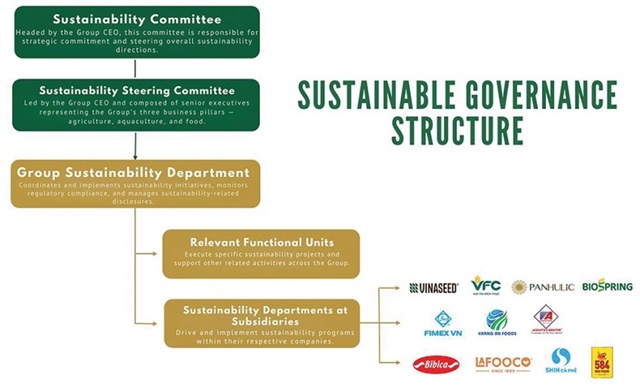
Addressing diversity, sustainable development at PAN is governed through a three-tier model: a sustainable development subcommittee advises on strategy; a steering committee for sustainable development is responsible for managing and supervising ESG execution; and an ESG department communicates and implements related activities across the entire organisation. Under this governance framework, both large subsidiaries and smaller companies are progressing on their own tailored ESG roadmaps.
|
For example, seafood processor Khang An Foods has committed to reducing CO₂ emissions by 50 per cent by 2030, based on the carbon quota allocated by the government. Meanwhile, Bibica, operating in packaged foods, has targeted a 32 per cent reduction in CO₂ emissions by 2030 compared to its 2023 baseline.
Driven by a unified vision, members of the PAN ecosystem are translating ESG strategy into concrete actions tailored to their specific business characteristics.
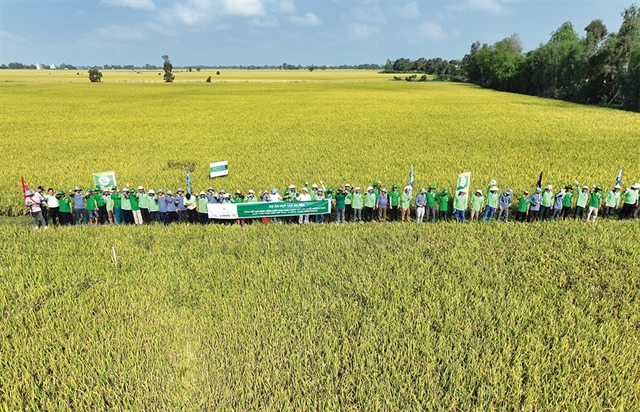
At Vinaseed, more than 21,500 hectares of high-quality, low-emission rice fields in the Mekong Delta were certified by international organisation Regrow Ag, achieving almost 82,400 tonnes of CO₂ reduction. The company was also granted the right to use a low-carbon green rice label by the Vietnam Rice Industry Association, paving the way for a new market orientation.
Elsewhere in the ecosystem, Lafooco has developed 455ha of organic cashew farming areas certified under USDA, EU, and JAS standards; and SHIN Cà Phê has established 7.6ha of organic coffee sourcing zones, also certified by the USDA, meeting stringent global requirements.
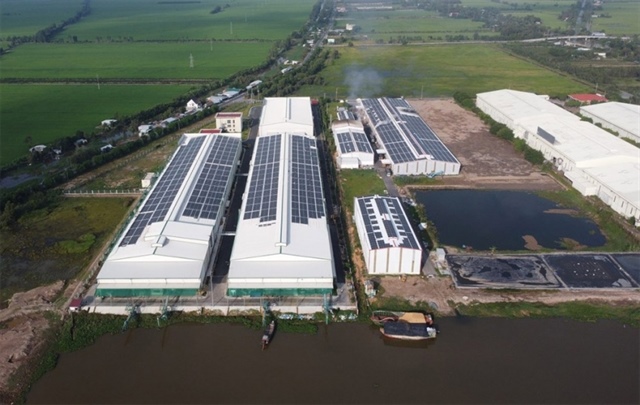
In addition to developing organic and sustainable raw material zones, PAN reduces its carbon footprint through energy efficiency and renewable energy adoption. In 2024, the group’s total solar energy output reached 3,770MWh, accounting for 3.5 per cent of total electricity consumption, and marking a 4.7 per cent increase over 2023. This figure is expected to continue rising, with a target for 100 per cent of PAN’s companies to install and use solar power systems by 2030.
PAN has redefined its approach to natural resources. In 2024, it reduced freshwater usage by 21.3 per cent, and recovered and reused almost 14,600 cubic meters of water. These results stem from the application of circular water reuse technologies, equipment upgrades, and scientific innovation across production operations.
In sustainable rice farming, PAN has transferred to farmers the alternate wetting and drying irrigation method, which has reduced water consumption by one-fifth compared to conventional practices.
It also maintains long-standing partnerships with farmers: Vinaseed partners with over 40,000 farming households and 220 cooperatives through a structured rice value chain, ensuring market access and improved incomes.
In addition to delivering value to investors and farmers, The PAN Group also provides livelihoods and employment for over 11,000 workers, including a significant number of ethnic minority employees at several member companies.
|
- 09:00 26/12/2025