Việt Nam strengthens supply chain defences amid global uncertainty
Việt Nam strengthens supply chain defences amid global uncertainty
For a highly open economy such as Việt Nam, where total import–export turnover far exceeds GDP, the spillover effects are increasingly evident.
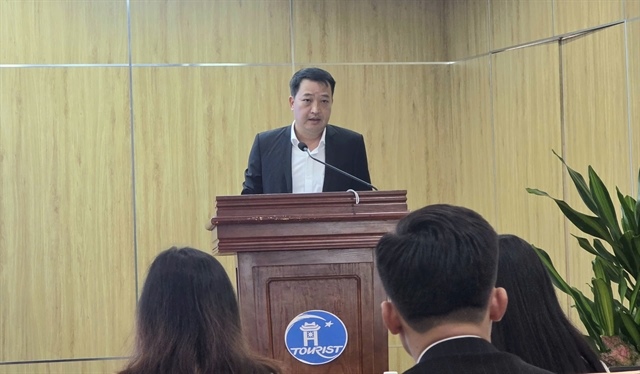
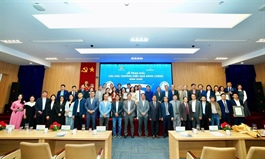
Bùi Quang Hưng, deputy director general of the Trade Promotion Agency, speaks at the event in Hà Nội. — VNS Photos Ly Ly Cao |
Amid escalating geopolitical tensions and deep structural changes in global trade, Việt Nam's enterprises are facing mounting pressure to adapt global supply chains while safeguarding growth and market access.
Speaking at a workshop themed 'Directions and Solutions for Creating a Safe and Sustainable Supply Chain for Businesses in the New Geopolitical Context', held by the Trade Promotion Agency, under the Ministry of Industry and Trade, on December 23, trade officials and logistics experts underscored that strategic competition among major economies, prolonged regional conflicts and rising protectionism are no longer temporary disruptions but defining features of the global trading environment.
For a highly open economy such as Việt Nam, where total import-export turnover far exceeds GDP, the spill over effects are increasingly evident.
Enterprises are confronting heightened risks related to supply concentration, trade remedy investigations, origin fraud and compliance with stricter standards on carbon emissions, labour and traceability imposed by major markets.
According to Bùi Quang Hưng, deputy director general of the Trade Promotion Agency, these pressures are forcing businesses to rethink not only their export strategies but also their position within regional and global value chains.
"Trade promotion today must go beyond market access," he said.
"It must help enterprises identify risks early, understand evolving standards, and connect more deeply with global supply chains that value transparency and sustainability."
At the logistics and supply chain level, experts highlighted the growing role of digitalisation and integrated service ecosystems in strengthening resilience.
Trần Chí Dũng, a member of the Executive Committee of the Vietnam Logistics Business Association (VLA), said that traditional, fragmented logistics models are no longer sufficient in a volatile geopolitical context.
He emphasised the need for an 'all-in-one' digital commerce and logistics framework that integrates sourcing, manufacturing, fulfilment and finance.
"Enterprises must move towards intelligent supply, dynamic fulfilment and green, resilient chains if they want to grow safely and sustainably from 2026 onwards," Dũng said, adding that digital trade platforms combined with multimodal logistics could help exporters diversify markets while reducing costs and operational risks.
Trade facilitation and customs reform were also identified as critical pillars supporting supply chain continuity.
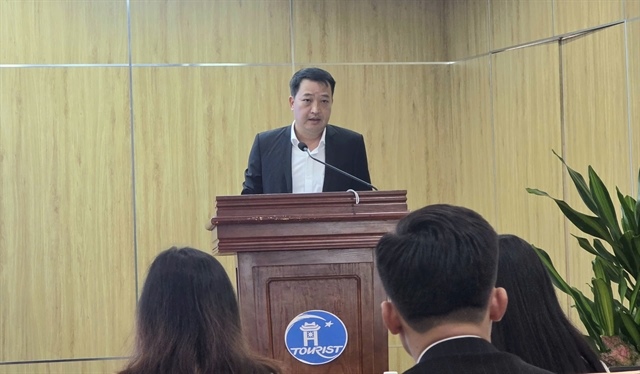
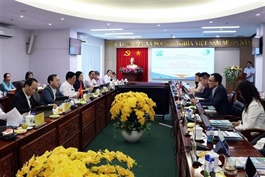
Bùi Quang Hưng, deputy director general of the Trade Promotion Agency, speaks at the event in Hà Nội. — VNS Photos Ly Ly Cao |
Bùi Thị Minh Hải, deputy head of the Customs Management Supervision Board at the Department of Customs under the Ministry of Finance, said that 2025 marks a pivotal year for comprehensive customs reform, with a strong focus on electronic customs procedures, digital documentation and streamlined administrative processes.
New regulations aim to reduce unnecessary paperwork, expand the use of electronic dossiers and enhance risk-based management through data standardisation and inter-agency connectivity.
"Customs reform is designed to ensure smoother, more transparent supply chains, while helping enterprises reduce compliance costs and improve predictability," Hải said.
Beyond regulatory changes, authorities stressed that enterprises themselves must strengthen internal governance and legal compliance to withstand external shocks.
Enhanced risk management, investment in information technology infrastructure, and closer co-ordination with logistics and financial service providers were repeatedly cited as prerequisites for effective participation in restructured global supply chains.
In this context, trade promotion agencies see their role as facilitators of ecosystem-based linkages, connecting domestic producers with international buyers, logistics operators and service platforms aligned with sustainability and digital transformation goals.
As global supply chains continue to fragment and reconfigure under geopolitical pressure, Việt Nam's ability to adapt will depend on how effectively policy reforms, digital logistics solutions and enterprise-level transformation converge to reinforce resilience, transparency and long-term competitiveness.
- 14:09 24/12/2025