Unlocking maritime advantages to position Việt Nam as a global logistics centre
Unlocking maritime advantages to position Việt Nam as a global logistics centre
With its strategic location and maritime advantages, Việt Nam has been identified as a promising destination for regional logistics activities and is presented with significant opportunities for breakthrough development.

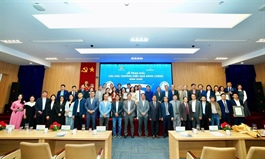
Dr Nguyễn Văn Hội, General Director of the Ministry of Industry and Trade's Vietnam Institute of Strategy and Policy for Industry and Trade. — VNA/VNS Photo |
Many domestic and international businesses recognise Việt Nam’s strong potential to emerge as a leading logistics hub in the region and globally.
With its strategic location and maritime advantages, Việt Nam has been identified as a promising destination for regional logistics activities and is presented with significant opportunities for breakthrough development. However, realising this ambition will depend on the country’s ability to address key challenges, particularly institutional constraints, infrastructure limitations and technological gaps.
In an interview with the Vietnam News Agency, Dr Nguyễn Văn Hội, General Director of the Ministry of Industry and Trade's Vietnam Institute of Strategy and Policy for Industry and Trade, shared insights into the logistics sector’s potential, challenges, and priority solutions.
How do you assess the potential and advantages for developing Việt Nam’s logistics industry?
It is essential to recognise the strong potential and advantages stemming from Việt Nam’s maritime economy. With a coastline stretching more than 3,260 kilometres and a network of deep-water ports capable of accommodating large vessels that meet international standards, Việt Nam enjoys favourable conditions for logistics development. In addition, the country has more than 4,000 islands, both nearshore and offshore, many of which have significant potential to be developed into deep-water ports serving logistics activities.
Beyond maritime advantages, Việt Nam’s trade and domestic markets continue to expand rapidly. Export turnover reached around US$800 billion in 2024 and is on track to exceed $900 billion by the end of 2025, with the possibility of surpassing $1 trillion after 2026. Meanwhile, the domestic market remains robust, with total retail sales estimated at VNĐ6.3 quadrillion in 2024 and approximately VNĐ7 quadrillion in 2025.
With these advantages, combined with favourable geographical conditions and the existing Maritime Economic Development Strategy, Việt Nam is well positioned to strongly develop its logistics industry, particularly over the next five to 10 years.
What challenges and obstacles must be addressed to foster the development of the logistics industry?
One of the challenges most frequently cited by businesses is the high cost of logistics. Compared with other cost indicators, Việt Nam ranks among the countries with the highest logistics costs worldwide. However, in my view, the most critical issue lies in mechanisms and policies, which remain inadequate and have yet to be fully developed, supplemented, or refined. This is despite significant progress over recent years in road and highway infrastructure.
Secondly, logistics infrastructure, including direct service centres as well as traceability and technology-related infrastructure, remains weak and has not received sufficient investment for comprehensive development.
Thirdly, human resources, both in terms of State management and within logistics enterprises, remain limited in both quantity and quality.
Another major challenge relates to technology application and digital transformation. Requirements for traceability, cargo management, and system operations increasingly depend on advanced technologies and digital solutions. However, these areas remain a constraint for Việt Nam at present.
|
Dr Nguyễn Văn Hội, General Director of the Ministry of Industry and Trade's Vietnam Institute of Strategy and Policy for Industry and Trade. — VNA/VNS Photo |
What solutions should Việt Nam prioritise to fully realise its potential and become a regional logistics hub?
At present, many domestic and international businesses recognise that Việt Nam has strong prospects to become one of the region’s and the world’s logistics centres. However, to achieve regional and global hub status, a number of key solutions are required.
First and foremost, mechanisms and policies must continue to be improved. Việt Nam should consider amending the Commercial Law 2000, which has become outdated and no longer reflects current logistics practices. At present, legal regulations governing logistics remain incomplete and weak.
In my view, the National Assembly could issue a separate resolution specifically aimed at developing the logistics sector, as a necessary and urgent measure, at least through 2026 or throughout the next legislative term.
In addition, provisions in other specialised laws should be aligned to guide the overall development of the logistics industry in accordance with national strategies. At the same time, greater emphasis must be placed on improving the quality of human resources. While many educational institutions and State agencies are already focusing on training personnel for both state management and business operations in logistics, these efforts need to be further strengthened.
Furthermore, the Planning Law should be amended to clearly identify logistics service centres linked to seaports, industrial clusters, economic regions, and major transport corridors. Such adjustments would enable more efficient utilisation of logistics infrastructure and support the industry’s sustainable development.
- 18:37 24/12/2025