Cà Mau producers step up efforts to meet HCM City market demands
Cà Mau producers step up efforts to meet HCM City market demands
Stronger links between farmers, co-operatives and distributors are helping Cà Mau Province's agricultural producers improve quality and meet the increasingly demanding requirements of urban markets.
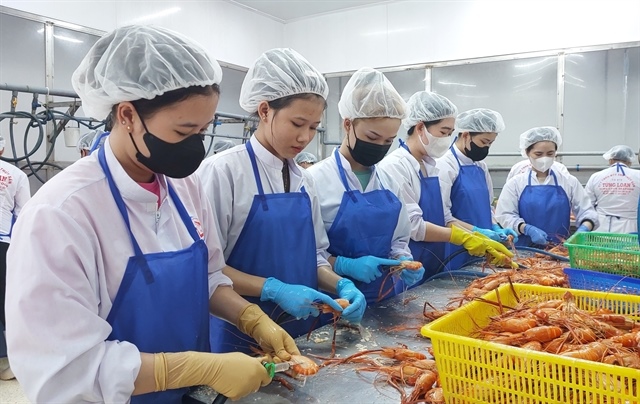
Giant river prawns from Cà Mau Province are steamed, peeled and frozen. They are valued by consumers for their freshness, attractive colour and high nutritional value. — VNA/VNS Photo |
Co-operatives and local producers in Cà Mau Province are improving product quality, production standards and traceability to meet growing demand in HCM City.
The Cửu Long (Mekong) Delta province is well known for its diverse agricultural products, especially shrimp and mud crab.
At the Trúc Thương Co-operative in Đầm Dơi Commune, efforts to improve product quality focus on processed products made from đất shrimp – a species harvested from the wild rather than farmed – and black tiger shrimp.
Trần Xuân Oanh, chairwoman of the co-operative's management board, said it sources around 500 kilos of đất shrimp each month, along with about 300 kilos of black tiger shrimp, white-legged shrimp and crab.
To ensure product quality, the co-operative carefully selects fresh raw materials before processing.
The co-operative has obtained ISO certification, while its dried shrimp and shrimp floss products have received four-star ratings under the country's One Commune–One Product (OCOP) programme. Several other products have received three-star ratings.
Oanh said: “We also supply many clients in HCM City who buy our products and package them themselves according to their distribution needs.
“When exporting the products, they use the co-operative's brand,” she said.
Other co-operatives are taking a supply-chain approach, working with farmers to maintain product quality from the raw material stage.
The Tài Thịnh Phát Farm Co-operative in Tam Giang Commune is focusing on developing production links and improving the quality of shrimp and crab products.
Mai Thị Thùy Trang, the co-operative's chairwoman, said it works with around 320 farming households across nearly 11,000ha.
Farmers receive technical guidance on seasonal farming practices and production methods to ensure the quality of raw materials, she said.
The co-operative supplies around 15-20 tonnes of black tiger shrimp a month and two to three tonnes of mud crab a day.
It has six OCOP products, including four rated four stars and two rated three stars.
Its products are supplied to restaurant chains, supermarkets and clean-food stores in HCM City and Hà Nội.
However, Trang said naturally harvested products often cost more than those from industrial farming, making it difficult to compete in some market segments.
The co-operative is therefore diversifying its products and supply sources while working to strengthen brand recognition and build consumer confidence.
“We continue to standardise farming areas, improve transparency in production and strengthen traceability so consumers can make informed choices about product quality,” Trang said.
For newer OCOP producers, improving production standards is also essential to establishing a foothold in the market.
The Đạt Hằng household business in Lý Văn Lâm Ward, which produces bird's nest products rated three stars under the OCOP programme, has been operating for around two years and is still building its customer base.
Its owner, Trần Thị Hằng, said the business is continuing to refine its production methods, adopt new technologies and use customer feedback to improve product quality and qualify for a higher OCOP rating.
While HCM City offers considerable opportunities for Cà Mau's specialties, accessing the market requires producers to meet increasingly stringent standards for product quality, packaging, labelling and supply reliability.
Nguyễn Minh Hùng, deputy head of the HCM City Department of Industry and Trade’s Trade Management Division, said supply-demand connection programmes are among the city's trade promotion activities aimed at making specialties from other localities more accessible to consumers.
Shrimp, crab and other speciality agricultural and aquatic products from the Mekong Delta have considerable potential in the city's market, he said.
Giant river prawns from Cà Mau Province are steamed, peeled and frozen. They are valued by consumers for their freshness, attractive colour and high nutritional value. — VNA/VNS Photo |
Dương Vũ Nam, deputy director of the Cà Mau Department of Industry and Trade, said the province has a diverse range of products associated with its natural conditions and local ecosystem, including shrimp, crab, processed seafood and OCOP products.
With its extensive network of distributors and modern retail chains, HCM City is a strategic market for Cà Mau as the province seeks to expand distribution and increase sales of its agricultural products and local specialties, he said.
The province will continue to support businesses and co-operatives in adopting new technologies, improving production processes and maintaining consistent product quality and output to serve domestic markets and move towards exports, he said.
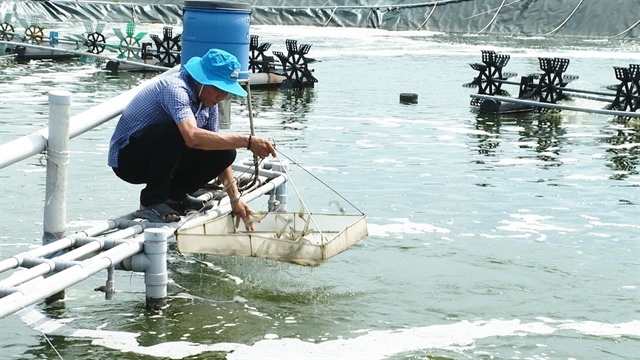
Cà Mau, which is the country’s largest shrimp-producing province, has around 418,000ha of shrimp farming areas, including nearly 90,000ha each dedicated to mangrove-shrimp and rice-shrimp farming models.
In the first 10 months of the year, shrimp output reached about 512,860 tonnes, up 8.5 per cent year-on-year, further strengthening the position of the local shrimp industry.
The province plans to hold the second Cà Mau Shrimp Festival 2026 from November 21 to 25 in An Xuyên Ward.
The festival will feature around 350 booths showcasing achievements in the shrimp industry, OCOP products, ecological shrimp farming models, rice-shrimp farming systems and high-tech applications.
- 14:42 19/11/2026