

Stronger EPR framework sought to accelerate green transition
Stronger EPR framework sought to accelerate green transition
The draft amendments to the Law on Environmental Protection propose removing the financial contribution mechanism as a way for businesses to fulfil their recycling obligations.
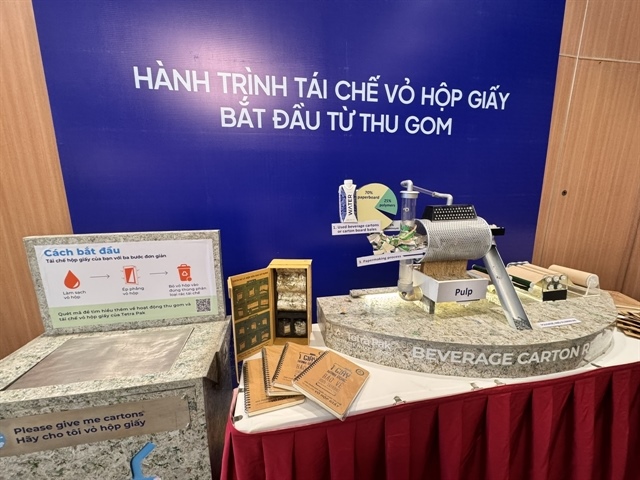
A model illustrating the recycling of used carton packaging. Under the proposed roadmap, from 2033 businesses would directly organise collection and recycling, transfer waste to recycling facilities or authorise PROs to fulfil their obligations.— VNS Photo Vũ Hoa |
Improving the extended producer responsibility (EPR) framework, strengthening collection and recycling networks and increasing corporate accountability are essential to advancing Việt Nam's circular economy, experts said at a forum in Hà Nội on November 18.
The forum, themed 'Implementing EPR regulations and promoting responsible business models towards a circular economy', was organised by the Nông nghiệp và môi trường (Agriculture and Environment) newspaper in collaboration with the Việt Nam Environment Protection Fund (VEPF).
Discussions focused on proposed amendments to environmental protection regulations, financial support mechanisms and ways to improve businesses' implementation of their obligations to collect and recycle used products and packaging.
According to Trần Thị Thu Hiền, a representative of the Environment Administration under the Ministry of Agriculture and Environment, the draft amendments to the Law on Environmental Protection propose removing the financial contribution mechanism as a way for businesses to fulfil their recycling obligations.
"The changes aim to increase the direct responsibility of manufacturers and importers for collecting and recycling discarded products and packaging," Hiền said.
To give businesses time to prepare, the draft proposes several compliance options, including organising collection and recycling themselves, transferring waste to qualified recycling facilities, hiring service providers, authorising producer responsibility organisations (PROs), or exporting waste for recycling. Businesses may also combine these approaches.
Under the proposed roadmap, from 2033, businesses would directly organise collection and recycling, transfer waste to recycling facilities or authorise PROs to fulfil their obligations.
The draft also requires PROs to register the product and packaging categories they intend to handle and maintain records to ensure traceability throughout the collection and recycling process. Their implementation reports would be subject to auditing.
"One major challenge is collecting discarded products and packaging, particularly hazardous waste generated by households. The draft therefore proposes allowing businesses, PROs and recycling and waste treatment facilities to establish collection points independently or jointly," she added.
Financing and responsible supply chains
On financial support, Nguyễn Anh Dũng, head of the Green Economy Division at VEPF, said the fund provides preferential loans, grants, co-financing and post-investment interest-rate support to mobilise resources for environmental protection and green development.
EPR funding is allocated to recycling activities and local waste management projects, including household waste collection and treatment, waste treatment technology research and the collection and treatment of pesticide packaging.
Beyond recycling volumes, ensuring that collection chains operate transparently and responsibly is another priority.
Hoàng Thành Vĩnh, a programme officer for waste management and the circular economy at UNDP Việt Nam, said the country was among the first five to participate in the Responsible Sourcing Initiative (RSI), launched by The Circulate Initiative to improve working conditions and protect informal waste collectors.
By the third quarter of 2026, the pilot programme for plastic recycling supply chains had responsibly sourced 44,850 tonnes of scrap plastic, directly and indirectly improving incomes and working conditions for 8,422 workers.
Hundreds of scrap collection businesses had also received training in responsible sourcing standards, tax obligations and occupational health and safety.
“Scaling up this model requires coordination between businesses and management agencies,” Vĩnh said, adding that brands and manufacturers should commit to responsible sourcing, while PROs and recycling companies should integrate these standards into their EPR implementation processes.
This would help improve transparency and traceability across recycling supply chains while enabling informal collection facilities and workers to gradually formalise their operations.
A model illustrating the recycling of used carton packaging. Under the proposed roadmap, from 2033 businesses would directly organise collection and recycling, transfer waste to recycling facilities or authorise PROs to fulfil their obligations.— VNS Photo Vũ Hoa |
Businesses step up recycling efforts
From the business perspective, Đinh Viết Khang, a representative of Vinamilk, said sustainability had been incorporated into the company's business strategy for years, with efforts to reduce environmental impacts throughout its production chain and achieve net-zero emissions by 2050.
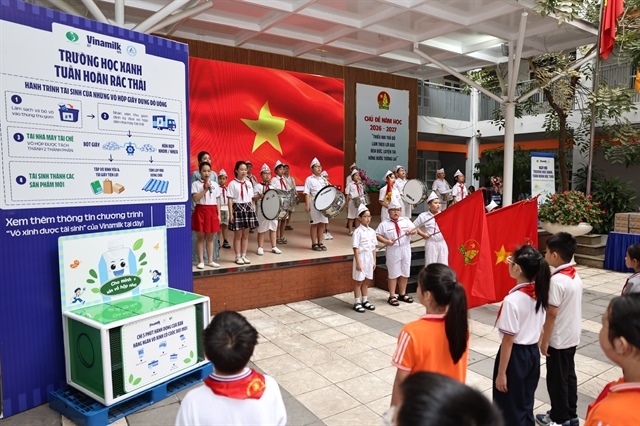
Through a network for collecting used carton packaging, combined with waste-sorting education and digital data management, the programme collected more than 16 tonnes of used cartons, equivalent to approximately 3.2 million packages, from August to November 10, 2026. Hà Nội and HCM City accounted for more than 83 per cent of the total.
Meanwhile, Nguyễn Đỗ Thu Minh, head of sustainability at Tetra Pak Việt Nam, said the company was working with partners to develop collection and recycling networks alongside its packaging and processing technology solutions.
The network focuses on three areas: waste-sorting education in schools, collection models linked to EPR implementation, and support for informal waste collectors.
Digital tools are also being used to track packaging from collection to recycling facilities.
“Digitalisation not only improves transparency in collection and recycling but also provides a basis for businesses and partners to assess EPR implementation,” Minh said.
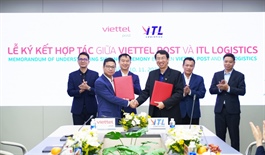
At the forum, VEPF, Vinamilk and Tetra Pak Việt Nam announced a memorandum of understanding on cooperation in the collection, sorting and recycling of used packaging.
- 06:24 19/11/2026