Ho Chi Minh City proactively adapts to climate change
Ho Chi Minh City proactively adapts to climate change
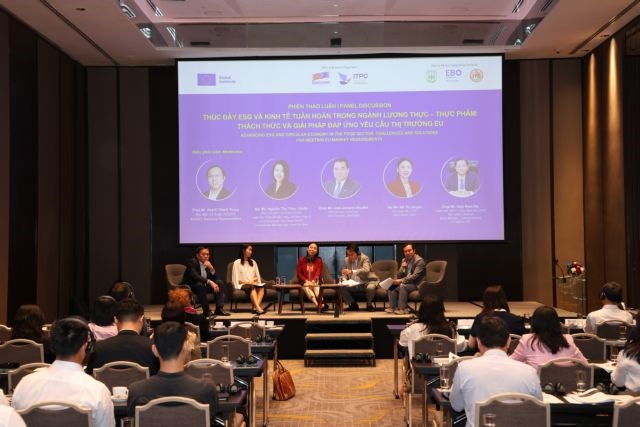
On November 18, Ho Chi Minh City Department of Agriculture and Environment organised an international workshop on the theme "Opportunities and Challenges in Responding to Climate Change in Ho Chi Minh City."
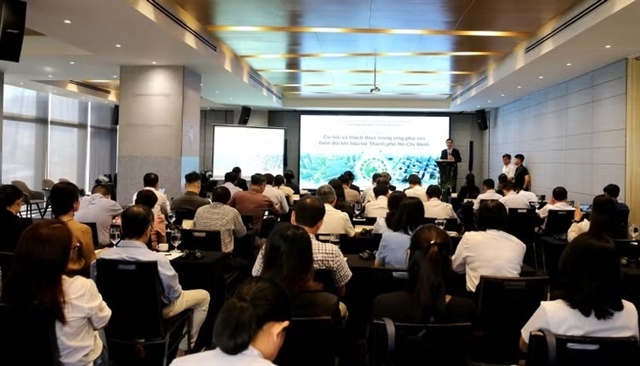
Ho Chi Minh City proactively adapts to climate change. Photo:cand.vn |
Nguyen Hong Nguyen, deputy director of Ho Chi Minh City Department of Agriculture and Environment, explained that climate change is no longer a potential threat but has become a harsh reality, directly impacting the living environment, socioeconomic infrastructure, and people's lives.
Ho Chi Minh City has taken on the form of a megacity with a natural area of 6,772 square kilometres, a population of approximately 13.8–14 million people, contributing 23.5 per cent to the country's total GDP, and possessing 168 wards, communes, and special zones. The new development space stretches from the northern highlands to the central lowlands, coastal areas, and islands, giving the city a strategic position but also exposing it to complex and intertwined climate risks.
Nguyen Duy Binh, deputy head of the Division of Meteorology, Hydrology and Climate Change under Ho Chi Minh City Department of Agriculture and Environment, pointed out four clear threatening signs namely increased heatwaves, extreme rainfall, tidal surges - rising water levels, and saltwater intrusion.
Monitoring data from 2021 to 2025 shows that Ho Chi Minh City has experienced 27 tidal surges exceeding alarm level III. Notably, on November 6, 2025, the water level at Phu An Station reached 1.78m - the highest level in history.
In 2024, maximum salinity at Nha Be Cape reached 13.3 parts per thousand. Under a high-risk climate change scenario by the end of the 21st century, average temperatures in inner-city areas could rise by 3.5–3.7°C, and the number of days above 35°C could increase by 90 to 110.
From the perspective of urban spatial planning, Ly Khanh Tam Thao, head of the General Planning Division under of Ho Chi Minh City Department of Planning and Architecture, warned of the "double challenge" when developing a compact urban area on weak sedimentary foundations. Land subsidence in the city is occurring at 2-5 cm per year, and the corridor along the Saigon River is experiencing subsidence exceeding 15 mm per year. Accumulated subsidence combined with rising sea levels will increase the severity of flooding if fundamental planning solutions are not implemented.
In implementing Conclusion No.75-KL/TW of the Central Party Committee, Ho Chi Minh City concretised this into 18 targets and 76 key tasks in its Action Plan for the 2026-2030 period. The city aims to reduce greenhouse gas emissions by 9 per cent by 2030 compared to the business-as-usual scenario, striving for net-zero emissions by 2045 – five years earlier than the national commitment.
To realise this goal, representatives from the Department of Planning and Architecture stated that in the Ho Chi Minh City Master Plan for the 2025-2050 period, with a 100-year vision (approved by Decision No.7308/QD-UBND dated October 31, 2026), the management mindset has shifted from "passive flood and subsidence control" to "water adaptation".
The city organises its space into 10 development management zones, establishing a green-blue interconnected system from Dau Tieng Lake and Ma Da Forest down to the Saigon and Dong Nai rivers and the Can Gio mangrove forest.
Simultaneously, the city applies the "sponge city" model, requiring new urban areas and industrial zones to allocate 5-10 per cent of their area for regulating lakes, infiltration green spaces, and to restore at least 30 per cent of natural low-lying areas for flood storage.
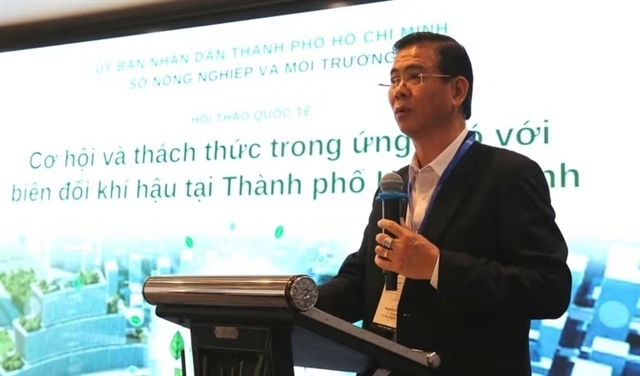
Nguyen Hong Nguyen, deputy director of Ho Chi Minh City Department of Agriculture and Environment. Photo: cand.vn |
In the energy sector, representatives from Ho Chi Minh City Department of Industry and Trade stated that the shift in energy structure is a revolutionary restructuring of the growth model, ensuring green competitiveness against technical barriers such as the European Union's Carbon Border Adjustment Mechanism.
With projected commercial electricity consumption reaching approximately 60 billion kWh and peak load reaching 9,677 MW in 2026, Ho Chi Minh City is facing three issues in energy security: over 50 per cent of power demand depends on inter-regional transmission; land clearance issues are slowing down the progress of the 500/220/110kV power grid; and fluctuations in fossil fuel prices.
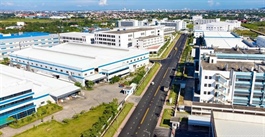
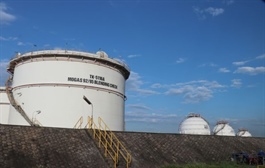
Ho Chi Minh City Department of Industry and Trade is focusing on promoting clean base power sources such as the Hiep Phuoc and Long Son LNG power plants, and developing waste-to-energy projects (total planned capacity of 432.6 MW).
The city is studying a mega-project for offshore wind power in Can Gio and Xuyen Moc with a capacity of 6,000 MW, connected to a battery energy storage system (BESS). The city is promoting the Direct Power Purchase Agreement (DPPA), developing over 21,500 rooftop solar power systems, and gradually forming a clean marine fuel supply chain from green hydrogen and green ammonia at key seaports.
At the workshop, experts and international partners shared many practical models with high reference value for Ho Chi Minh City's green transformation process.
From the Japanese side, Kawabe Shunsuke, head of International Cooperation, Osaka City Environment Bureau, introduced the "Next Green" project and the model of the Decarbonisation Pioneer Zone on Midosuji Avenue. Osaka aims to reduce greenhouse gas emissions by 50 per cent by 2030 through a dual subsidy mechanism (combining national and municipal budgets) for small and medium-sized enterprises (SMEs) to conduct energy audits, renovate housing insulation, and commercialise next-generation Perovskite solar cells.
Notably, the application of aquifer thermal storage technology (ATES) in the Grand Green Osaka project helps save up to 40 per cent of cooling and heating energy – a practical suggestion for addressing the urban heat island effect in Ho Chi Minh City.
Sharing experience, a representative from the Korea Environmental Group (K-eco) stated that South Korea has legalised carbon neutrality targets and implemented them synchronously across 17 cities and provinces, along with 226 wards, through the "Task Management Card" tool. K-eco expressed its readiness to collaborate with Ho Chi Minh City in technical exchange programmes, climate-resilient water management infrastructure, and emission reduction in key sectors.
- 12:39 19/11/2026