ILO's WIND approach brings safer coffee farming to Vietnam
ILO's WIND approach brings safer coffee farming to Vietnam
Nguyen Trong Tuong was first introduced to the International Labour Organization's WIND approach in 2022. Four years later, he is teaching it himself, still looking for ways to make safer and healthier work part of everyday coffee farming in Vietnam.
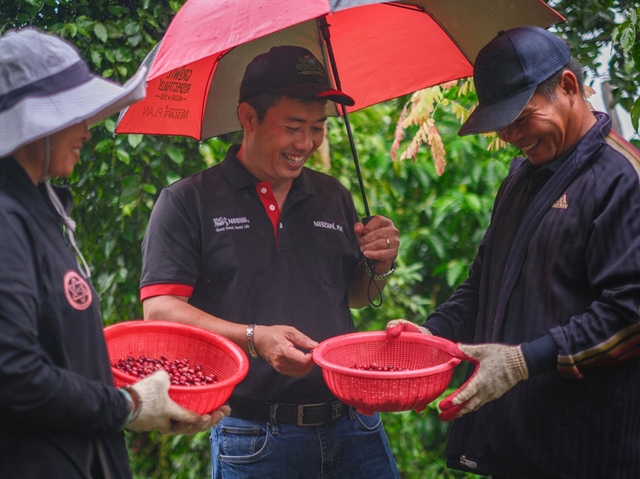
Photo courtesy of ILO |
Behind every coffee harvest are countless decisions made in the course of a working day: how to prune a tree, handle chemicals, lift a heavy load, or move coffee from the farm. Many are routine, repeated season after season. Yet small changes in how that work is done can make an important difference to the safety and health of the people doing it.
Nguyen Trong Tuong has spent years working closely with coffee farmers in Central Highlands. In his role as Nescafé Plan Programme Manager in Vietnam, he has seen first-hand many of the everyday realities of coffee farming. When he first took part in training on the International Labour Organization (ILO)’s Work Improvement in Neighbourhood Development (WIND) methodology in 2022, it offered another lens on that work: the safety and health of the people doing it.
As the ILO–Nestlé partnership, implemented through the Vision Zero Fund in Vietnam, developed its work to improve occupational safety and health, and working conditions in coffee-growing communities, WIND became an important part of the approach.
Tuong returned to WIND training with ILO experts several times, while continuing to explore the material on his own. He wanted to know it well enough to move beyond the training slides, to understand how its technical knowledge could be explained in ways that farmers could easily relate to their own work, without losing their substance.
The more familiar he became with WIND, the more he began thinking about how those messages would be most useful to farmers. Coffee farming follows its own rhythm, with different tasks – and different risks – coming to the fore throughout the year.
Rather than presenting WIND as something to be absorbed all at once, Tuong began bringing relevant topics back as the work changed through the season: safe tools and working at height around pruning, for example, or lifting and transport as harvest approached. The ILO WIND action checklist remained the foundation, covering practical measures across cultivation and plant care, harvesting and transport, storage and processing.
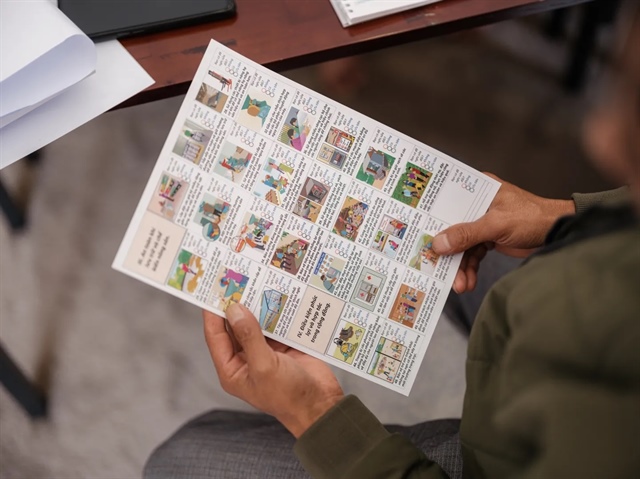
Photo: ILO |
Connecting safety with the work farmers are actually doing also stays close to the spirit of WIND: farmers look at their own working conditions, identify where improvements are possible, and decide which actions should take priority. Tuong encouraged farmers to take that process back to their own farms and households, and document the changes through before-and-after photographs. Those photographs have grown into a library of more than 2,000 improvements, capturing practical changes ranging from safer storage of tools and chemicals to improved electrical safety and work areas.
Seeing those changes has reinforced what first drew Tuong to WIND: practical knowledge can lead to practical action. Having learned the approach from ILO experts, and worked to bring it closer to farmers’ realities, he is now passing that knowledge on himself. To date, he has led three WIND training classes for more than 150 farmers across three provinces in Central Highlands.
As the ILO–Nestlé partnership continues, Tuong is already looking ahead to what farmers could benefit from next. The value he has found in WIND has also shaped the way he sees other areas of learning to come, including first aid and social protection: practical knowledge that can help farmers better protect themselves, their work, and their livelihoods.
Four years after he began learning about WIND and OSH, Tuong’s role has changed from learner to trainer. But his experience is about more than that progression. It shows what can happen when someone close to the work sees value in new knowledge, takes the time to make it relevant to others, and then carries it forward.
One improvement on one farm may seem small. But multiplied across farming communities, these changes can help make safer and healthier ways of working part of how coffee is grown – so that progress in coffee production also means progress for the people behind it.
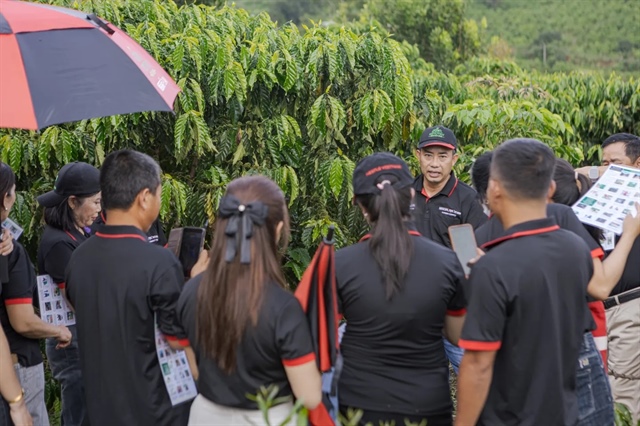
Photo: ILO |
- 10:34 07/10/2026