




Northern Ho Chi Minh City apartment market gains momentum in 2026
Northern Ho Chi Minh City apartment market gains momentum in 2026
The apartment market in northern Ho Chi Minh City has gathered significant momentum in 2026, with a steady stream of new project launches, prices reaching new highs, and major developers joining an increasingly competitive market.
In the first seven months of 2026, northern Ho Chi Minh City (the former Binh Duong province) had 11,714 apartments eligible for sale, more than 55 per cent of the citywide total, according to the city’s Department of Construction.
Figures from commercial real estate services and investment firm CBRE Group tell a similar story with nearly 80 per cent of the city’s new apartment supply in the first half came from the area.
Yet supply tells only part of the story. The market is also seeing a notable shift in both positioning and pricing. Most new projects sit in the upper mid-range and high-end segments, with prices typically at VND55-60 million ($2,200-$2,400) per square metre and some above VND70 million ($2,800).
The figures point to a notable change in the area’s market position. Once considered part of Ho Chi Minh City’s urban periphery, the area is now emerging as a major source of the city’s new apartment supply.
Experts point to two forces behind included the area’s new status after the merger and infrastructure projects worth hundreds of millions to several billion dollars being rolled out at the same time.
After years of anticipation, work has begun on widening the National Highway No.13 to 10–14 lanes, marking a significant upgrade to Ho Chi Minh City’s northeastern gateway.
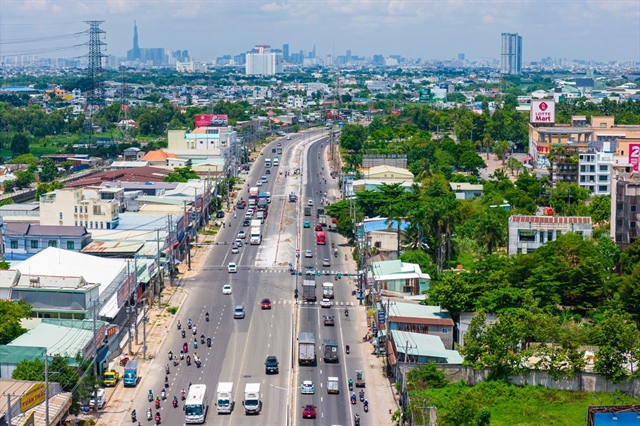
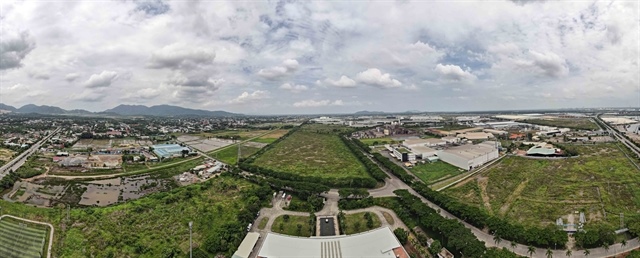
National Highway No.13 is being widened through Thuan Giao ward. Photo: Gamuda Land |
Scheduled to open to traffic by the end of 2028, the project is expected to strengthen connectivity between the city’s urban core and its northern industrial hubs.
At the same time, several infrastructure links made fresh progress in the latter part of the year. Ring Road 3 was more than 80 per cent complete as of mid-August and is scheduled to open in December.
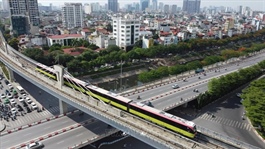
Two metro lines between the former Binh Duong area and central Ho Chi Minh City are on the investment priority list, with construction targeted to start in late 2026 and finish in 2030.
Ring Road 4 and Ho Chi Minh City–Thu Dau Mot–Chon Thanh Expressway are also being accelerated, gradually completing a network that ties the city's industrial and service region to the wider southeast.
Infrastructure shortens travel times and widens the radius within which people can choose where to live. When distance is measured in time rather than kilometres, areas once outside the urban core can plug directly into the city's network of jobs, commerce, and services.
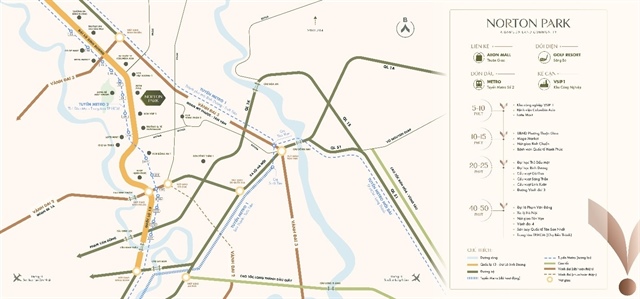
On this map, Thuan Giao ward is emerging as a standout location. It lies along the National Highway No.13 corridor and has a large employment base from Vietnam-Singapore Industrial Park (VSIP) I, Viet Huong, and neighbouring industrial parks.
Its commercial and service ecosystem is also fairly complete, with AEON Mall Binh Duong Canary, Song Be Golf Course, hospitals, and schools.
Unlike emerging areas where infrastructure must first attract residents and services, Thuan Giao is entering its next development cycle on a foundation built over many years. As further infrastructure is developed, the area’s growth potential is set to expand accordingly.
As infrastructure, urban positioning, and price levels advance in tandem, competition in northern Ho Chi Minh City’s apartment market is also intensifying. A series of projects positioned in the higher-end segment, including La Pura, Monrei, Khai Hoan Imperial, The Emerald 68, and Sky Solis, have entered the market in quick succession.
The result is a new phase of competition extending beyond price to product standards, residential experience, developer credentials, and community quality.
More recently, news that Gamuda Land is preparing to unveil Norton Park on Binh Duong Boulevard in Thuan Giao ward has added further heat to the market. Gamuda Land, the property development arm of Malaysia’s Gamuda Berhad, is a top regional developer specialising in integrated townships and sustainable urban communities.
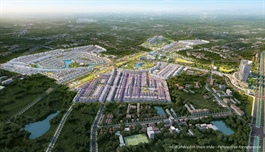
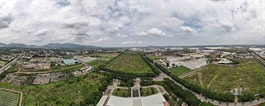
Located along the Binh Duong Boulevard–National Highway No.13 corridor, Norton Park forms part of a 17.5-hectare master-planned development.
AEON Mall Binh Duong Canary is nearby, while Song Be golf course lies opposite the project and VSIP I is nearby. International hospitals, schools, Lotte Mart, MM Mega Market, and other urban amenities are within a 10–20-minute journey.
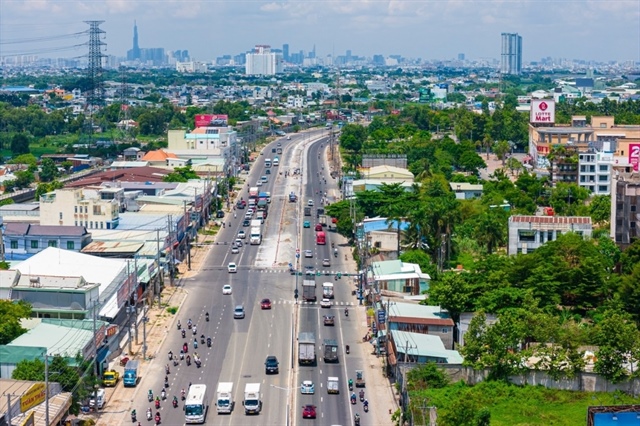
Norton Park is on the Binh Duong boulevard frontage, next to AEON Mall and adjacent to VSIP I. Photo: Gamuda Land |
According to a representative of the developer, Norton Park is being developed to meet genuine housing demand in the area, focusing on the community of professionals, managers, and engineers working in industrial parks and foreign-invested enterprises.
Norton Park spans 7.9 ha and comprises six residential towers with 1,286 residential and commercial units.
These include 1,256 apartments across a diverse range of configurations, from studios and one- to three-bedroom apartments to duplexes, alongside 30 commercial units, bringing additional services and conveniences within the development.
Construction density is capped at just 20 per cent, with 2.5 ha dedicated to landscaped green spaces across the development, including ecological green cores interspersed among the residential towers and adjacent parkland.
Together, these spaces help create a greener, more tranquil living environment amid rapid urbanisation and industrial activity.
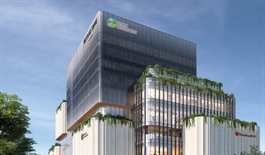
Norton Park – a new addition to Gamuda Land’s footprint in Ho Chi Minh City. Photo: Gamuda Land |
Responding to increasingly sophisticated expectations for quality of life among a new generation of residents and the international professional community, Norton Park places everyday living at the heart of its amenity planning.
Amenities are organised into two major clusters at the centre of the residential blocks, providing a diverse range of experiences while keeping them within easy reach of residents. Spaces are planned around everyday routines, spanning exercise, work, study, entertainment, relaxation, and community interaction.
Daily needs are also reflected in the master plan, with a work hub for professionals, multipurpose learning spaces for children, dedicated facilities for older residents, and amenities designed specifically for pets and their owners.
While earlier generations of apartments in the area largely addressed the need to live close to the workplace, the growing presence of international developers such as Gamuda Land signals a broader shift towards higher standards in northern Ho Chi Minh City’s residential market.
Against this backdrop, Norton Park is expected to contribute to the next chapter of northern Ho Chi Minh City’s residential market, raising the bar for quality living in the area.
- 08:00 14/10/2026