




Hung Yen unveils adjusted master plan with three economic zones
Hung Yen unveils adjusted master plan with three economic zones
Hung Yen's adjusted provincial master plan for the 2021–2030 period, with a vision to 2050, establishes a development framework of three economic zones, two corridors, and seven development axes, providing a basis for reorganising economic space and mobilising resources in the new phase.
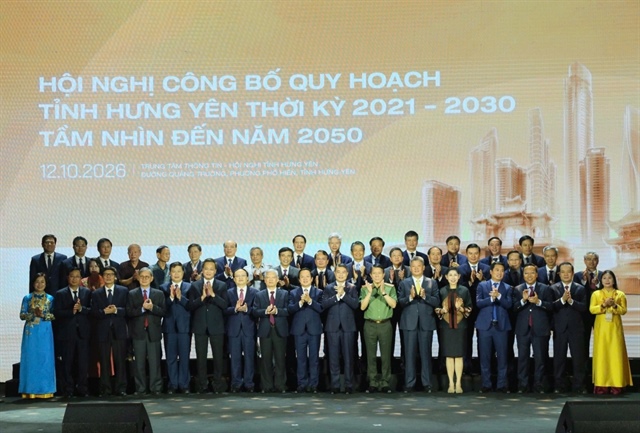
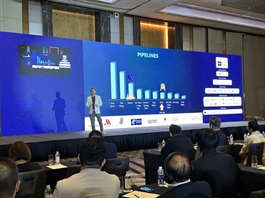
The Hung Yen People's Committee held a conference to announce the plan on October 12. The adjusted plan follows the merger of Hung Yen and Thai Binh provinces and aims to reflect the expanded development space, leverage local strengths, and establish a foundation for rapid and sustainable growth.
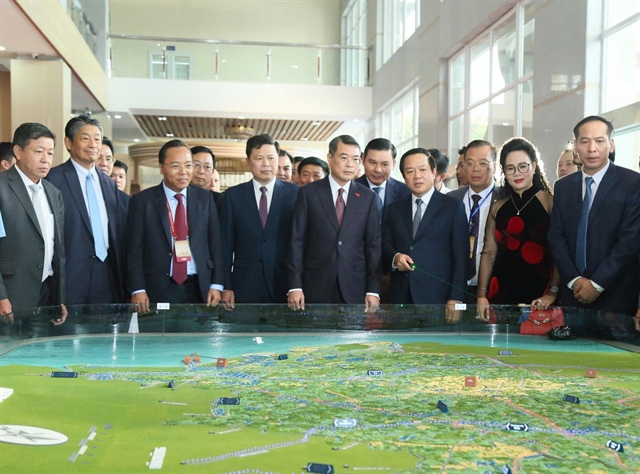
Photo: Mai Huong |
In his opening remarks, Nguyen Manh Quyen, Chairman of Hung Yen People’s Committee, noted, “Implementing the policy of the Party Central Committee and Resolution No.202 of the National Assembly on the reorganisation of provincial-level administrative units, the entire natural area and population of the former Hung Yen and Thai Binh provinces have been merged into a new administrative unit named Hung Yen province.”
According to Chairman Quyen, this is a strategic decision by the central government that optimises national resources while creating an integrated development space connecting inland areas with the sea, shaping a new growth pole with significant potential in northern Vietnam.
Following the merger, Hung Yen has a natural area of 2,638 square kilometres, a marine area of approximately 487 sq.km and 104 commune-level administrative units.
With its expanded development space, the adjusted master plan establishes orientations for reorganising economic areas, connecting infrastructure and promoting complementary roles among the northern, central and coastal areas.
Hung Yen has identified rapid and sustainable development as its overarching objective, with modern industry as the main driver, civilised urban development at the centre and sustainable marine economic development as a key pillar.
Science and technology, innovation, digital transformation, green growth and the circular economy are cross-cutting priorities.
By 2030, the province aims to become a dynamic economy achieving double-digit growth, with a modern industrial base, civilised urban areas, a developed marine economy, synchronised infrastructure, and improved living standards.
Hung Yen targets average annual regional GDP growth of 10-11 per cent during 2026-2030, striving to exceed 11 per cent. Regional GDP per person is expected to approach $8,000 by 2030, while regional GDP at current prices is projected to surpass $27.4 billion.
By 2030, the economic structure is expected to comprise agriculture, forestry, and fisheries at 8 per cent; industry and construction at 60 per cent; services at 27.5 per cent; and taxes on products less subsidies at 4.5 per cent.
To achieve these objectives, the master plan organises the province's development space around three economic zones, two development corridors, and seven development axes.
|
Photo: Mai Huong |
Accordingly, the northern growth-driving zone, identified as a gateway to the Hanoi region, will focus on industry, urban development, services and high-tech logistics, capitalising on its connectivity with Hanoi, Bac Ninh, and Haiphong.
The central zone will serve as the province’s administrative, political, cultural, and educational centre, with integrated development of urban areas, services, clean industries, trade, and logistics. Pho Hien urban area is oriented towards becoming a regional centre for administration, culture, education, and services.
The coastal zone is designated as a new strategic growth area, focusing on an integrated marine economy, the energy industry, processing and manufacturing, seaport logistics, coastal urban development and services, as well as ecological and resort tourism.
The two development corridors comprise the Red River ecological, economic and cultural corridor and the industrial, urban and service corridor associated with the expressway network and major transport routes.
The seven development axes are intended to strengthen connectivity within the province and links with Hanoi and other localities across the Red River Delta.
Regarding the urban system, the master plan envisages developing 18 urban areas during 2026-2030, comprising four Grade II urban areas and 14 Grade III urban areas, towards the goal of becoming a centrally governed city by 2030.
After 2030, the province plans to establish nine urban development areas associated with the ‘HungYen30’ 30-minute city model.
With a vision to 2035, Hung Yen aims to become a modern industrial locality meeting Grade I urban criteria. By 2045, it seeks to become a smart, ecological city directly under central government administration, with modern industry and a strongly developed marine economy.
By 2050, the province aims to develop a modern, digitalised and circular economy, moving towards net-zero emissions.
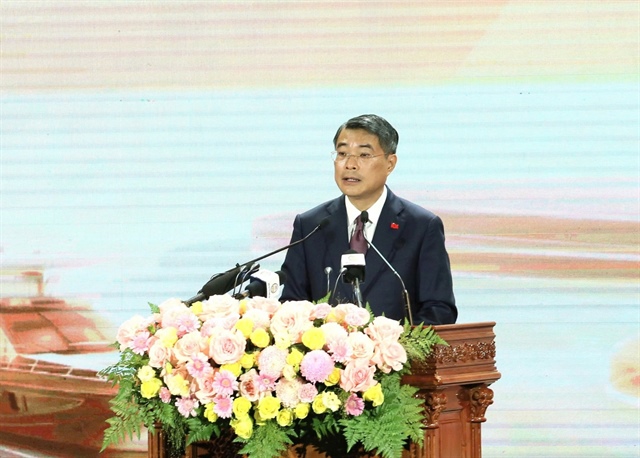
Prime Minister Le Minh Hung. Photo: Mai Huong |
Addressing the conference, Prime Minister Le Minh Hung described the event as significant in opening up new development directions and creating fresh momentum for Hung Yen.
"Planning must do more than organise spatial development and allocate resources. It must create growth drivers, guide investment, and pave the way for sustainable development. Good planning is a necessary condition, but effective implementation is the decisive factor," the PM said.
He outlined four development principles: leveraging the province's geoeconomic position and strengthening regional connectivity; organising integrated, multi-centred, and multipolar development space; shifting from a management-oriented mindset to one focused on public service and development facilitation; and placing people at the centre, with culture as the foundation, while ensuring balanced economic, social, and environmental development.
Regarding spatial organisation, PM Hung stated, “Developing three economic zones, two development corridors and strategic development axes does not mean investing equally or distributing resources evenly. Instead, investment must be based on the comparative advantages and functions of each area, focusing on drivers with significant spillover effects.”
The PM also called on central ministries and agencies to coordinate with and support the province in addressing difficulties during implementation. He stated that the government would continue to work alongside local authorities and the business community to improve institutions, enhance the investment and business environment, and mobilise and use development resources effectively.
Chairman Quyen declared that the master plan would only be meaningful if its strategic objectives and vision were translated into tangible infrastructure, projects and substantive growth results.
“The province pledged to build a development-oriented government, take decisive action and work alongside investors to establish a transparent, secure and favourable investment and business environment,” he said.
- 11:23 13/10/2026