Ho Chi Minh City offers interest rate support to businesses
Ho Chi Minh City offers interest rate support to businesses
Ho Chi Minh City has introduced practical interest rate support programmes to help businesses address funding challenges as they modernise production and pursue sustainable development.
According to Nguyen Quang Thanh, deputy general director of Ho Chi Minh City Finance and Investment Company – a state-owned enterprise wholly owned by Ho Chi Minh City People's Committee that serves as the city's principal public financial institution – the support is being implemented under Resolution No.09/2023/NQ-HDND and Resolution No.523/NQ-HDND of Ho Chi Minh City People's Council.
"A key feature of the policy is that the city budget provides interest rate support for loans of up to VND200 billion ($7.69 million) per project, excluding deductible VAT," Thanh said at the 2026 Trade Connection and Product Showcase Week for the Mechanical Engineering, Electrical Engineering, and Digital Technology Industries, held in Ho Chi Minh City from October 20 to 25. "The support covers up to 85 per cent of investment in technology and equipment and 70 per cent of investment in construction, for a maximum period of seven years from the first disbursement."
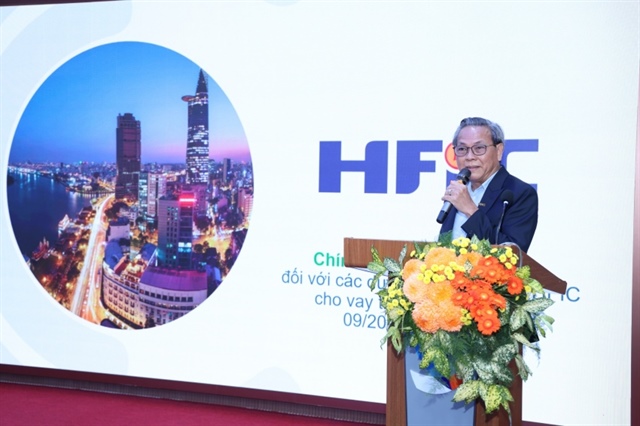
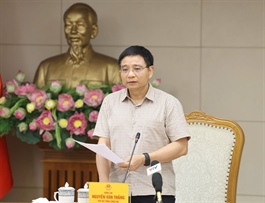
Nguyen Quang Thanh, deputy general director of Ho Chi Minh City Finance and Investment Company. Photo: ITPC |
The interest rate eligible for support is based on the actual rate, capped at the average 12-month VND deposit rate announced monthly by the four commercial banks operating in the city, plus a management fee of 2 per cent per annum.
Businesses operating in industrial automation and electronics and IT, which fall within the city’s four key industrial sectors and supporting industries, are eligible for interest rate subsidies of up to 100 per cent on loans for new ventures, factory renovation and expansion, and the procurement of modern equipment.
The list of products eligible for the maximum 100 per cent interest rate subsidy covers a broad range of core sectors, including automotive components, industrial and collaborative robots, high-tech moulds, electrical switchgear, power cables rated at 15 kV or above, transformers, and next-generation energy-efficient motors. It also includes microchips, semiconductor chips, sensors, integrated production control software, and solutions applying AI, the Internet of Things, and 3D printing.
On structuring projects to access preferential financing for the green transition, Thanh said mechanical engineering and electrical businesses could incorporate green measures into five project categories to qualify for subsidies of 50 to 100 per cent.
Full subsidies apply to investments in upgrading machinery and production lines to improve energy and material efficiency; manufacturing components for renewable energy equipment or grid-connection infrastructure for waste-to-energy plants; developing wastewater and exhaust gas treatment systems and producing recycled materials and biodegradable polymers; and implementing digital transformation projects that use data to improve production management.
In addition, projects to develop multi-storey factories for supporting industries and investments in green transport vehicles powered by electricity or liquefied natural gas, compressed natural gas, or liquefied petroleum gas are also eligible for preferential access to this funding.
“As solar power systems under Resolution No.09/2023/NQ-HDND are currently only covered for the offices of administrative agencies and public service units, businesses should incorporate green transition measures directly related to their production projects listed in Appendices 1 and 2 of the resolution to ensure eligibility,” he said.
To ensure a smooth application process and compliance with the law, Thanh explained that project owners must be legal entities wholly owned by domestic investors, including businesses, cooperatives, economic organisations and public service units. They must maintain this ownership structure throughout the period of support, while their projects must not be receiving interest rate subsidies from other budget-funded schemes.
“The approval process is transparent and comprises seven steps, beginning with preliminary discussions with Ho Chi Minh City Finance and Investment Company to screen the project, followed by the preparation of a loan application, an assessment of financial viability and registration for interest rate support. An inter-agency working group then conducts an on-site inspection before the application is submitted to chairman of Ho Chi Minh City People’s Committee for formal approval and disbursement,” he said.
Thanh also highlighted a crucial rule that project owners must follow to avoid losing their eligibility for incentives: they must not sign contracts with contractors or suppliers for construction, equipment or technology items proposed for support before the project receives approval from Ho Chi Minh City People’s Committee. They must also strictly comply with their credit agreements by repaying principal and interest on time.
- 10:03 23/10/2026