




Hải Phòng eyes integrated logistics hub to drive marine economy
Hải Phòng eyes integrated logistics hub to drive marine economy
The port city is focusing on seaports, logistics, multimodal transport infrastructure and high-quality human resources as key drivers of this transformation.
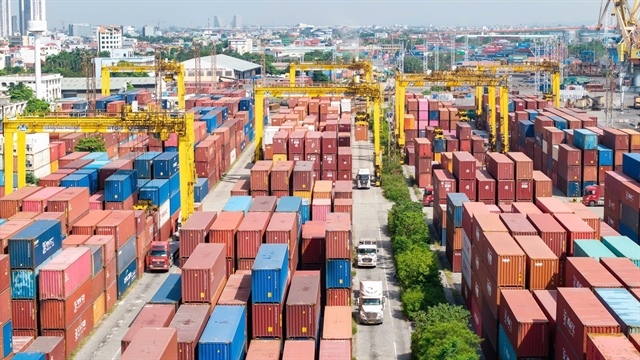
Hoàng Diệu Chùa Vẽ Port, Hải Phòng. The port city is eyeing to become a northern import-export gateway to an integrated logistics growth hub. — VNA/VNS Photo |
The port city of Hải Phòng is working to shift from its traditional role as a northern import-export gateway to an integrated logistics growth hub with stronger competitiveness, resilience and regional and international connectivity.
The city is focusing on seaports, logistics, multimodal transport infrastructure and high-quality human resources as key drivers of this transformation.
The city’s GRDP growth in the first nine months of 2026 was estimated at 12.08 per cent, ranking third nationwide and marking the city’s highest growth rate in six years, according to the municipal Party Committee.
Import-export activities and seaports remained major drivers of the local economy. Exports reached an estimated US$43.72 billion, up 12.3 per cent year-on-year and equivalent to 84.1 per cent of the annual target. Imports were estimated at $34.98 billion, up 16.7 per cent, reaching 84.1 per cent of the annual target.
Cargo throughput at the city’s ports totaled about 156.3 million tonnes during the period, up 11.8 per cent year-on-year and equivalent to 65.4 ơerr cent of the annual target.
Hoàng Diệu Chùa Vẽ Port, under Hải Phòng Port JSC, has made a significant contribution to the city’s growth. Established by the French in 1874, it was the first port in the northern seaport system and has long played an important role in Hải Phòng’s port and logistics network.
The port specialises in general and non-containerised cargo, including steel, machinery, equipment, construction materials, breakbulk cargo and oversized and overweight shipments. Such cargo is increasingly important as Hải Phòng expands its processing and manufacturing industries, infrastructure and large-scale projects.
Hoàng Diệu Chùa Vẽ is currently the largest port in northern Việt Nam for general breakbulk cargo. In 2026, it handled a number of vessels carrying equipment, steel, and other cargo requiring complex loading and unloading plans.
In the first nine months of the year, the port’s revenue rose more than 27 per cent, while its profit surged 245 per cent year-on-year. The results reflected improved resource use and growth potential in general cargo, bulk cargo, and domestic containers.
The port’s ability to handle cargo that conventional container transport cannot easily accommodate also gives it an advantage in serving industrial, construction, energy and infrastructure projects in Hải Phòng and other northern localities.
Hải Phòng currently has more than 50 port berths. Among them, the Lạch Huyện Port Area, with six berths already in operation, is one of Việt Nam’s largest and most modern seaport facilities. It is also the largest deep-water port in northern Việt Nam and serves as an international container hub for the Hải Phòng port system.
The city has also expanded digitalisation in port operations through automated customs systems, ePort and Smart Gate solutions.
However, the logistics sector still faces several bottlenecks. Road transport accounts for more than 80 per cent of freight movement, putting pressure on transport infrastructure, increasing logistics costs and raising greenhouse gas emissions. Rail and inland waterway connections with the port hinterland remain limited.
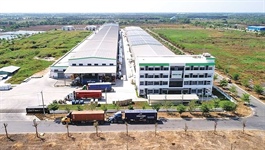
Hải Phòng has six logistics centres, but they remain relatively small and fragmented, while logistics data infrastructure is also dispersed. A shortage of highly skilled workers is another obstacle to development.
The municipal Department of Industry and Trade has submitted a proposal for a project to develop Hải Phòng into a modern international logistics centre linked to international seaports and economic corridors and belts.
The proposed model, described as “Two poles – One axis – One belt”, aims to improve connectivity, digital and green transformation, competitiveness, governance and energy capacity.
The first pole would be an international seaport logistics centre in the Lạch Huyện–Đình Vũ area, serving as the main import-export gateway, container hub and core of a free trade zone and smart seaport system.
The second would be a strategic transhipment, energy and maritime services centre in Nam Đồ Sơn. It would handle bulk cargo, develop a clean energy centre and provide high-end maritime services, helping redistribute port capacity and ease pressure on Lạch Huyện. The planned area is 2,500–3,000 ha through 2035.
The two poles and the hinterland would be connected by a multimodal logistics axis, with the 1,435mm Lào Cai–Hà Nội–Hải Phòng railway serving as the main link. It would connect with the Hà Nội–Hải Phòng and coastal expressways, major inland waterways and the Cát Bi–Gia Bình air network.
A logistics and green energy belt would include inland container depots, bonded warehouses and distribution depots, together with a renewable energy belt linking Bạch Long Vĩ, Cát Bà and Nam Đồ Sơn to supply clean power for port and industrial operations.
Human resources as a long-term foundation
Experts say skilled workers are essential to building a strong marine economy. Modern ports and infrastructure alone are not enough; the sector needs workers capable of mastering new technologies and meeting international standards.
Phạm Văn Thuận, Vice Rector of Vietnam Maritime University, proposed special policies on tuition fees, scholarships, training loans and internship support for key maritime fields. Such support should be linked to students’ commitments, training outcomes and the actual workforce needs of port, shipping and logistics companies.
He also called for flexible mechanisms for hiring and paying experts, encouraging businesses to send specialists to universities to teach, provide practical training and help develop curricula.
At a voter meeting in late September, Secretary of the municipal Party Committee and head of the city’s delegation of National Assembly deputies Lê Ngọc Châu said the city would strengthen cooperation with central agencies, training institutions, businesses and maritime organisations to develop, attract and effectively use high-quality human resources.
Training will be linked more closely with labour market demand and the development of Hải Phòng’s marine economic ecosystem.
- 07:37 15/10/2026