VIFC steps up focus on talent and green finance
VIFC steps up focus on talent and green finance
Vietnam’s International Financial Centre is moving towards a new phase of development, with international standards, finance talent, green finance, and regulatory capacity emerging as key requirements for turning the country’s dual-city model into functioning markets.
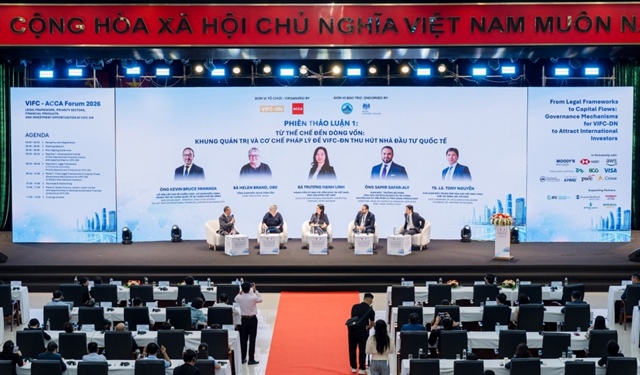
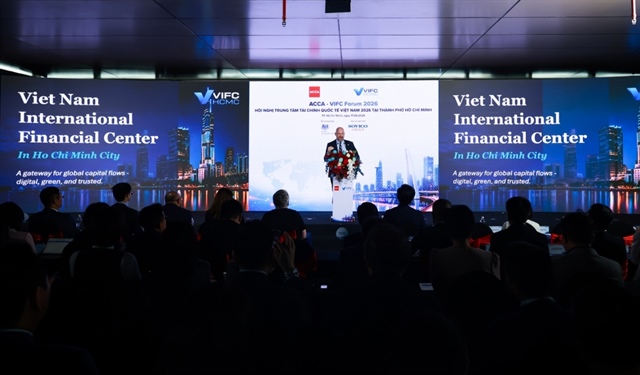
The priorities were highlighted at two forums organised by the Association of Chartered Certified Accountants (ACCA) in Ho Chi Minh City and Danang on September 17 and 18, where policymakers, financial institutions, investors, businesses, and professional organisations discussed the foundations needed to support activity for the new Vietnam International Financial Centre (VIFC) system.
The event in Ho Chi Minh City focused on professional standards, financial reporting, governance, sustainability, and access to international capital, while the Danang edition examined the legal framework, priority sectors, financial products, and investment opportunities at the centre.
The discussions came as VIFC-HCMC prepares to develop four strategic product and market segments: investment funds and asset management, international bond markets, fintech, and commodity derivatives. For both centres, the availability of professionals with international expertise will be an important part of that development.
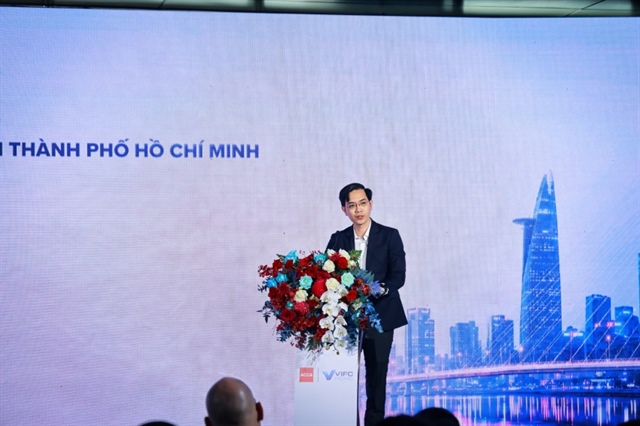
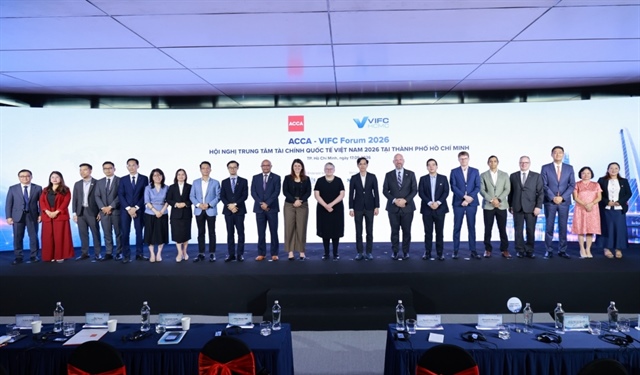
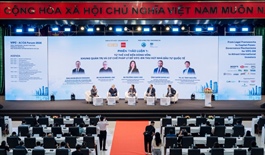
The VIFC-ACCA Forum brought together experts in finance, law, and professional services. Photo: ACCA Vietnam |
Around 300 delegates attended the Ho Chi Minh City forum, representing government regulatory bodies, financial institutions, investment funds, businesses, professional associations, and specialised service providers.
Helen Brand, chief executive of ACCA, placed regulatory alignment and talent development at the centre of Vietnam's immediate priorities.
“The recent steps taken by Vietnam have probably been among the most urgent priorities because parity provides confidence,” she said. "Technology and sustainability are similarly becoming embedded in the core competencies expected of finance and accounting professionals."
Brand said the two areas could no longer be treated as separate domains, with strong sustainability strategies and rigorous assurance standards increasingly important to long-term market confidence.
For Vietnam, this will require systematic knowledge transfer to local professionals rather than prolonged reliance on external expertise. Brand highlighted the openness of Vietnamese universities to innovation and international partnerships, including the integration of professional qualifications into academic programmes.
She also pointed to the country's strong entrepreneurial aspirations. ACCA research shows that 74 per cent of Gen Z and Alpha in Vietnam aspire to become entrepreneurs, compared with 50 per cent globally.
“This entrepreneurial spirit will be a powerful asset for the country's economic development,” Brand said.
For the IFC, she called for an ethical and technology-enabled professional ecosystem capable of supporting the wider financial infrastructure of the centre.
Alexandra Smith, British consul general in Ho Chi Minh City, put legal certainty at the heart of efforts to build an international financial centre, with common law offering a framework familiar to international businesses.
“Common law is one of the primary principles I would name, which underscores the importance of a strong legal system,” she said. "For businesses entering a new market, knowing what they can and cannot do is fundamental. Common law provides a familiar basis for contracts and is used by major international financial centres, including those operating within civil law jurisdictions."
For investors, this can reduce legal risk and make transactions more efficient and cost-effective, she added.
Talent is another essential pillar. Vietnam’s ambition to attract sustained finance will require international firms to establish local operations and employ professionals.
Smith highlighted the value of professionals who understand Vietnamese regulations and are fluent in international business practices. Government investment in professional skills and universities provides a strong foundation for developing such talent.
She also pointed to the role of professional qualifications in bridging local expertise with international practice. “Embedding professional qualifications through bodies like ACCA can help finance graduates apply their expertise effectively in a global professional environment,” she said.
International Financial Reporting Standards (IFRS) was another area addressed as Vietnam looks to strengthen the financial foundations of its international financial centre. Luong Thi Anh Tuyet, assurance partner at PwC Vietnam, said adoption could improve the transparency and comparability of financial information, supporting greater investor confidence.
“Adopting IFRS significantly enhances investor confidence by delivering high transparency and comparability,” she said.
The standards require companies to present financial information that more closely reflects economic reality, particularly in areas involving complex estimates, judgement, capital, and impairment, where local Generally Accepted Accounting Principles has more limited application. Standardised disclosures can also give investors a common financial language, making cross-border investment decisions more straightforward.
Against this context, Tuyet sees the IFC as an opportunity to develop practical experience in applying IFRS and build a centre of expertise for the wider economy.
“The IFC can serve as a pioneer and a centre of excellence for IFRS implementation,” she said. "Experience gained through the IFC could support wider adoption while helping develop a stronger pool of financial professionals nationwide. Maintaining consistent standards aligned with global frameworks will be important to building international confidence over the longer term."
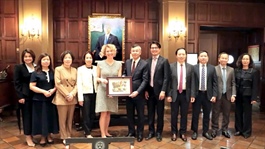
On the sidelines of the forum, the Executive Authority of VIFC-HCMC and ACCA signed a new MoU covering workforce development, professional training, international knowledge-sharing, and capacity-building for the financial services ecosystem.
The agreement coincides with ACCA's 25th anniversary in Vietnam. The organisation opened its representative office in Ho Chi Minh City in 2001 and now has more than 1,300 members and over 7,000 students nationwide.
The forum in Danang also witnessed the signing of an MoU between the Executive Agency of VIFC-Danang and ACCA, covering cooperation in finance and accounting, professional development, international experience-sharing, and access to international expert networks.
Kevin Iwanaga, senior advisor for Strategy and Coordination at the Executive Agency of VIFC-Danang, said investor confidence would depend on more than physical infrastructure and investment incentives, with trust, transparency, regulatory certainty, and institutional capacity also shaping decisions on where to establish a presence or commit capital.
“Investors need confidence that the rules are clear, institutions are reliable, and the market can support their activities over the long term. These factors are just as important as infrastructure and incentives,” Iwanaga said.
Discussions in Danang examined the legal and governance framework needed to attract international investors, with international standards, regulatory certainty, effective implementation, and enforcement among the issues raised.
Financial crime, cyber threats, operational disruption, climate risks, and changing regulatory requirements were considered alongside the professional capacity required across finance, accounting, auditing, risk management, legal services, and fintech.
The integrity of carbon credits, common data standards, credible assessments, and performance monitoring were also raised as important elements in developing transparent and credible sustainable finance markets.
Vice chairman, VIFC-HCMC Ho Chi Minh City’s ambition to become an international financial centre is increasingly tied to the quality of the market it can build around global capital. This means creating an environment in which international investors can assess opportunities with greater certainty and Vietnamese businesses can access longer-term sources of funding. A credible regulatory framework will be central to that process. Consistent application of clear rules, dependable sustainability reporting, and stronger governance can help reduce uncertainty for investors, particularly as Vietnamese projects seek to meet international investment requirements. Digital infrastructure and dispute resolution mechanisms will add another layer to the market’s ability to serve cross-border participants. Building that market also means developing people who can operate to international standards. The partnership between VIFC-HCMC and ACCA will support professional development through practical training and access to an international network, helping bridge the gap between domestic expertise and the requirements of global financial markets. The test for the centre will ultimately be how these elements work together in practice. |
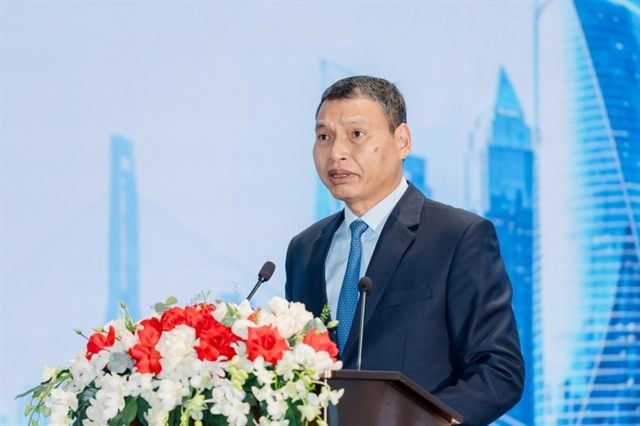
Ho Ky Minh Standing Vice Chairman, Danang People's Committee The competitiveness of an international financial centre depends on investor confidence in the legal framework, the transparency of the market, the quality of governance, and the ability of the financial centre to respond to investors’ practical needs. The legal framework can therefore be regarded as the most important invisible infrastructure of an international financial centre. The international financial centre in Danang is expected to focus on a range of areas, including fund and asset management, green finance and the carbon market, commodity exchanges, fintech, and innovative financial platforms and products. The development strategy extends beyond attracting individual businesses to the city. The longer-term objective is to gradually establish a broader financial ecosystem in which different market participants can operate and interact more effectively. Such an ecosystem would provide the supporting infrastructure needed for the development of a more diverse range of financial activities and services in Danang. |
- 17:34 23/09/2026