Tien Phong Plastics highlights sharing resources for industrial symbiosis
Tien Phong Plastics highlights sharing resources for industrial symbiosis
Developing modern industrial parks requires stronger links between businesses, resource data sharing, and integrated infrastructure for electricity, water, and waste treatment.
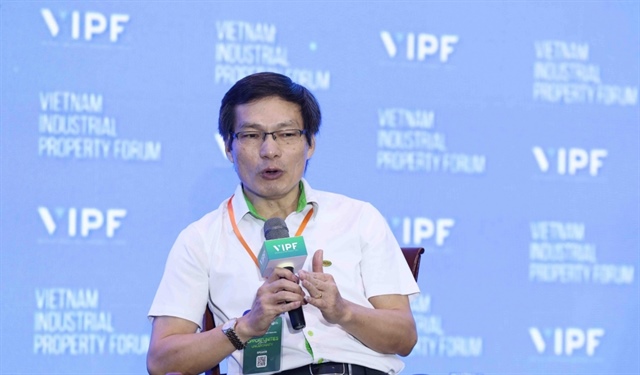
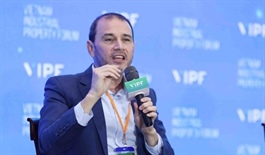
Tran Nhat Ninh, deputy general director of Tien Phong Plastic. Photo: Le Toan |
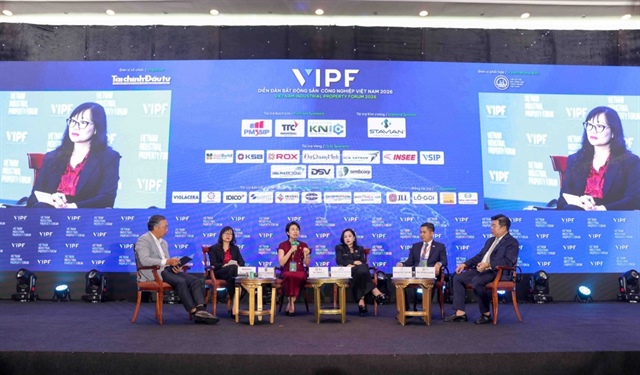
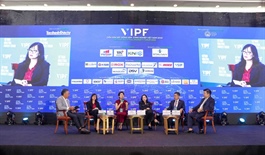
Speaking at The Vietnam Industrial Property Forum 2026 in Ho Chi Minh City on September 29, Tran Nhat Ninh, deputy general director of Tien Phong Plastic, said the most critical and fundamental shortcoming in the industry is the capacity for industrial symbiosis.
Tien Phong Plastics currently operates three factories in Haiphong, Nam Cam Industrial Park (IP) in Nghe An, and Dong An IP in Binh Duong, which is now part of Ho Chi Minh City. The company is both a manufacturer operating in IPs and a provider of materials, infrastructure solutions, and development solutions.”
“In recent years, traditional IPs and some newly developed ones have gradually pivoted towards next-generation models. This transition is not only focused on quantity but increasingly on quality, while seeking to balance economic efficiency with environmental benefits and social responsibility.”
However, some companies in IPs still operate under standalone production models. This is a notable limitation in developing eco-IPs and a circular economy.
According to Ninh, establishing industrial symbiosis requires businesses to establish links and exchange information on material flows, both inbound and outbound. By-products or scrap from one company can become input materials for another. Similarly, treated wastewater or other resources can be reused further along the production chain.
However, this currently faces several obstacles due to a lack of data and mechanisms for connecting businesses within the same IP.
Ninh identified three key issues that need to be addressed. First, there is insufficient transparency regarding material flows within individual businesses. Second, there is a lack of legal mechanisms to establish a framework for resource exchange and sharing between companies. Third, there is a lack of trust between businesses needed to establish long-term linkages and promote a circular economy.
“In the coming period, we need to address these issues to lay the foundation for industrial symbiosis,” Ninh said.
From the perspective of a manufacturing company that directly uses IP infrastructure, Ninh also said factories face several infrastructure challenges, particularly concerning electricity and water.
For wastewater, companies must invest in treatment systems that meet required standards before discharging wastewater into the IP's centralised treatment system. They must also invest in internal pipelines to transport wastewater to the common connection point.
For water supply systems, companies likewise have to invest in pipelines connecting their factories to the IP's connection point. This is one of the infrastructure investments that companies need to factor in from the factory development stage.
Similarly, for electricity, companies must invest in medium-voltage power lines, transformers, and related supporting infrastructure. As requirements for power reliability increase, companies must also consider backup solutions to minimise the risk of production disruptions.
If electricity, water, and waste-treatment infrastructure are comprehensively integrated from the outset, companies can significantly reduce their initial investment costs.
In that case, companies would not need to build as many preliminary wastewater-treatment facilities, invest separately in power systems and transformers, or develop their own internal water pipeline systems. Shared and integrated infrastructure can also help prevent duplication of investment between individual companies and IPs.
The second benefit is a shorter time to bring factories into operation. According to Ninh, before a factory can begin operations, companies must complete numerous procedures and supporting systems related to environmental requirements, environmental impact assessments, wastewater treatment, electricity, water, and other infrastructure components.
"If these systems are already comprehensively planned and integrated at the industrial park level, the time required to prepare and deploy factory operations can be shortened," he said.
- 14:11 30/09/2026