Global supply chain shifts create opportunities, challenges
Global supply chain shifts create opportunities, challenges
Digitalisation and the green transition were two other long-term trends reshaping global supply chains.
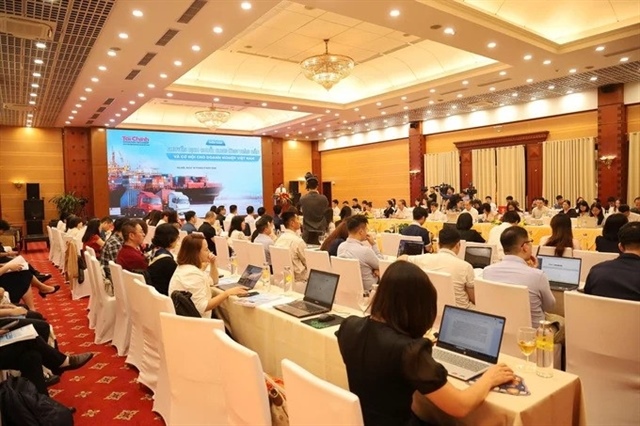
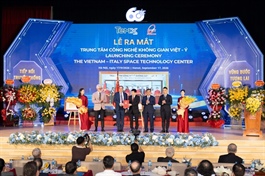
Participants attend a forum on shifts in global supply chains and opportunities for Vietnamese businesses in Hà Nội. — Photo taichinhdoanhnghiep.net.vn |
Shifts in global supply chains driven by geopolitical tensions, trade policies, technological change and the transition to greener production are creating opportunities for businesses while raising pressure to improve competitiveness and meet tougher international standards, speakers said at a forum on Friday.
Nguyễn Anh Dương of the Institute for Policy and Strategy Studies under the Central Commission for Policy and Strategy said the global economy was recovering but remained vulnerable to geopolitical competition and policy shifts in major economies.
Those developments could directly affect exporters to the United States, as well as companies heavily reliant on imported raw materials, components and other production inputs, Dương said.
Economies and major corporations were increasingly seeking to diversify trade and supply relationships to support growth and reduce exposure to disruptions, he said.
New-generation free trade agreements are one tool being used to diversify economic relations and reduce risks, Dương said.
Before 2024, free trade agreements were largely viewed as mechanisms to remove trade barriers and expand access to export markets. From 2025 onwards, their role was increasingly expected to extend to helping economies diversify both import and export relationships, he said.
Businesses were also seeking to expand ties with different regions, markets and partners to reduce dependence on individual markets, suppliers, technologies or business partners, Dương said.
Digitalisation and the green transition were two other long-term trends reshaping global supply chains.
In logistics in particular, digital platforms, data and electronic transactions were improving operational efficiency and strengthening connections among supply-chain participants, Dương said.
Rising standards expose capability gaps
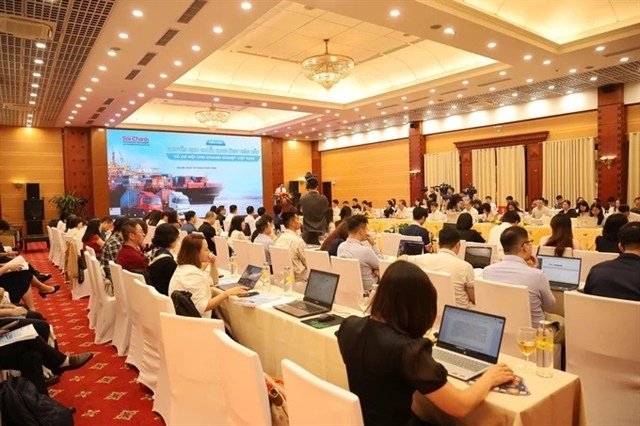
Participants attend a forum on shifts in global supply chains and opportunities for Vietnamese businesses in Hà Nội. — Photo taichinhdoanhnghiep.net.vn |
Đỗ Diệu Hương, deputy director of the Centre for Strategy and Policy at the Institute of Vietnam and World Economy, said Việt Nam was becoming increasingly integrated into global production and trade networks.
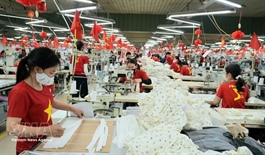
However, rapid growth in trade and exports did not necessarily mean domestic companies were improving their position or ability to create value within those chains, Hương said, adding that requirements for suppliers were expanding beyond traditional measures such as quality, cost, scale and delivery reliability.
Companies were increasingly expected to meet requirements covering raw-material origin, data, traceability, carbon emissions, energy use, environmental performance, labour practices and risk management.
This meant businesses needed more than products that met requirements at the point of delivery. They also needed management systems, processes and data capable of demonstrating and maintaining compliance throughout the supply chain, Hương said.
Her presentation identified five broad groups of capabilities needed by companies: quality, technology and productivity; cost, scale and delivery reliability; governance, data and traceability; environmental, carbon, labour and social-responsibility standards; and innovation, adaptation and resilience.
Hương also introduced the concept of a standard gap, referring to the difference between a company's existing capabilities and those required to meet, demonstrate and maintain the requirements of a particular market, supply chain or leading company.
The focus should therefore be on identifying specific missing capabilities and bottlenecks rather than simply determining whether a company is strong or weak. Addressing those gaps could help companies enter supply chains, maintain their position and gradually move into higher-value segments, she said.
Export sales capacity remains a bottleneck
Nguyễn Tuấn Việt, general director of VIETGO Co, said Việt Nam could benefit from global supply-chain shifts as international buyers diversified their sources of supply.
But opportunities would create value only when they were converted into concrete export orders, Việt said.
The bottleneck was not limited to production capacity, he said adding that many companies had invested in factories, machinery and raw-material production areas but lacked teams capable of finding overseas buyers, negotiating contracts, organising supply chains and bringing products to global markets.
Việt said Việt Nam needed to develop more export trading companies that could connect domestic producers with international buyers, organise supply chains and expand market access.
He described such businesses as the 'sales team of the economy', saying they could help connect producers with global customers and increase the value retained domestically.
- 16:43 18/09/2026