Lai Châu ginseng targeting international markets
Lai Châu ginseng targeting international markets
To reach global markets, Lai Châu ginseng needs a clear roadmap: standardising growing areas, ensuring transparent traceability, promoting deep processing and building a national brand.
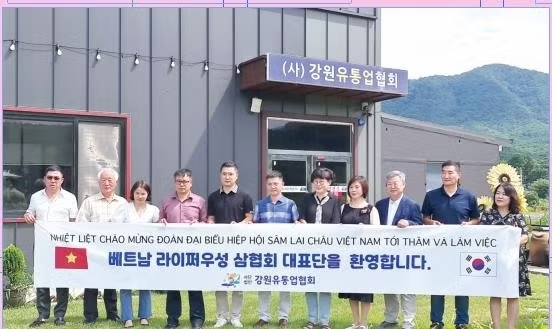
A delegation from the Lai Châu ginseng association learns about ginseng processing technology in the Republic of Korea. — Photo baolaichau.vn |
Lai Châu ginseng is now entering a new phase of development, with a vision that goes beyond simply preserving and cultivating the plant. More than a valuable medicinal herb, it is being position as a high-value economic sector, linked to sustainable forest-based development and international integration.
To reach global markets, Lai Châu ginseng needs a clear roadmap: standardising growing areas, ensuring transparent traceability, promoting deep processing and building a national brand.
One of Lai Châu's breakthrough steps has been the issuance of growing-area establishment codes.
Nguyễn Thành Đồng, deputy director of the provincial Department of Agriculture and Environment, said that the issuance of codes is not simply a management tool, but a strategic step in standardising local ginseng production areas.
To date, 112 growing establishments across the province have been issued codes – an important foundation for moving towards the official registration of growing-area codes, meeting traceability requirements and expanding export markets. Each code not only ensures transparency but also reflects a clear shift from small-scale production towards more professional models that are increasingly aligned with international standards.
If growing-area codes are a necessary condition, deep processing is the sufficient one for raising the value of the product.
According to forestry scientist Dr Phạm Quang Tuyến of the Vietnam Academy of Forest Sciences, the current priority is to strengthen the scientific foundation and develop products. It is necessary to quickly establish a set of quality standards and complete the dossier for the inclusion of Lai Châu ginseng in the Vietnamese pharmacopoeia. At the same time, sustainable growing areas under forest canopies should be developed in association with the livelihoods of ethnic minority communities. More importantly, investment in deep processing is needed to create products such as functional foods, pharmaceuticals and healthcare products.
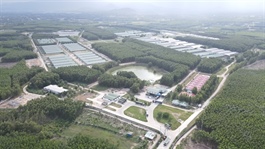
In Bum Nưa Commune, Pusilung Ginseng JSC is among the pioneers in this field. With nearly 20 hectares of ginseng, the company is not only focused on cultivation but is also working with Japanese experts to apply modern farming technologies to improve the medicinal properties and quality of its products. At the same time, processed products such as ginseng tea, ginseng honey and ginseng extract drinks are gradually being researched and brought to market.
Its General Director Đinh Văn Đô said: “Applying Japanese technology helps improve the quality of the medicinal materials while opening up opportunities to access demanding markets such as Japan and the Republic of Korea. This is an inevitable path towards increasing value and affirming the position of Lai Châu ginseng.”
These developments clearly show that, if local ginseng is to go further, it cannot simply be sold as a raw material; it must become more deeply integrated into the global value chain. No industry can develop sustainably without strong linkages. For Lai Châu ginseng, the “four-party” model is gradually becoming a key pillar. The State provides mechanisms, policies and planning; scientists conduct research and transfer technology; businesses invest, organise production and expand markets; and local people directly cultivate the crop and benefit from it. In particular, the establishment of the Lai Châu ginseng association has played a role in connecting businesses, promoting international cooperation and developing a long-term strategy.
From fragmented and spontaneous development, the province now has hundreds of hectares of ginseng involving more than 50 businesses and cooperatives, together with hundreds of farming households. This scale is expected to expand rapidly, with a target of around 3,000 hectares by 2030. Alongside the expansion of cultivation areas, comprehensive standardisation is under way – from seed quality and farming processes meeting international standards to the establishment of geographical indications, the issuance of growing-area codes and the gradual development of a deep-processing industry.
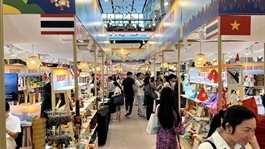
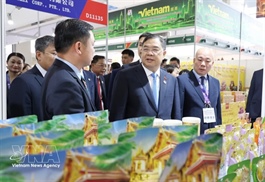
Notably, proactive participation in international events such as the Geumsan World Ginseng Festival in the Republic of Korea has helped Lai Châu ginseng gradually establish its identity on the global medicinal-herb map, opening up opportunities to connect with markets and attract investment.
- 11:41 18/09/2026