Japanese firms eye infrastructure, disaster resilience and workforce in northern Việt Nam
Japanese firms eye infrastructure, disaster resilience and workforce in northern Việt Nam
This was the first time the embassy held a forum to facilitate direct dialogue between northern provinces and Japanese businesses interested in investment.
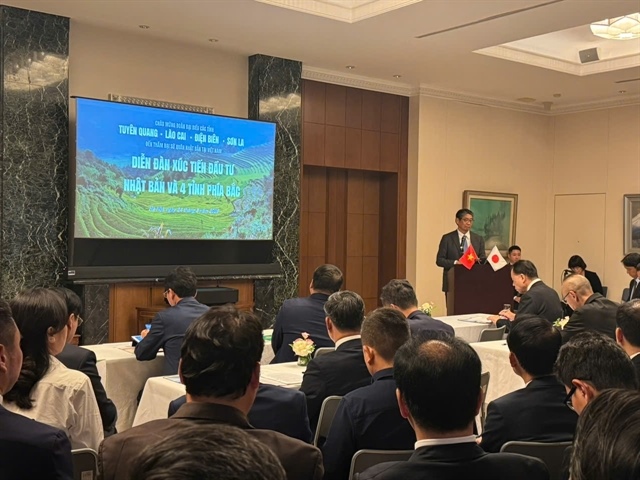
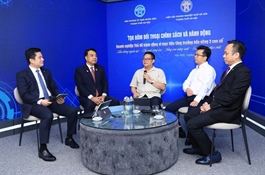
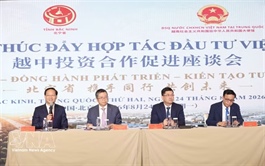
The Japan–Northern Việt Nam Investment Promotion Forum held by the Embassy of Japan in Việt Nam on August 24 brought together leaders from Tuyên Quang, Lào Cai, Điện Biên and Sơn La provinces and around 60 representatives of Japanese companies. — VNS Photo Vũ Hoa |
Infrastructure, logistics, disaster resilience and workforce availability are among the key concerns of Japanese businesses considering investment in northern Việt Nam's mountainous provinces.
The issues were raised at the Japan–Northern Việt Nam Investment Promotion Forum held by the Embassy of Japan in Việt Nam on August 24, bringing together leaders from Tuyên Quang, Lào Cai, Điện Biên and Sơn La provinces and around 60 representatives of Japanese companies.
Japanese Ambassador to Việt Nam Ito Naoki said this was the first time the embassy had organised a forum to facilitate direct dialogue between northern provinces and Japanese businesses interested in investment.
The four provinces have expressed strong interest in attracting Japanese investment to create new drivers of local economic development, he said.
A representative of Japanese non-life insurer Sompo Japan said the mountainous northern provinces are attractive investment destinations, but remain vulnerable to floods and storms.
The company called on local authorities to strengthen disaster prevention and resilience measures to minimise disruptions to business operations.
Vice Chairman of the Lào Cai People's Committee Nguyễn Thành Sinh said the province is paying particular attention to climate change adaptation.
Provincial authorities plan to build a flood control dike system covering Yên Bái Ward, formerly Yên Bái City, with total investment of more than VNĐ13 trillion (US$498 million). The province is also developing monitoring systems and other disaster prevention projects to reduce risks to businesses.
Japanese companies also raised concerns about the availability of young workers, noting that many young people from rural provinces move to Hà Nội and other major cities.
Sinh said Lào Cai is developing industrial parks to create more local jobs and career opportunities. The province is also strengthening vocational training and policies to attract skilled workers, he said.
He also noted that the province's universities, colleges and vocational education institutions are being used to better match workforce training with the needs of businesses.
Transport and logistics remain bottlenecks
For agricultural investors, transport and logistics are another major challenge.
A representative of Japanese high-tech agricultural company Niinuma Tomofarm said infrastructure limitations in Điện Biên and other mountainous areas made it difficult to transport fresh agricultural products efficiently.
Improved roads and logistics systems would allow fresh produce to reach consumers nationwide more quickly, the company said.
Deputy Secretary of the Điện Biên Party Committee Mùa A Vang acknowledged that transport and logistics remain a major bottleneck for agriculture, trade and services.
The province is working with neighbouring localities, including Sơn La, to propose new connecting roads and upgrade routes linking Điện Biên with border gates, aiming to reduce transportation times.
Japan is also supporting infrastructure development in the region through official development assistance.
According to the Japan International Cooperation Agency, in June, the Vietnamese Ministry of Finance signed on-lending agreements for Japanese ODA loans with eight mountainous northern provinces, including the four participating in the forum.
The loans total 39.3 billion yen ($247 million), and are expected to support infrastructure upgrades and improve disaster resilience.
At the forum, chairman of the Tuyên Quang People's Committee Phan Huy Ngọc highlighted the province's potential in agriculture and forestry, processing industries, renewable energy, eco-cultural tourism and the green economy.
He said Tuyên Quang particularly values Japan's strengths in technology, management, supporting industries and workforce development.
Japanese companies already operating in Tuyên Quang, including Erex, also shared their experiences at the event.
Ngọc pledged that the province would continue improving its investment environment, accelerating administrative reform and upgrading transport infrastructure to facilitate Japanese investment.
Ito said the forum was expected to create new partnerships between Japanese businesses and the four provinces, promote practical investment cooperation and further deepen economic ties between Japan and Việt Nam.
- 17:37 25/08/2026