Rising power demand puts gas and LNG stocks in focus
Rising power demand puts gas and LNG stocks in focus
The outlook for energy companies will also depend on the pace of electricity pricing reform, project implementation, generation mobilisation and fuel-price movements as Việt Nam expands power supply to meet rising economic demand.
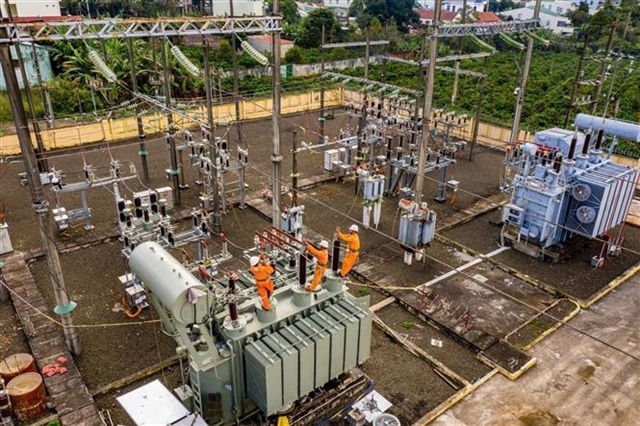
EVN workers inspect and repair power-line systems. — VNA/VNS Photo |
The demand for electricity is forecast to grow by around 10 per cent annually through 2030, while changes to electricity pricing mechanisms could gradually remove bottlenecks across the energy value chain and create new growth opportunities for gas-fired power and liquefied natural gas (LNG) businesses.
According to Yuanta Securities Vietnam's latest energy sector report, the country's electricity consumption is projected to reach about 510 TWh by 2030, driven by high economic growth targets.
In 2025, power consumption rose 7 per cent year-on-year.
Yuanta forecasts electricity consumption to expand at a compound annual growth rate of around 10 per cent during 2025-30, broadly corresponding with the target of maintaining GDP growth at around 10 per cent annually during 2026-30.
However, the challenge facing the power sector is increasingly shifting from simply ensuring sufficient electricity supply to providing enough power at reasonable costs.
Volatile fuel prices, weather conditions and a rising share of higher-cost generation sources are increasing Vietnam Electricity (EVN)'s electricity purchasing costs, while adjustments to retail electricity tariffs need to be carefully managed to limit their broader economic impact.
The issue is particularly evident in gas-fired generation. According to Yuanta, gas from the Block B project costs around US$14 per MMBTU, resulting in a power purchase agreement price of approximately VNĐ2,500 per kWh.
For LNG-fired power, the electricity price at Nhơn Trạch 3 and 4 is estimated at about VNĐ3,600 per kWh, substantially above the current average retail electricity tariff.
Electricity pricing has therefore become an important factor in attracting investment into new generation capacity.
The average retail electricity tariff was raised by 4.8 per cent in May 2025 to VNĐ2,204 per kWh. Yuanta said the adjustment contributed to EVN returning to profitability in 2025 and eliminating accumulated losses from previous periods.
More significantly, proposed amendments to the Electricity Law are aimed at allowing retail electricity prices to reflect input costs more accurately and promptly, including reasonable and legitimate expenses that were previously not fully incorporated.
If effectively implemented, the mechanism could ease financial pressure on EVN while improving the economic viability of new power projects.
Yuanta also noted that electricity prices in Việt Nam remain relatively low compared with many regional markets, potentially providing room for further adjustments as the power system becomes increasingly reliant on natural gas and LNG, which carry higher generation costs.
EVN workers inspect and repair power-line systems. — VNA/VNS Photo |
The changing generation mix is also drawing attention to energy stocks, with Yuanta identifying PV Power (POW) and PV Gas (GAS) as two companies positioned to benefit from policy changes and expansion of gas-fired power and LNG infrastructure.
For POW, Nhơn Trạch 3 and 4 are expected to become major growth drivers.
Yuanta forecasts the power producer's revenue to surge 88 per cent year-on-year to VNĐ64 trillion ($2.4 billion) in 2026. Gas-fired electricity output is projected to rise 63 per cent to 15.8 TWh, while the average gas-fired electricity price is forecast to increase 13 per cent to VNĐ2,595 per kWh.
The projections reflect the full-year contribution of Nhơn Trạch 3 and 4 and higher mobilisation of gas-fired generation under dry weather conditions.
POW's core net profit is forecast to rise 58 per cent to VNĐ3.8 trillion in 2026 and remain relatively stable in 2027. Yuanta expects the company’s new earnings base to be significantly higher than before Nhơn Trạch 3 and 4 became operational.
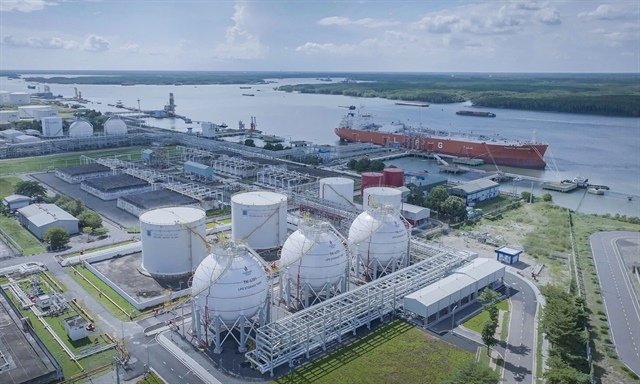
Meanwhile, GAS is expected to play an increasingly important role in the development of Việt Nam's LNG infrastructure.
Under Power Development Plan VIII, LNG import demand could reach 14-18 billion cubic metres by 2030. GAS has an advantage through its existing LNG import, storage and regasification infrastructure, as well as its role in supplying fuel to power plants.
The company is also expanding its supply capabilities. It has signed its first long-term LNG sales and purchase agreement with Shell for the 2027-31 period, while developing the Thị Vải-Cái Mép and Sơn Mỹ projects.
Yuanta expects these developments to strengthen GAS's position across the LNG value chain.
- 07:02 27/08/2026