Centralised customs clearance paves the way for smarter trade
Centralised customs clearance paves the way for smarter trade
Centralised customs clearance is streamlining procedures, cutting shipment processing times and reducing direct contact, marking a significant step towards a more efficient, transparent and digitally driven customs system.
After a more than two month pilot, the centralised customs clearance model has reduced the processing time for a shipment by 12 per cent compared with May 2026 and by around 14 per cent compared with the first quarter of 2026, while also reducing direct contact between businesses and customs officials.
Every day, tens of thousands of customs declarations are processed at seaports, border gates and international airports across the country.
As cross-border flows of goods continue to grow, the customs authority is required not only to maintain strict controls to prevent fraud, but also to shorten processing times, reduce costs and facilitate trade as much as possible for businesses.

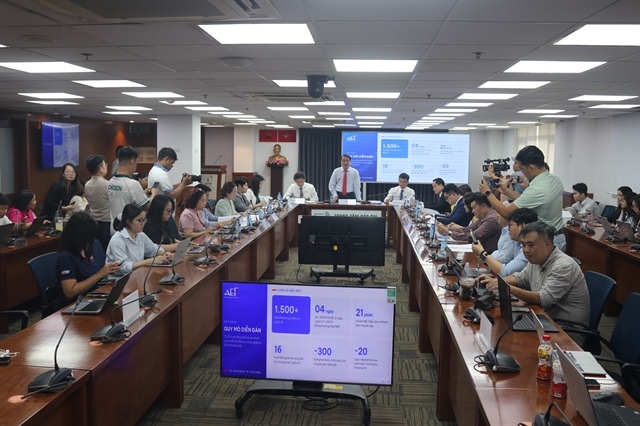
Centralised customs clearance model is bringing visible improvements to customs procedures processing. Photo: baodautu.vn |
The shift from geographically decentralised management to centralised customs clearance based on a unified data platform is emerging as an important step in the development of digital and smart customs.
According to Dao Duy Tam, head of the Customs Control and Supervision Department under the General Department of Vietnam Customs, the centralised customs clearance is in line with the Party and state's direction on digital transformation, administrative reform and the establishment of a unified focal point for administrative work.
The Customs Department began piloting the centralised customs clearance model at Customs Branch No. III from June 1, following the direction of the Ministry of Finance's leadership set out in Notice No 710/TB-BTC dated September 12, 2025.
The pilot was also developed as part of the Customs Department's broader programme to modernise customs procedures and boost digital transformation.
After the initial pilot period, the model has delivered a number of positive results. One of the most notable changes has been the digitisation of documents.
Customs declarants can submit dossiers in the form of data fields, with the support of AI tools to convert information. This enables businesses to avoid re-entering data, reduce errors and cut the costs of printing and storing paper documents.
More importantly, processing procedures under the centralised model establish a unified workflow, limiting differences in implementation among units.
This makes processing times more predictable for businesses, allowing them to organise logistics activities more actively and reduce compliance costs.
According to the Customs Department, the customs clearance time for a shipment after the introduction of the centralised model fell by 12 per cent compared with May and by around 14 per cent compared with the first quarter of 2026.
Another benefit of the model is that it promotes paperless administrative procedures.
As documents are digitised and processed centrally through the system, customs declarants have less need for direct contact with customs officials.
This not only saves businesses time but also helps eliminate intermediary stages in administrative procedures. The Customs Department has identified reducing direct contact between businesses and customs officials as one of the model's key objectives.
However, according to the Customs Department, centralised customs clearance is not simply a matter of transferring existing procedures to an electronic system.
The core of the model is a change in management thinking: from processing procedures according to geographical areas to centralised, data-based management; and from a fragmented approach to a unified process across the entire system.
Dao Duy Tam said the Customs Department considers changing perceptions and mindsets a decisive factor, requiring a shift from manual management to digital thinking and from decentralisation to centralisation. This is intended to prevent different units from applying different approaches, reduce problems arising in practice, and improve transparency in the handling of procedures.
This also marks an important step on the journey towards building digital and smart Customs, as data is gradually becoming the foundation for both regulatory management and services for businesses.
- 09:34 20/08/2026