Carbon footprint the key to be competitive
Carbon footprint the key to be competitive
For Vietnamese exporters, the journey of a product to an overseas market is increasingly being measured not only in dollars and tonnes, but also in carbon.

Garment factories are among the energy-intensive industries covered by Việt Nam’s greenhouse gas inventory requirements as businesses face growing pressure to measure and reduce emissions. — VNA/VNS Photo Trần Việt |
For Vietnamese exporters, the carbon footprint of a product is becoming more than an environmental measure — it is increasingly a factor in whether that product can compete in global markets, as tighter domestic rules and rising international standards put emissions data under growing scrutiny.
From September 25, greenhouse gas inventories will become a mandatory requirement for 2,441 facilities. The list of facilities required to conduct facility-level greenhouse gas inventories covers six sectors: energy, transport, construction, industrial processes, agriculture, forestry and land use, and waste.
The largest share falls under the Ministry of Industry and Trade, with just over 1,900 facilities. The construction and transport sectors account for around 460 facilities, while agriculture and environment account for just over 60.
The concentration in energy-intensive industries reflects where much of the country's emissions challenge lies. Thermal power, metallurgy, chemicals, fertiliser production, textiles, footwear and fossil-fuel extraction are among the activities covered.
The new requirement means businesses must collect activity data, calculate their greenhouse gas emissions using prescribed methodologies and prepare inventory reports.
For companies, however, the significance of the requirement extends beyond compliance. Reliable emissions data is becoming a prerequisite for understanding future carbon costs and responding to demands from overseas customers.
The change comes as carbon requirements are becoming increasingly linked to international trade.
The European Union's Carbon Border Adjustment Mechanism (CBAM) is one of the clearest examples. From 2026, its definitive phase covers products including iron and steel, aluminium, cement, fertilisers, electricity and hydrogen.
In April, the European Commission announced a CBAM certificate price of 75.36 euros (US$8,793) for the first quarter of 2026. The mechanism means importers need information about the greenhouse gas emissions embedded in covered products, creating pressure on suppliers to provide reliable data.
For Vietnamese businesses, this pressure can extend through the supply chain. A company may not export directly to the EU or fall within the scope of CBAM, but it could supply a manufacturer whose European customers require emissions information. Carbon accounting can therefore become a commercial requirement even for businesses that are not directly regulated.
Nguyễn Trung Thực, director of the Institute of Technology and Innovation under the Vietnam Chamber of Commerce and Industry, said the EU, US and Japan were establishing new technical barriers based on the carbon footprint of products.
"At the same time, sustainability requirements were increasing the demand for transparent emissions information from businesses," he said.
For exporters, establishing credible carbon data is therefore becoming part of preparing for international markets. The aviation sector illustrates how carbon requirements can translate into direct financial pressure.
Việt Nam's international aviation industry is participating in the Carbon Offsetting and Reduction Scheme for International Aviation, under which airlines must offset emissions above the applicable baseline through eligible carbon credits.
|
Garment factories are among the energy-intensive industries covered by Việt Nam’s greenhouse gas inventory requirements as businesses face growing pressure to measure and reduce emissions. — VNA/VNS Photo Trần Việt |
Đặng Hồng Hạnh, executive director of the Energy and Environment Consultancy JSC, estimated that Việt Nam's aviation sector could need 10.7-15.4 million carbon credits during 2026-35. Depending on carbon credit prices, she estimated that compliance costs could reach nearly $500 million.
Vietnam Airlines estimated that it could need to offset about 400,000 carbon credits in 2026, with the figure potentially exceeding one million credits a year after 2030.
The airline plans to increase the number of fuel-efficient aircraft and use sustainable aviation fuel as part of its response.
The example shows why measuring emissions is becoming increasingly important. Companies that understand their major emission sources can identify ways to reduce them instead of relying entirely on carbon credits or facing higher compliance costs later.
Support for exporters
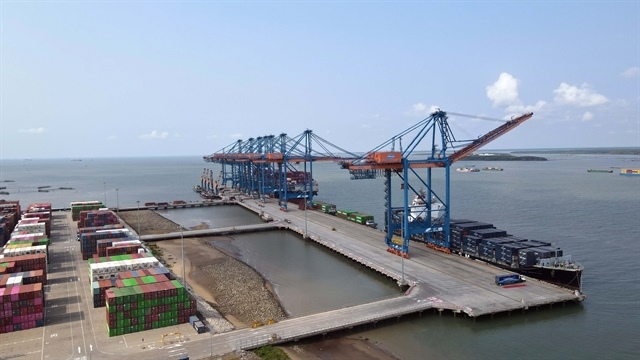
Garment factories are among the energy-intensive industries covered by Việt Nam’s greenhouse gas inventory requirements as businesses face growing pressure to measure and reduce emissions. — VNA/VNS Photo Trần Việt |
Việt Nam is also incorporating carbon-related assistance into its export-support policies. The GoGlobal programme for 2026-30 includes support for businesses seeking to meet environmental and sustainability requirements in overseas markets.
Potential support covers carbon-footprint measurement, verification of emission reduction claims, supply chain transparency, circular materials, biodiversity protection and low-emission business strategies.
The approach is particularly relevant to small and medium-sized enterprises, which may lack specialised staff and the resources needed to measure and verify emissions.
The programme does not provide a uniform subsidy. Businesses must contribute funding and share risks, with support considered according to individual proposals and eligibility.
The Ministry of Industry and Trade is the focal agency for implementation, while Việt Nam's trade offices overseas will provide information about regulations and market requirements.
For businesses, the objective is not simply to produce a carbon report. They may also need to improve technology, production processes and supply chain management to meet the requirements of individual markets.
Although greenhouse gas inventories create an additional compliance responsibility, the information can also become useful for business management.
Knowing where emissions originate allows companies to establish a baseline and identify areas where energy consumption and production processes can be improved. The data will also provide a foundation for participation in Việt Nam's emerging carbon market.
Companies that reduce emissions could potentially benefit from carbon credits or emissions allowances, creating an economic incentive to invest in cleaner production.
Việt Nam is also working with international partners on a voluntary carbon-label programme that would allow businesses to measure, verify and disclose product-level emissions.
The proposed labels could show emissions in kilograms of CO2 equivalent per unit of product, together with information on validity and a QR code linking to supporting data. The pilot is expected to cover sectors including energy, chemicals, paper, textiles, food and beverages and electronics.
The carbon label initiative is being developed alongside the pilot phase of the domestic carbon exchange, which is expected to run through 2028.
Together, these measures could give businesses greater tools to respond to international demand for environmental information while creating a domestic market for emissions reductions.
Businesses must adapt
Some major Vietnamese companies have already begun incorporating carbon reduction into their production strategies.
Vinamilk has factories and farms that have obtained carbon-neutral certification under the PAS 2060 international standard.
Heineken Vietnam has reported that 96 per cent of the energy used in production comes from renewable sources and that emissions across its value chain have fallen by 49 per cent compared with 2018.
Nestlé's circular coffee production model has also been cited as reducing more than 14,000 tonnes of CO2 equivalent annually.
Such examples suggest that reducing a carbon footprint can involve changes to energy sources, technology, materials, waste management and relationships with suppliers.
This is increasingly important as international brands impose their own emissions targets on supply chains. Vietnamese suppliers may therefore face carbon requirements from customers even when they are not among the facilities subject to mandatory inventories.
The September 25 deadline marks an important step in Việt Nam's transition from voluntary carbon management towards a more systematic framework. For the listed facilities, greenhouse gas inventories will provide the data needed for regulatory compliance and future emissions management.
For exporters, the same data can help meet increasingly demanding requirements from international buyers.
The immediate challenge is investment in measurement systems, expertise and verification. For some businesses, particularly smaller companies, these costs may be significant.
But the cost of inaction could also increase as carbon requirements become more deeply embedded in international trade.
- 09:29 22/08/2026