Vietnam urges meaningful business condition cuts to support development
Vietnam urges meaningful business condition cuts to support development
Driven by the Ministry of Finance's latest regulatory reform push, the government is seeking sweeping cuts to business regulations, while lawmakers insist the overhaul deliver genuine deregulation rather than shifting compliance burdens elsewhere.
At its fourth session last week, the National Assembly Standing Committee reviewed the draft law amending and supplementing provisions relating to the List of Conditional Business Lines under the Law on Investment.
According to Minister of Finance Ngo Van Tuan, the draft law introduces a ban on trading nitrous oxide for human inhalation.
“Outside medical purposes, it also replaces the List of Conditional Business Lines under the 2025 Law on Investment, building on the list set out in Government Resolution No.6617 dated May 15, which removes 56 conditional business lines and revises the scope of 14 others compared with the 2025 Law on Investment,” Minister Tuan said.

The government is ramping up efforts to support business development |
Based on proposals from the Ministry of Industry and Trade, the revised list further eliminates two conditional business lines: ‘the trading of goods and activities directly related to the trading of goods by foreign service providers in Vietnam’ and ‘petroleum activities.’
Presenting the verification body's assessment, Chairman of the National Assembly's (NA) Committee for Economic and Financial Affairs Phan Van Mai noted that although the bill was drafted under the expedited legislative procedure, its amendments would have a broad impact on citizens, businesses and the investment and business environment.
“The draft law should include policy impact assessments commensurate with the proposed reforms, fully compile and explain comments from affected stakeholders, and undergo a thorough review to ensure consistency across the legal system,” he said. “It is essential to ensure that the reduction of business conditions is genuine, while avoiding any weakening of necessary regulatory safeguards or creating new risks that would be difficult to address in practice.”
Providing further clarification after comments from the NA Standing Committee, Minister Tuan revealed that conditional business requirements should be concentrated only in sectors affecting national security, defence, public health, ethics and the environment. Where sector-specific laws already establish sufficient technical standards and operational requirements, there is no need to impose additional business conditions, he noted.
“For example, in the clean water sector, the Ministry of Construction should issue technical standards defining what constitutes clean water so that projects meet the requirements for operation and commissioning without posing risks to public health,” Minister Tuan said.
Also drafted by the Ministry of Finance, the proposed amendments to the Law on Customs received strong support from the NA Standing Committee.
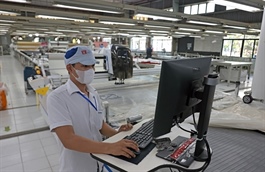
According to the government's submission, the amendments focus on reducing and simplifying administrative procedures while advancing digital customs.
They replace the requirement for ‘electronic documents’ in customs dossiers with ‘electronic data messages’ to facilitate the operation of digital customs.
The draft law also abolishes licensing requirements for customs brokerage agents and customs brokerage employees.
In addition, the draft reduces reporting obligations for businesses while expanding the application of IT in customs administration.
NA Chairman Tran Thanh Man said the amendments to the Law on Customs should go beyond revising procedures and instead transform the management mindset.
“This amendment is not simply about changing procedures. It must shift customs management from pre-clearance inspection to risk management, from document management to data management, and from administrative control to facilitating development,” he said. “With taxation and customs today, encouraging voluntary compliance is the single most important priority.”
Minister Tuan added that the drafting process had been built on a data-driven approach, with risk management serving as the core management method, while establishing the legal foundation for applying advanced technologies such as AI, big data and other emerging technologies throughout customs administration.
NA Vice Chairman Nguyen Khac Dinh said after incorporating the comments of the NA Standing Committee the draft law was ready to be submitted to the National Assembly for consideration and approval at the NA’s first extraordinary session to be held in early August.
- 07:46 23/07/2026