Việt Nam seeks stronger export growth in H2
Việt Nam seeks stronger export growth in H2
Despite the encouraging performance, Vietnam's exports remain heavily dependent on a limited number of major markets and product groups, while the domestic value added of many export products remains relatively low because of their reliance on imported raw materials and components.
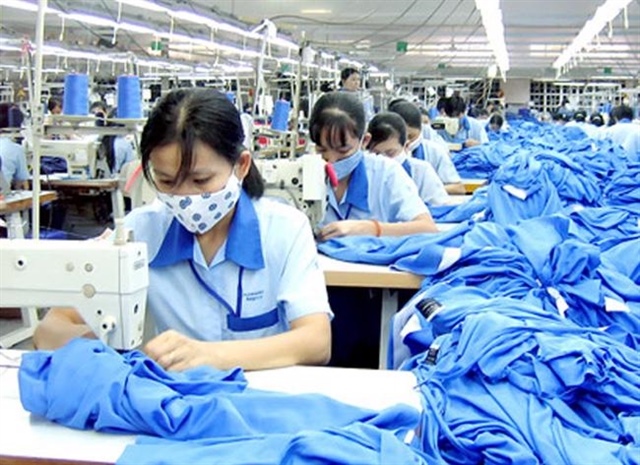
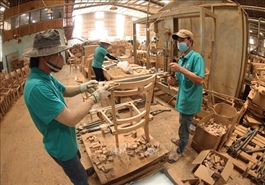
The textile and garment sector also maintained solid growth, with export turnover approaching Ú$19 billion in the first half. — Photo vneconomy.vn |
Stronger efforts are needed to maintain growth momentum of exports in the second half of this year, according to experts.
Despite the encouraging performance, Việt Nam's exports remain heavily dependent on a limited number of major markets and product groups, while the domestic value added of many export products remains relatively low because of their reliance on imported raw materials and components.
The seafood industry, one of the country's major export earners, generated an estimated US$5.7 billion in export revenue in the first half, up 11 per cent year-on-year. However, growth began to slow in the second quarter, particularly as tuna exports to the US fell by 8-10 per cent.
Nguyễn Hoài Nam, General Secretary of the Vietnam Association of Seafood Exporters and Producers (VASEP), said the increasing trend toward trade protectism is gradually eroding the advantages created by free trade agreements (FTAs).
In addition to anti-dumping and anti-subsidy duties on shrimp, the US has introduced new regulations and legislative measures that could further restrict imports. At the same time, seafood enterprises continue to struggle with labour shortages, limited access to credit and rising production costs.
The textile and garment sector also maintained solid growth, with export turnover approaching $19 billion in the first half. However, businesses are facing higher input, logistics and compliance costs, while international competition is increasingly centred on supply chain transparency, fast delivery and compliance with environmental, social and governance (ESG) standards rather than low labour costs.
According to Trương Văn Cẩm, Vice Chairman and General Secretary of the Vietnam Textile and Apparel Association (VITAS), the industry's dependence on imported materials, which account for 60-70 per cent of total inputs, continues to limit its ability to fully benefit from FTAs such as the EU-Việt Nam Free Trade Agreement (EVFTA) and the Comprehensive and Progressive Agreement for Trans-Pacific Partnership (CPTPP). Since the beginning of the year, the sector has spent more than $13 billion on imported materials, including $5.53 billion worth of fabric from China.
Nguyễn Thu Oanh, head of the Service and Price Statistics Department under the Ministry of Finance's National Statistics Office, said exports remained a bright spot in the first half despite weak global demand. However, she warned that subdued consumption in major markets, falling commodity prices, growing trade barriers and persistently high international interest rates would continue to weigh on export performance in the coming months.
The Ministry of Industry and Trade has therefore outlined several priorities to maintain export momentum during the remainder of the year.
The ministry will intensify support for businesses to make full use of existing FTAs, particularly opportunities arising from the recently concluded negotiations for a free trade agreement with the European Free Trade Association (EFTA). Trade promotion activities will also be strengthened, with greater emphasis on resolving market access barriers in key export destinations.
Authorities will tighten inspections to combat trade fraud and origin fraud, especially for billion-dollar export products, while enhancing verification of certificates of origin to reduce the risk of trade remedy investigations.
The ministry also plans to closely monitor global commodity markets to manage imports of energy and fuel more effectively, avoiding large purchases when international prices peak in order to help contain import costs.
Although Việt Nam recorded a trade deficit of $16.65 billion in the first half, compared with a surplus of $7.95 billion a year earlier, Deputy Director of the ministry's Agency of Foreign Trade Trần Thanh Hải said much of the increase stemmed from higher imports of machinery, equipment, electronics, computers and production materials.
These imports, which account for more than half of total import turnover, are expected to strengthen manufacturing capacity and support future export growth, he noted. Foreign direct investment, remittances and tourism receipts have also helped ease pressure on foreign exchange, keeping the macroeconomic situation under control.
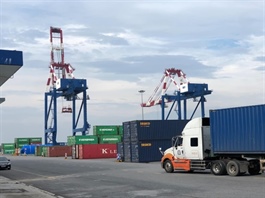
Improving logistics efficiency is another priority as Vietnam's total trade value has surpassed $900 billion.
Trần Tiến Dũng from the Vietnam Logistics Business Association (VLA) said the country's shipping fleet remains underdeveloped and mainly serves short regional routes, leaving most international cargo to foreign shipping lines.
The association has called on the Government to introduce stronger support policies to help domestic shipping companies invest in larger fleets and operate international routes directly, rather than leasing vessels to foreign operators.
Drawing on the experience of the Republic of Korea, Dung said state-backed financing could provide an effective model for strengthening Việt Nam's maritime transport industry.
According to experts, exports will continue to underpin economic growth as orders recover in manufacturing, agriculture and seafood. However, they stressed that Việt Nam must also prepare more proactively for stricter technical standards and trade defence investigations while accelerating efforts to diversify export markets, increase domestic value added and improve supply chain competitiveness to sustain long-term growth.
- 11:58 10/07/2026