Workshop discusses support for businesses through better use of RCEP
Workshop discusses support for businesses through better use of RCEP
Việt Nam's total trade turnover with RCEP member economies reached nearly US$503 billion last year, of which exports accounted for approximately $171 billion, up more than 30 per cent compared with 2022, when the agreement came into force.
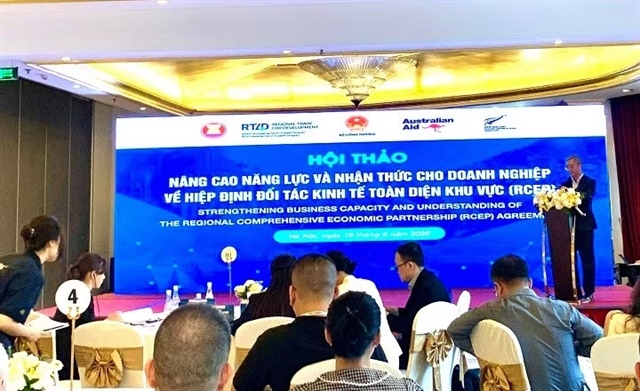
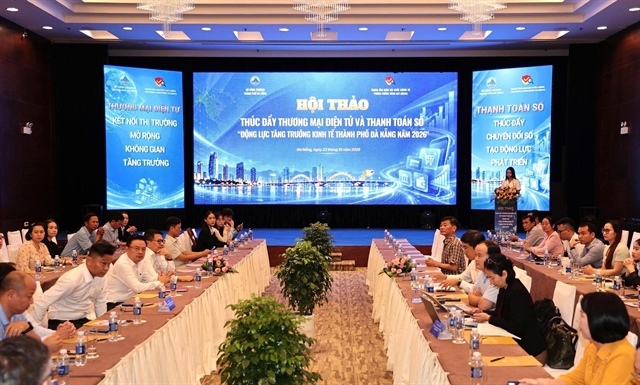
The workshop focuses on translating RCEP commitments into practical knowledge and tools for businesses. — Photo thuongtruong.com.vn |
A workshop was held in Hà Nội on Tuesday to discuss measures to enhance business capacity and understanding of the Regional Comprehensive Economic Partnership (RCEP), whose members include 10 ASEAN member states, China, Japan, the Republic of Korea, Australia, and New Zealand.
The event was organised by the Vietnamese Ministry of Industry and Trade (MoIT) in coordination with the Regional Trade for Development (RT4D) programme and the Mekong-Australia Partnership (MAP).
The initiative aimed to strengthen the capacity of micro, small and medium-sized enterprises (MSMEs) to better utilise RCEP in digital trade through the private sector and stakeholders' engagement as part of RT4D's RCEP Implementation Support Programme (RISP).
The project also places emphasis on supporting women-led enterprises, businesses led by persons with disabilities and other vulnerable groups, thereby expanding opportunities for participation in regional trade and enhancing the economy's resilience.
The workshop focused on translating RCEP commitments into practical knowledge and tools for businesses. Participants were updated on the RCEP implementation in Việt Nam, and presentations of survey findings on the extent to which businesses have utilised the agreement. The event also provided recommendations to improve its application, as well as technical exchanges and group discussions on issues of concern to enterprises, including rules of origin, trade compliance requirements and sector-specific business scenarios.
During the event, organisers launched the handbook on utilising RCEP for businesses, industry associations and regulatory agencies. The publication serves as a practical reference to help Vietnamese enterprises better understand and apply RCEP provisions in their daily operations, covering export procedures, market access and regional trade opportunities.
Nguyễn Việt Chi, deputy director of the MoIT's Department of Multilateral Trade Policy, said RCEP is currently the world's largest free trade area and one of the key drivers of economic, trade and investment integration in the Asia-Pacific region. The agreement has helped strengthen regional supply chains, expand market access opportunities and facilitate businesses' export and import activities.
According to Chi, Việt Nam's total trade turnover with RCEP member economies reached nearly $503 billion last year, of which exports accounted for approximately $171 billion, up more than 30 per cent compared with 2022, when the agreement came into force.
Citing the findings of a 2026 survey conducted by the Foreign Trade University involving 1,360 enterprises across 34 provinces and cities, she said around 42.2 per cent of respondents considered RCEP to have had a positive or very positive impact on their business operations. Some 60.2 per cent believed the agreement had helped expand access to export markets. However, the survey also found that around 31.1 per cent of businesses had yet to see a clear impact from the agreement.
At the workshop, Quyền Anh Ngọc, head of the ASEAN Division under the Multilateral Trade Policy Department, noted that awareness and understanding of RCEP among businesses, particularly small and medium-sized enterprises, remained limited, resulting in a relatively low utilisation rate of the agreement's preferences.
He said businesses continue to face difficulties in applying rules of origin and origin certification procedures, including selecting the most appropriate free trade agreement and meeting documentation requirements. Some implementation regulations remain complex, increasing compliance costs for enterprises.
Differences in tariff schedules and non-tariff measures among RCEP members have raised the costs of obtaining information and completing procedures. Some businesses still prefer to use other ASEAN+1 free trade agreements instead of RCEP because they are simpler and offer earlier tariff reduction schedules.
- 22:01 16/06/2026