TVET creates jobs, drives economic progress, says PM
TVET creates jobs, drives economic progress, says PM
The Prime Minister notes that Cambodia’s human resource development strategy focuses on three priorities including health, knowledge and skills, and employment and careers.
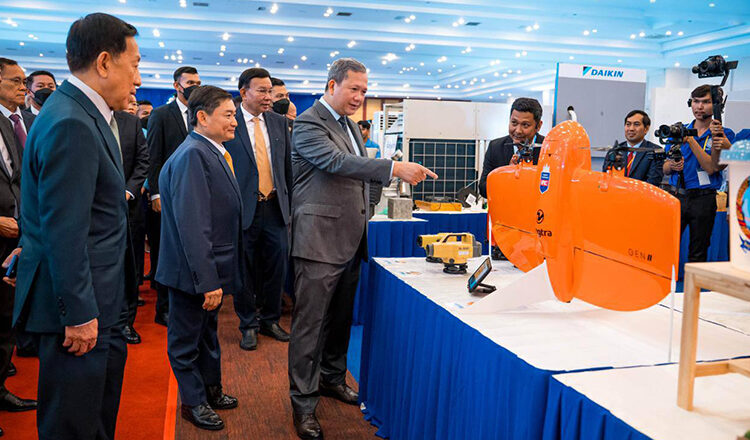
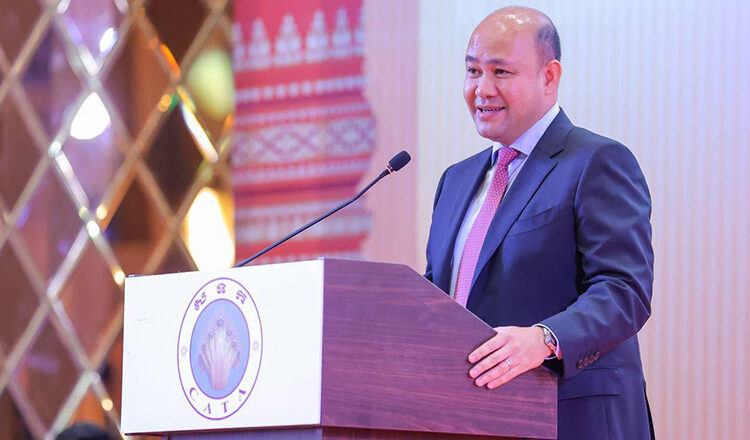
Prime Minister Hun Manet stated that the Royal Government of Cambodia (RGC) continues to regard human capital as the driving force behind social progress and national economic development, with the goal of transforming Cambodia into a high-income country.
He made the remarks during the celebration of the 9th National Technical and Vocational Education and Training (TVET) Day 2026 yesterday under the theme, ‘TVET Provides Skills, Jobs and Income,’ at Koh Pich Convention and Exhibition Center.
The two-day event, held on June 15–16, was organised by the Ministry of Labour and Vocational Training (MLVT).
Mr Hun Manet said the annual observance of National TVET Day reflects the government’s strong commitment to building Cambodia’s human capital into a genuine pillar of inclusive, effective and sustainable socio-economic development. He said the effort aims to improve people’s livelihoods and wellbeing while gradually reducing social inequality and advancing a society built on peace, solidarity and justice.
“The Royal Government has always considered human capital as the lifeblood of national socio-economic progress. Transforming Cambodian people into true human capital is comparable to polishing a diamond into something brilliant and invaluable for the existence of a civilised society in Cambodia,” he said.
The Prime Minister noted that Cambodia’s human resource development strategy focuses on three priorities including health, knowledge and skills, and employment and careers.
“The government has continued to maintain peace, political stability, social security and public order, while preserving macroeconomic stability, strengthening public financial resilience, supporting international trade growth and attracting both domestic and foreign investment — factors that underpin job creation, job retention and sustainable market access for Cambodian products and agricultural goods,” said Mr Hun Manet.
He added that Cambodia’s economy recorded stronger-than-expected growth of around 5.3 percent in 2025, supported by low inflation, exchange rate stability between the riel and the US dollar, as well as robust export performance and international reserves.
During the event, he also revealed that for 2027, the Ministry of Education, Youth and Sport (MoEYS) and the Ministry of Labour are assessing five additional schools located near special economic zones across four provinces — Kandal, Svay Rieng, Pursat and Kampong Speu— to strengthen skills development linked to industrial demand.
Mr Hun Manet also called on the private sector, development partners and civil society to deepen collaboration with the government in advancing Cambodia’s human capital agenda in line with national socio-economic goals. He encouraged greater investment in education, workforce orientation and mindset transformation under the concept that “every workplace should become a training ground.”
Meanwhile, Labour Minister Heng Sour said TVET plays an essential role in human capital development by equipping learners with knowledge, technical competencies and work readiness to become skilled workers.
“TVET strengthens our workforce resilience amid changing economic structures, labour market shifts and technological advancement, while helping young people access employment opportunities more quickly, reducing unemployment and contributing more broadly to national socio-economic development,” Sour said.
Meanwhile, the administration of Kampong Speu province, under the leadership of Governor Cheam Chan Sophorn, also marked the 9th National TVET Day, drawing participation from government officials, company representatives, teachers and more than 200 students.
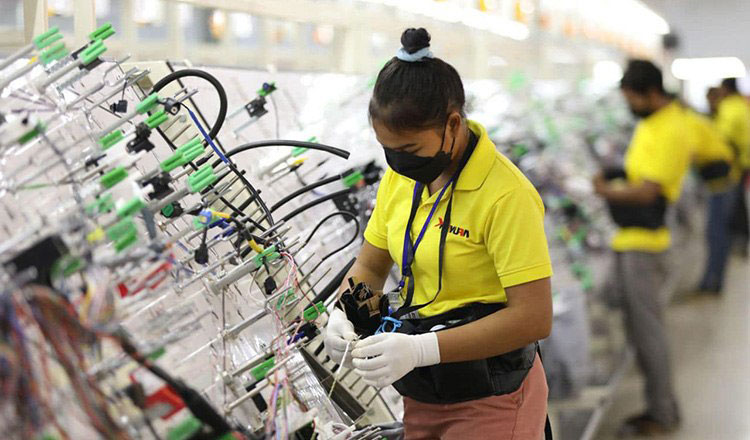
During the event, Chan Sophorn said technical and vocational skills are a key catalyst for Kampong Speu’s economic growth, noting that the province has emerged as one of Cambodia’s rapidly expanding industrial and manufacturing hubs.
He stressed that possessing practical skills has become a strong economic asset for young people.
According to him, students in the province are in a favourable position as Kampong Speu continues to develop as an important industrial and economic centre, creating broader employment opportunities and improving access to stable jobs with competitive incomes after graduation.
It worth to know that the event showcased 108 participating units across 261 booths covering 12 subsectors at the Koh Pich Convention and Exhibition Center.
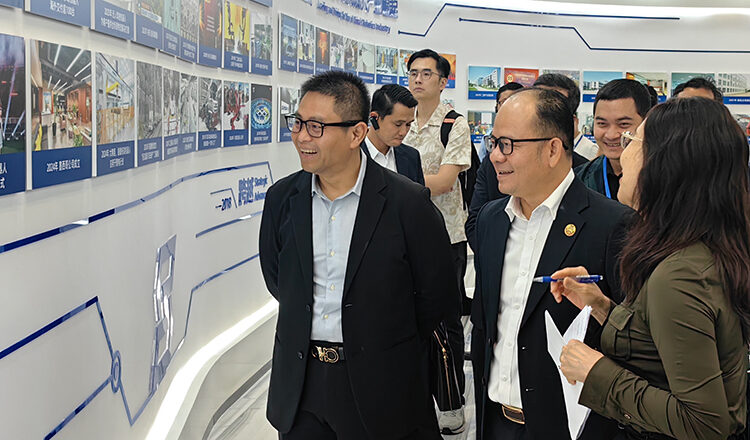
The event also featured participation from 10 leading TVET institutions from China representing six major regions — Beijing, Guangxi, Zhejiang, Guangdong, Shandong and Hubei — which are key partners in supporting the development and expansion of Cambodia’s TVET sector.
Cambodia officially designated National TVET Day in 2017 and has observed it annually on June 15.
- 07:53 16/06/2026