Private capital market shifts from growth-at-all-costs to patient capital
Private capital market shifts from growth-at-all-costs to patient capital
As Vietnam's private capital market matures, investors are shifting their focus from aggressive expansion to long-term, sustainable growth. At the VIPC Summit on May 28, Nguyen Thanh Thao, CEO of Thien Viet Securities (TVS) explained why 'patient capital' – capital focused on governance, operational resilience, and sustainable value – is becoming the new benchmark.

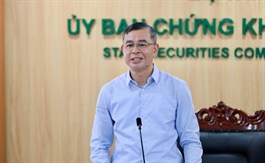
Nguyen Thanh Thao (far right) joined fellow speakers at the panel discussion |
What is the strongest signal that Vietnam's private capital market is maturing?
I would classify this into three signals.
The first is macroeconomic tailwinds. FTSE Russell's upgrade of Vietnam to secondary emerging market status takes effect in September 2026. Initial public offering (IPO) activity is reopening after a quiet period since 2018, with names like Bach Hoa Xanh, Long Chau Pharmacy, and Masan Consumer in the pipeline. The four policy pillars of Doi Moi 2.0 (Resolutions 57, 59, 66, and 68) set a strong foundation for private sector growth, and the state is now moving beyond its role as regulator to become a co-investor through the Vietnam Sovereign Fund and the Hanoi Venture Capital Fund, providing hybrid equity and credit platforms targeting early-stage tech startups.
The second is more disciplined capital from investors. In 2025, total private equity/venture capital deal value doubled to $370 million while deal count dropped 30 per cent to just 36 transactions, far below the 2021 peak of 108. Investors are making high-conviction bets on resilient, mature-stage companies rather than spreading capital across smaller bets. Notable rounds include Nhi Dong 315 at $135 million, TechCoop at $70 million, Dat Bike at $26 million with TVS participation, and Coolmate at $20 million.
The third is a stronger generation of founders. We are seeing more serial entrepreneurs with institutional track records, alongside a growing wave of engineers and specialists returning from Silicon Valley to build companies at home. The Wall Street Journal estimated China's 'sea turtles' grow 12 per cent on-year, and our investment team sees the same trend emerging in Vietnam – through names like Dat Bike, AI Hay, and NamiTech.
As a boutique merchant bank and asset management platform, what characteristics make Vietnamese companies truly ready for institutional capital today? What makes investors hesitate?
Companies that are genuinely ready for institutional capital usually share three characteristics.
First is the quality of the founding and management team. Founders need relevant expertise, complementary skill sets, discipline in execution, and the resilience to take the company to a bigger and more sustainable scale. One thing we have learned from working with portfolio companies from inception through pre-IPO is that founders must be willing to grow and transform alongside their company and the market – not just manage well at one stage.
Second is a business model with a genuine 'right to exist'. This means serving real and sustained demand of a sizeable market, with a crystal-clear path to monetisation – the company must be able to generate actual cash, not just GMV or user numbers. Beyond that, investors look for proven unit economics: scalable top-line growth, defensible margins with room for expansion, and real, verifiable traction.
Third is integrity and governance built early. This is often overlooked by early-stage founders who consider it boring or unnecessary. However, we have seen many company failures across Southeast Asia in recent years – including Indonesia's eFishery – due to weak governance and even fraud. Founders and early-stage investors should not overlook the basics – independent board members, audited financials, and strong financial controls. Good corporate governance is a shared responsibility across founders, management, and investors.
From your experience co-investing with global institutional investors in Vietnamese companies, what are the key success factors in making businesses institutional-ready?
From our experience co-investing with other international investors, there are three elements that are non-negotiable.
The first is financial reporting that international investors can trust. Financials need to be International Financial Reporting Standards (IFRS)-aligned or at least clearly reconcilable, and audited by recognised firms. The Vietnamese Accounting Standards-to-IFRS gap remains one of the biggest friction points in cross-border deals because investors cannot underwrite what they cannot verify.
The second is governance documentation that protects downside risk – drag-along rights, tag-along rights, anti-dilution protections, and information rights. These are now baseline requirements. Some founders initially resist, but the companies that successfully close deals understand these are standard infrastructure rather than adversarial conditions.
The third is having a trusted local partner already on the cap table. International investors entering Vietnam for the first time cannot navigate the market independently. A local partner with deep relationships and on-the-ground legal and operational experience is essential to validate the company and support post-investment relationship management.
The broader ecosystem is reflecting this maturation. Due diligence cycles have extended to 9–12 months, and capital is concentrating on institutionally ready operators. Vietnam's merger and acquisition and private capital market registered approximately $8.7 billion in deal value last year – not speculative capital chasing momentum, but disciplined capital finding quality.
Do you see exit prospects in Vietnam improving? Are we likely to see more strategic sales, domestic listings, regional listings, or international exits?
Yes, but the most realistic near-to-medium-term opportunities still lie in domestic channels.
The priority remains domestic IPOs. This is what founders generally prefer, and frankly what local investors like TVS understand best. We know the legal framework, the market dynamics, and the post-listing environment. That said, domestic listings still face challenges around profitability and return on equity requirements, and for Vietnam's PE and VC ecosystem to mature properly, the market needs a dedicated platform for growth-stage companies – similar to China's STAR Market – to keep the best companies in the country.
The second path is strategic sales to offshore investors. Japanese and South Korean investors remain especially active in sectors such as healthcare, consumer, and technology. They are not buying growth stories on paper any more. They want companies with defensible margins, clean governance, and management teams capable of operating independently post-acquisition. We have seen this directly through our own exits.
Offshore IPOs, including Hong Kong listings, are still not a priority for most Vietnamese founders or local investors today, though they will gradually become part of longer-term plans.

Capital flows in Vietnam are moving according to plan in most stages, except for a clear gap in the IPO segment. Source: Vietnam Innovation and Private Equity Investment Report 2026 |
What is one practical action to make Vietnam more investable in the next 12 months?
Both founders and investors need to align around the philosophy of patient capital. This is a long-term commitment – five to 10 years – built to last, not for a quick flip.
For founders, this means building institutional infrastructure rather than chasing vanity metrics. For investors, it means deeper operational involvement rather than just providing capital and stepping back. In this volatile market environment, stability and sustainability are the core assets that help companies navigate through the storms. Discipline and patience are what make the difference.
- 11:27 01/06/2026